Tag: All-Clad Knives

  • How to Cut a Watermelon: The Ultimate Guide to Perfect Slices Every Time

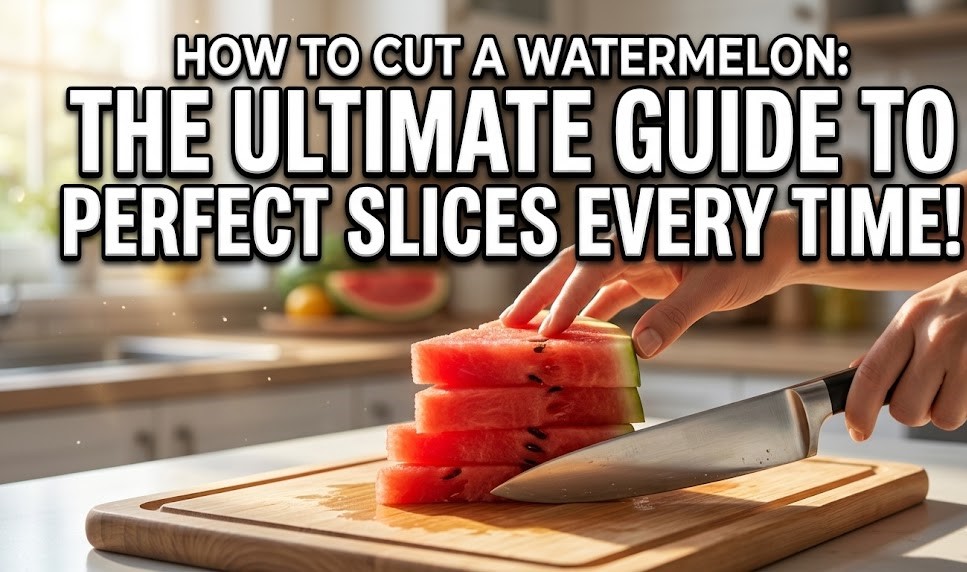
    How to Cut a Watermelon: The Ultimate Guide to Perfect Slices Every Time

    Cutting a Watermelon doesn’t need to be messy or difficult. With the right technique and a sharp knife, you can enjoy perfectly sliced fruit effortlessly for any summer gathering.
    Why Knife Choice Matters

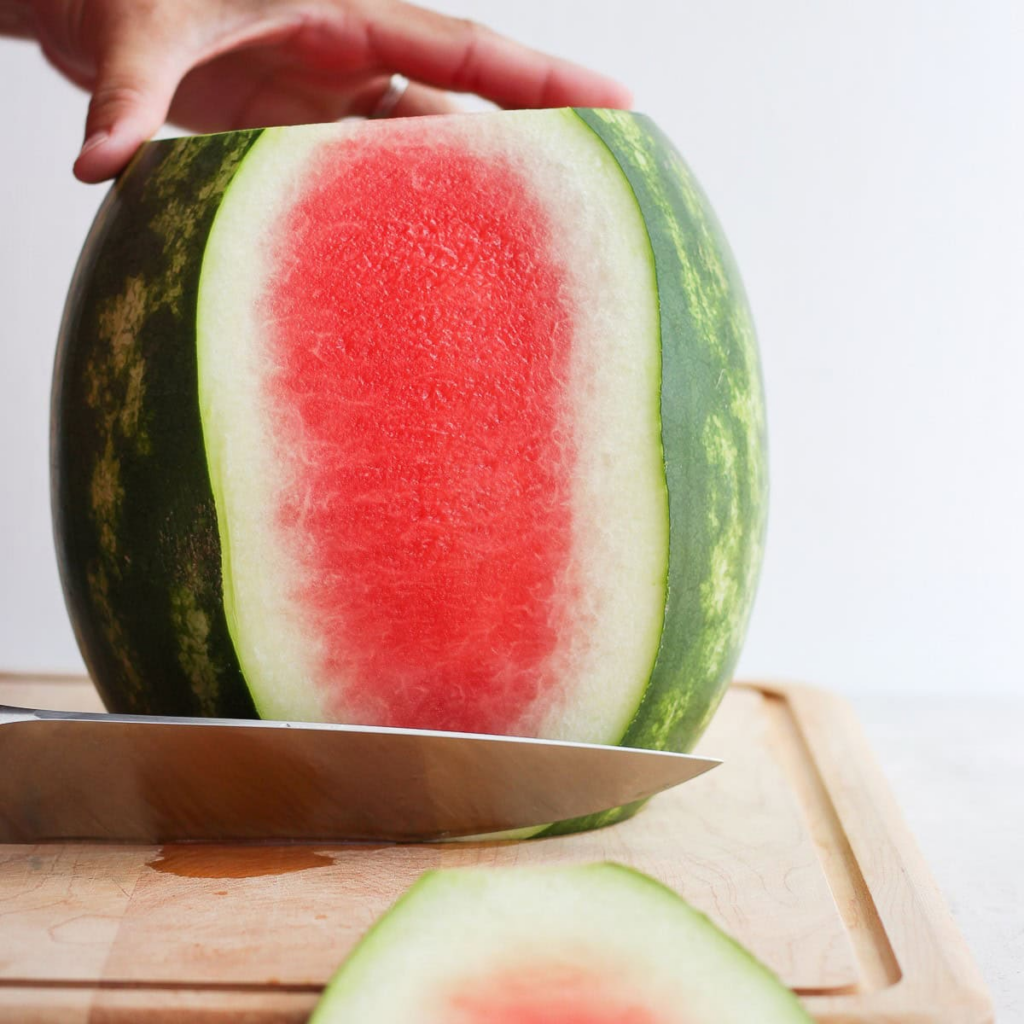
    Your success in cutting a whole watermelon starts with selecting the right blade. A proper knife ensures clean cuts through the tough rind while protecting the delicate flesh inside.

    • Length and Balance: A longer blade lets you slice through the watermelon in one smooth motion, while proper weight distribution ensures control and stability—whether you’re cutting wedges, cubes, or half-moons.
    • Edge Retention: Maintaining sharp cutting power allows you to transform your watermelon into pristine pieces without crushing the fruit or creating jagged edges.

    Best Ways to Cut a Watermelon

    Here is how to transform your watermelon into different serving styles, whether you want to keep the rind or remove it entirely:

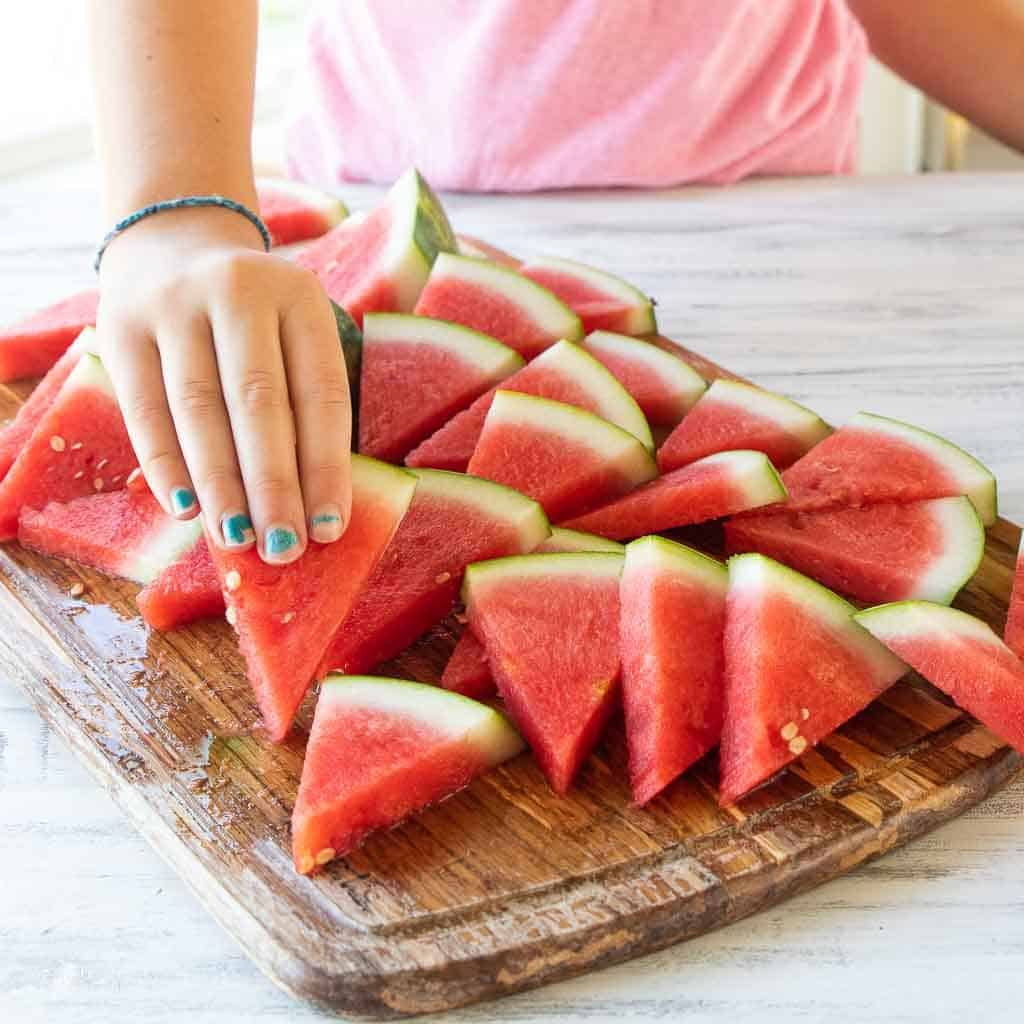
    • Classic Triangles: Place your halved watermelon cut-side down and slice it lengthwise into quarters. Working with one quarter at a time, make clean cuts across the flesh at 1-inch intervals. The rind provides a natural handle for easy snacking.
    • Party-Ready Cubes: After removing the rind, slice your watermelon into 1-inch thick planks. Stack these planks and cut them into 1-inch strips, then rotate 90 degrees to create uniform cubes. These are ideal for fruit salads or elegant appetizers.
    • Refreshing Sticks: Transform your halved melon by cutting it into 1-inch thick slabs, then slicing those slabs lengthwise into perfectly portioned sticks. This shape is perfect for dipping or arranging on platters.
    • Elegant Half-Moons: Create sophisticated half-moon slices by cutting the watermelon crosswise into 1-inch thick rounds, then halving each round.

    Tips for Safe and Efficient Cutting

    Position your watermelon halves with the flat side down on your cutting board to create a highly stable base for precise cuts.

    • Keep your fingers tucked while gripping the handle of your knife, maintaining control through each slice.
    • A damp paper towel placed under your cutting board safely prevents unwanted movement during cutting.
    • Watch the angle of your blade—a 45-degree approach works best for removing the rind cleanly.
    • Keep the knife handle and blade dry by wiping away excess juices as needed to prevent your hand from slipping.

    Best Knives for Cutting Watermelon

    • Chef’s knife: A standard 8-inch chef’s knife excels at watermelon preparation. The cutting edge delivers clean slices through both rind and flesh, while the ergonomic handle provides confident control.
    • Bread Knife: For larger melons, reach for an 8-inch bread knife. Its serrated edge easily grips the tough exterior without crushing the delicate fruit inside.
    • Santoku: A Santoku knife’s unique fluted blade design prevents watermelon pieces from sticking to the metal, making it perfect for creating precise, rapid cubes.
    Serving Your Watermelon: Creative Presentations

    Transform your expertly cut watermelon into stunning presentations that will elevate any summer dining experience.

    Create an eye-catching fruit board by arranging watermelon cubes alongside fresh mint leaves and crumbled Feta cheese. For an elegant twist, stack watermelon wedges in a cascading pattern on a serving platter, garnishing with fresh herbs.

    Turn watermelon into a refreshing summer appetizer by threading cubes onto skewers with fresh mozzarella, or craft a sophisticated watermelon Gazpacho that transforms this sweet fruit into a savory, chilled soup. For children’s parties, you can even use cookie cutters to punch out fun shapes from thin watermelon slices!
  • Master Your Kitchen: The Ultimate Guide to Choosing Between a Santoku and a Chef Knife

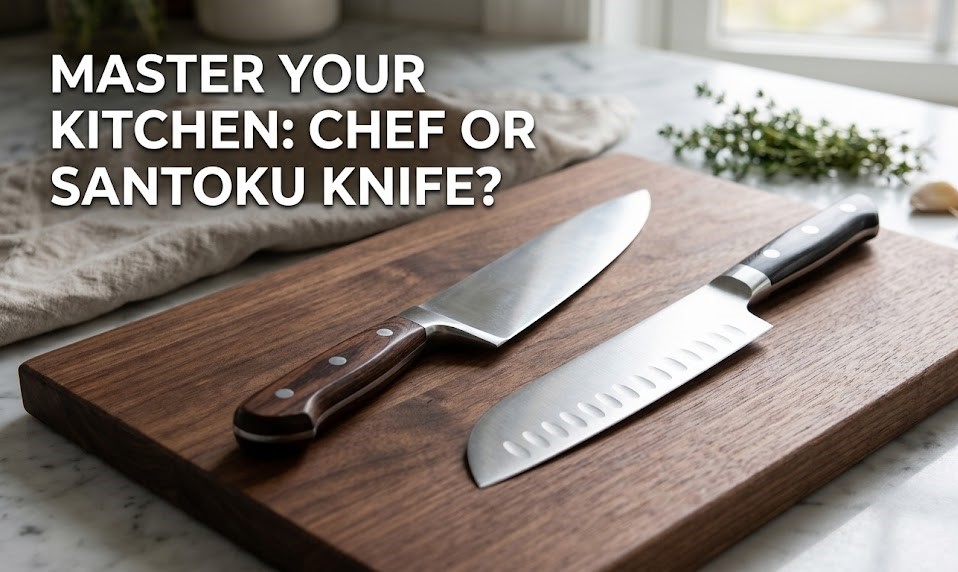
    Master Your Kitchen: The Ultimate Guide to Choosing Between a Santoku and a Chef Knife

    When selecting between premium knife offerings for your kitchen, understanding their practical applications makes all the difference. While both blades are essential multi-purpose tools, they each bring distinct strengths to your cutting board.

    Consider your personal cooking style and typical ingredients when making your choice. The classic chef knife proves invaluable for larger tasks and heavy-duty chopping, while the Santoku shines in detailed prep work requiring exactness and finesse.

    Santoku vs. Chef’s Knife: What’s the Difference?

    Understanding Blade Designs

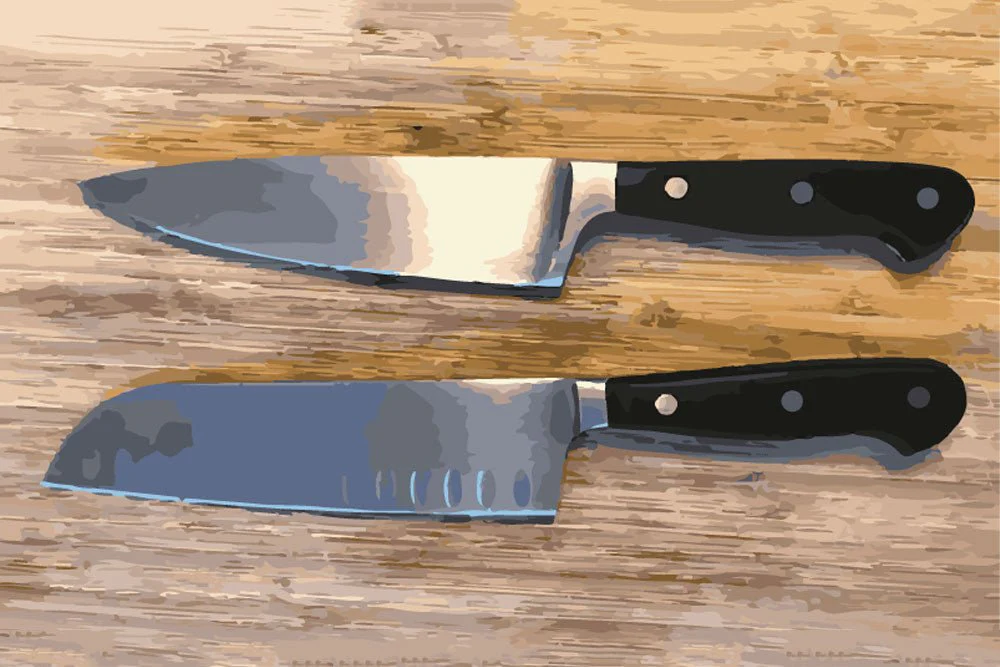
    The chef’s knife blade design showcases proven Western craftsmanship with its signature curved edge and longer blade length. It is perfectly suited for the characteristic “rocking motion” during cutting. Premium chef knives feature robust, full-tang construction and precision-honed edges that deliver exceptional performance for a wide range of heavy kitchen tasks, from dicing onions to breaking down whole poultry.

    The Santoku blade features a distinctive Japanese design with a shorter, straight cutting edge. Its wide, flat profile is beneficial for scooping up ingredients, while the precision-engineered edge ensures optimal cutting performance. Because the blade lacks a curved belly, its unique profile excels at rapid up-and-down cutting motions rather than rocking. Most Santoku blades also incorporate specialized grooves (a Granton edge) that prevent starchy or delicate food from sticking to the metal during use.

    Features of Santoku Knives: What Are Their Advantages?

    The name “santoku” translates to “three virtues,” representing its absolute mastery of three essential cutting techniques: slicing, dicing, and chopping.

    The Santoku knife represents Japanese precision engineering at its finest. Its balanced weight distribution and ergonomic design make it especially adept at precise cutting tasks, from creating paper-thin vegetable slices to portioning delicate fish fillets. The distinctive design features a shorter blade length, typically around 7 inches.

    Santoku knives excel at the following cutting techniques:

    • Push-cutting: For clean, highly precise vegetable slices.
    • Tap-chopping: For uniform dicing and rapid mincing.
    • Pull-slicing: For exceptionally thin, delicate cuts of fish and raw meat.
    • Vertical chopping: For finely processing herbs and aromatics.

    Features of Chef Knives: What Is a Chef Knife Used For?

    The chef’s knife stands as the quintessential kitchen tool, revered by professional chefs and home cooks alike for its exceptional, heavy-duty versatility. This iconic blade typically ranges from 6 to 12 inches in length, with the 8-inch version being the most popular for its optimal balance of power, weight, and control.

    The distinctive design features a broad heel that tapers to a pointed tip, creating a slight curve along the cutting edge known as the “belly.” This curved profile enables the characteristic rocking motion technique, where the knife pivots smoothly against the cutting board while maintaining constant contact. The wide, heavy blade serves multiple functions, from crushing whole cloves of garlic to scooping prepared ingredients.

    Chef knives excel at the following cutting techniques:

    • Rock chopping: For easily breaking down large piles of herbs and leafy vegetables.
    • Straight-down chopping: For firm, dense root vegetables like potatoes and carrots.
    • Draw cuts: For smoothly slicing through thicker meats and fish.
    • Cross-chopping: For heavy, fine mincing tasks.

    All-Clad Professional Knife Sets: The Best of Both Worlds

    If you can’t choose just one, comprehensive knife sets combine the versatility of both the chef knife and the Santoku knife into one professional collection.

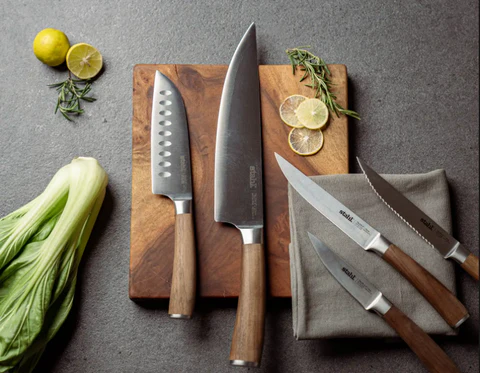
    • The 7-Piece Set: Features an 8-inch chef’s knife and a 7-inch Santoku knife, allowing home cooks to experience the best of both Western and Asian cutting techniques. It also includes essentials like a serrated utility knife, paring knife, honing steel, and kitchen shears housed in an acacia wood block.
    • The 12-Piece Set: Builds upon the foundational 7-piece block by adding premium steak knives and a long 8-inch bread knife for a complete kitchen solution.

    Choosing the Right Knife for You

    When investing in a knife, material quality is paramount. Premium kitchen knives are often crafted from X50CrMoV15 German stainless steel. This exceptional material combines high chromium content with the perfect balance of manganese, silicon, and carbon, delivering superior rust resistance and lasting durability.

    Additionally, look for blades that undergo an innovative cryogenic treatment with liquid nitrogen, which massively enhances both edge retention and overall corrosion resistance. Whether you choose the precise 7-inch Santoku or the robust 8-inch Chef Knife, investing in a precision-engineered 26-degree total cutting edge will achieve the ideal balance between razor-sharp performance and chip resistance in your kitchen.