
Tag: Cooking Guide

  • How to Choose the Best Size Air Fryer for Your Household

    How to Choose the Best Size Air Fryer for Your Household

    Air fryers have quickly become an unrivaled kitchen gadget, with many households completely replacing their traditional ovens with this new-age piece of kitchen tech. If you are hesitating to invest in this handy appliance, it is likely because you are overwhelmed by the options and wondering what the best size is for your specific household.
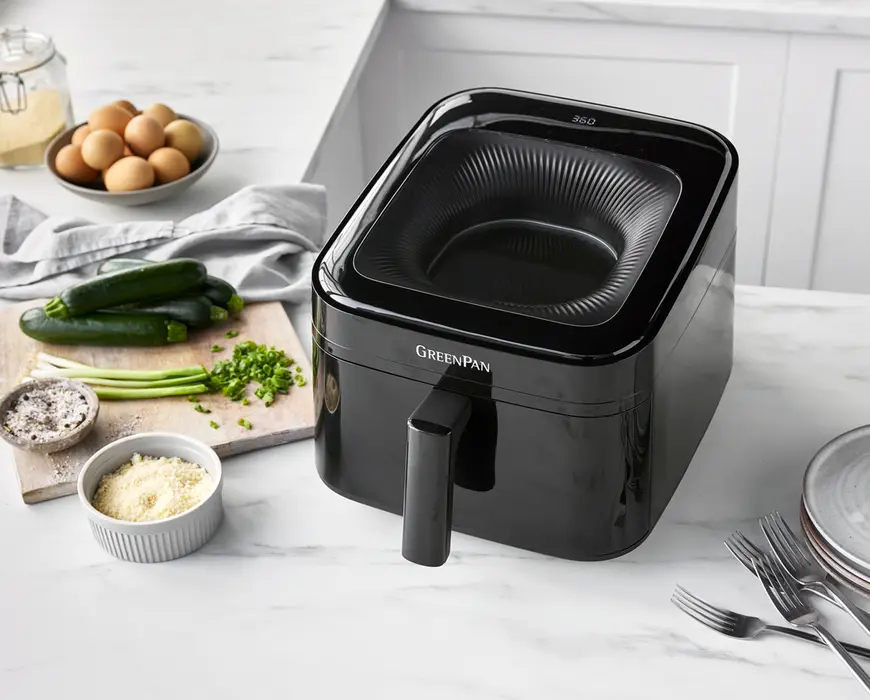
    Air fryers come in a massive variety of sizes. Some are perfectly compact for making a quick batch of crispy chicken nuggets, while others are large enough to prepare a full three-course meal. Whether you are cooking for one, feeding a large family, or looking to streamline your batch cooking sessions, here is an expert-backed guide to choosing the perfect air fryer.

    How Much Space Do Air Fryers Take Up?

    If you live in an apartment, you know that every single inch of kitchen counter space counts. Fortunately, there are multiple size categories that can squeeze into even the slimmest of corners.

    Smaller air fryers (the 2 to 4-liter models) have a footprint similar to a standard 4-slice toaster. On the other end of the spectrum, larger, family-sized models (6+ liters) will take up about as much space as a small microwave.

    The Ultimate Air Fryer Size Guide

    • Small (1–3L) | Perfect for singles or couples: These compact fryers are best used for cooking single portions perfectly or for quickly preparing after-school snacks when you don’t want to fire up the oven. Recommended: Daewoo Compact Manual Air Fryer.
    • Medium (3.5–5L) | Perfect for families of 2–3: If you have a little extra counter space, a medium fryer makes preparing full meals simple and prevents you from accidentally overfilling your basket. Recommended: Ninja 3.8L Air Fryer.
    • Large (5.5–7L) | Perfect for families of 4+: Choosing an air fryer in the 5 to 6-liter range will easily accommodate larger portions and make weeknight dinner prep a total breeze. Recommended: COSORI CP158 Air Fryer.
    • Extra-Large (7L+ / Dual Basket) | Perfect for batch cooking or entertaining: A dual-drawer or stacked model is incredibly practical. A single person can use just one drawer for everyday meals, while utilizing the second drawer when guests come over. A family can run both drawers simultaneously with completely different foods! Recommended: Daewoo 10L Mega Drawer Air Fryer.

    Is a Dual Basket Better?

    “Better” is entirely subjective, but are they more versatile? 100%.

    Dual basket air fryers are explicitly designed to cook multiple items at once. They are ideal for meal prepping, cooking different dinners for fussy children, or simply preparing your protein and your roasted vegetables at the exact same time. The dual function allows you to set one basket to reach a completely different temperature than the other, taking the stress out of complex, layered meals.

    If you are on the fence, models like the Salter Fuzion Dual Air Fryer offer a versatile compromise, allowing you to convert dual drawers into one large single drawer for dinner parties. Just keep in mind that dual basket air fryers take up the most countertop space in the kitchen!

    The Dangers of Overfilling

    If you often feel your air fryer isn’t working to its full potential, you are likely overfilling it! Experts note that stuffing the basket too full is the most common mistake new users make.

    Overfilling prevents the hot air from circulating properly around the food, leading to uneven cooking and soggy, undercooked meals. If you consistently find yourself running out of room, it is time to upgrade to a bigger capacity or a dual basket model so your food cooks to crispy perfection every single time.
  • Stand Mixer vs. Hand Mixer: Which Should You Choose?

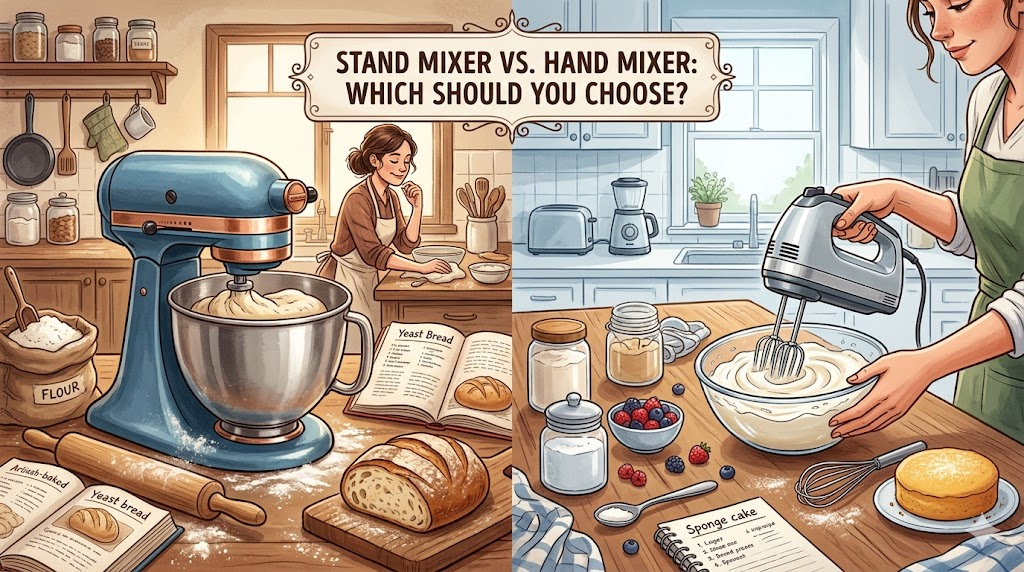
    Stand Mixer vs. Hand Mixer: Which Should You Choose?

    Whether you are a keen amateur chef or an occasional cake baker, a good mixer is an absolute essential for your kitchen toolkit. These handy appliances make light work of mixing dough, whipping cream, and whisking up fluffy meringues. But when it comes time to upgrade your kitchen, you are faced with a classic dilemma: should you choose a stand mixer, a hand mixer, or even both?

    The right choice entirely depends on your budget, storage space, and cooking style. Here is a practical, comprehensive guide to help you choose the best food mixer for your culinary needs.

    What is the Difference?

    Before diving into the pros and cons, it helps to understand the core differences between the two appliances:

    • Hand Mixer: A compact, handheld electric mixer that you manually hold over a bowl. It is designed for quick, everyday tasks like whipping cream or making simple batters.
    • Stand Mixer: A heavy-duty electric mixer attached to a sturdy base that sits on your worktop. It holds the bowl in place for you and often features a powerful motor and various attachments for heavy-duty baking and food prep.

    The Case for the Stand Mixer

    Stand mixers are the ultimate kitchen workhorses. With powerful motors (aim for at least 600W) and heavy, robust frames, they are built to tackle large batches and stiff mixtures without skipping a beat.

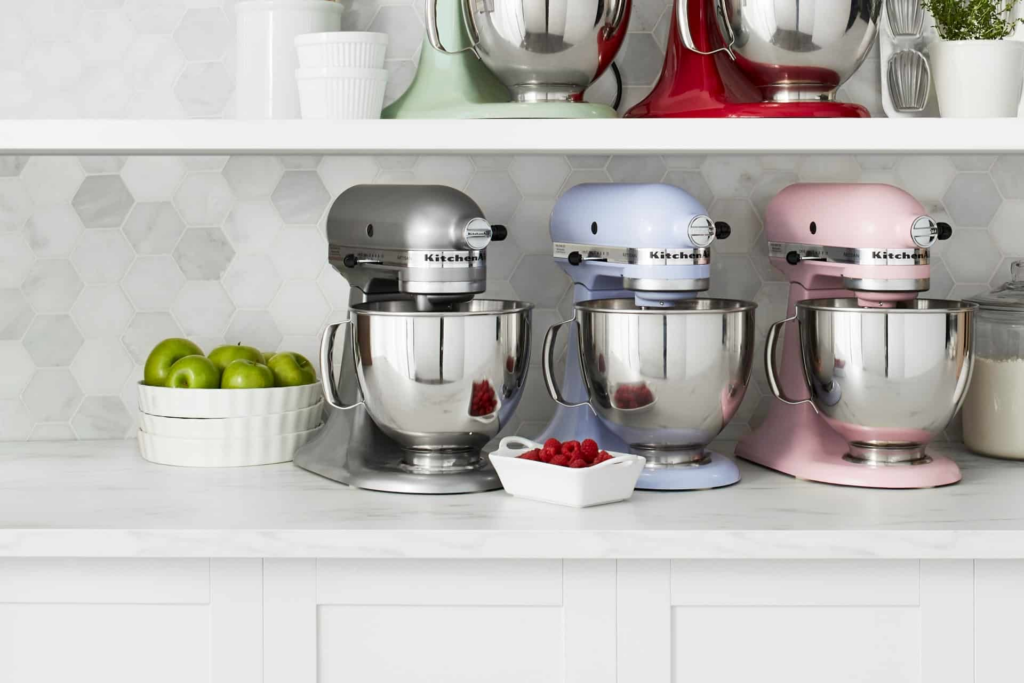
    Because they hold the bowl securely in place, stand mixers operate completely hands-free. This allows you to multitask in the kitchen and add ingredients on the fly without having to turn the machine off. Furthermore, brands like KitchenAid feature a power hub that transforms the mixer into a multi-use appliance, capable of churning ice cream, rolling pasta, or even grinding meat.

    Pros of a Stand Mixer:

    • Solid, stable, and robust design.
    • Highly powerful motors with up to 10 precise speed settings.
    • Hands-free operation saves your arms from fatigue.
    • Capable of heavy-duty tasks like kneading thick bread dough.
    • Available in beautiful colors and designs that act as a kitchen style statement.

    Cons of a Stand Mixer:

    • Heavy and difficult to move in and out of cupboards.
    • Requires dedicated worktop space.
    • Significantly more expensive (ranging from £75 up to £1,000).
    • Can be fiddly to clean, though many feature dishwasher-safe bowls.

    The Case for the Hand Mixer

    If you have a compact kitchen or only bake occasionally, a hand mixer might be your perfect match. These lightweight appliances are incredibly convenient for rustling up small batches of ingredients.

    One of the biggest advantages of a hand mixer is its portability. You can mix directly inside any container—whether it is a mixing bowl, a saucepan on the stove, or a measuring jug—which drastically cuts down on your washing up. They are also incredibly easy to clean; simply pop the beaters in the dishwasher and wipe down the main unit.

    Pros of a Hand Mixer:

    • Lightweight, portable, and incredibly easy to store in a drawer.
    • Perfect for quick tasks like whipping cream or beating eggs.
    • Highly affordable (basic models start around £10).
    • Mix directly in your own pots and pans.
    • Cordless hand mixer models offer even more freedom around the kitchen.

    Cons of a Hand Mixer:

    • Requires physical effort; your arm may ache during long mixing sessions.
    • Less powerful motors can struggle with dense, stiff doughs.
    • Ties up both of your hands while in use.
    • Fewer speed settings and attachment options.

    Head-to-Head Comparison

    FeatureStand MixerHand Mixer
    Best ForFrequent bakers, large batches, heavy bread dough.Occasional bakers, small batches, quick whipping.
    Storage NeedHigh (Usually stays on the counter).Low (Easily fits in a drawer).
    Physical EffortZero (Hands-free operation).High (Requires holding the unit and bowl).
    Price Range£75 – £1,000+£10 – £180
    VersatilityHigh (Pasta rollers, meat grinders, etc.).Low (Usually just beaters and dough hooks).

    The Final Verdict: Which is Best?

    Choose a Hand Mixer if: You bake in small batches, have limited kitchen storage, are on a strict budget, and primarily need a tool for light batters and whipping.

    Choose a Stand Mixer if: You regularly cook for a crowd, bake dense bread doughs, want hands-free convenience, and have the worktop space to display a beautiful appliance.

    The Ideal Scenario: If your space and budget allow, having both types of mixers in one kitchen offers maximum flexibility. You can grab the hand mixer for a quick weekday whipped cream, and rely on the stand mixer for your weekend baking marathons!