
In the modern domestic kitchen, the demand for low-fat culinary preparation has driven the mass adoption of hot-air cooking technologies. While both Air fryers and Convection ovens operate on similar thermodynamic principles, their structural engineering and intended culinary deployments differ significantly. This intelligence brief deconstructs the mechanical operations, utility trade-offs, and energy economics of both appliances to help operators optimize their kitchen infrastructure.
Historical Context and Culinary Architecture
Historically, achieving a crispy exterior on food required Deep frying, a process that fully submerges ingredients in boiling oil, resulting in a high caloric load and heavy fat absorption. The introduction of consumer-grade convection technology aimed to simulate this exact textural outcome using superheated air and minimal lipid application. Today, the market is divided between highly specialized, compact air fryers and broad-utility, large-capacity convection ovens.
Technical Mechanics: Thermodynamics and Heat Transfer
While both appliances utilize fans to circulate hot air, the velocity and spatial dynamics vary drastically, altering the culinary outcome.
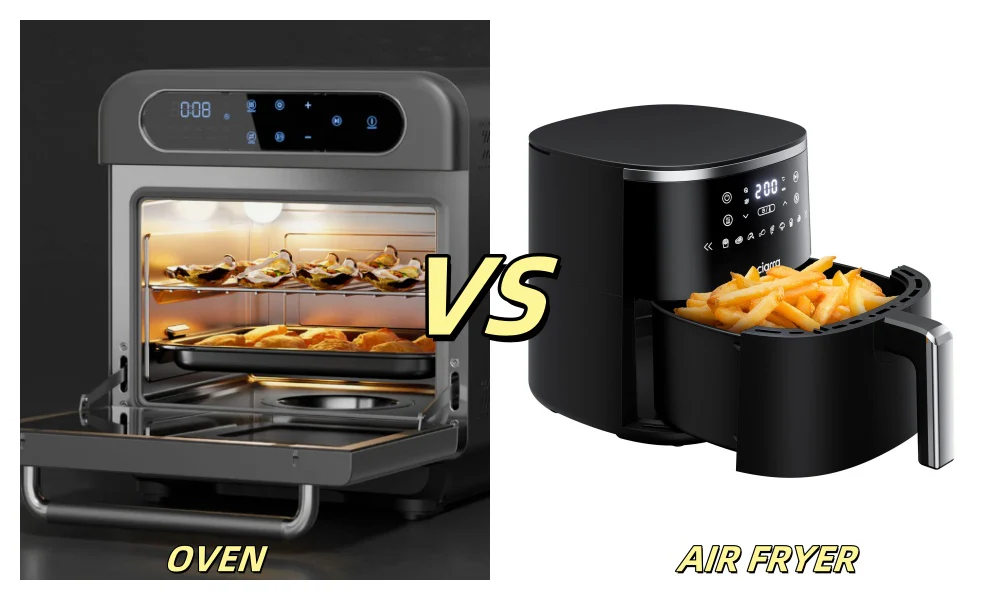
- The Air Fryer Architecture: An air fryer is essentially a highly compact, turbocharged convection chamber. It features a heating element positioned directly above a perforated basket, paired with a powerful, high-speed fan. This architecture creates a concentrated, aggressive wind tunnel effect. The intense heat transfer rapidly triggers the Maillard reaction, delivering a deeply crispy exterior in minutes with up to 80% less oil than traditional frying.
- Operational Constraints: The compact size prohibits large-batch cooking. Overcrowding the basket physically blocks the airflow, resulting in soggy, steamed food rather than a crisp finish.
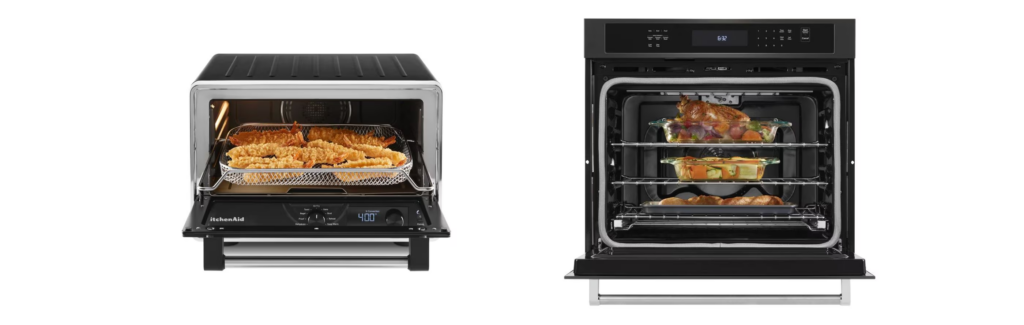
- The Convection Oven Architecture: This system utilizes a fan and exhaust port located at the back of a standard-sized oven cavity. The fan distributes ambient hot air evenly across multiple racks.
- Operational Advantages: It eliminates “hot spots” common in conventional ovens, ensuring uniform baking and roasting. Because the airflow is less aggressive than an air fryer, it is vastly superior for delicate operations like baking cakes or roasting large proteins. Operators should generally lower recipe temperatures by 10°C to 20°C when utilizing the convection setting to prevent overcooking.
Economic Impact and Energy Logistics
From a domestic utility perspective, the choice between these assets impacts both time efficiency and Energy efficiency (Operational Expenditure).
- Energy Consumption: Air fryers are significantly more energy-efficient for small-scale operations. Their small internal volume requires zero to minimal preheating (3–5 minutes) and cooks food up to 30% faster than a full-sized oven, drastically reducing electricity draw.
- Batch Efficiency: Conversely, for a multi-person household, cooking a large meal in an air fryer requires multiple sequential batches, negating the time and energy savings. A convection oven allows the operator to load multiple racks simultaneously, making it the more economically and temporally efficient asset for large-scale meal prep.
Conclusion
The strategic verdict is that neither appliance is objectively “healthier” than the other; both successfully eliminate the need for heavy oil submersion. The correct procurement decision depends entirely on the operator’s daily logistics. If your primary objective is rapidly generating crispy, fried-style textures in small batches with minimal energy waste, the air fryer is the optimal tool. If your operations require high-volume capacity, multi-rack baking, and even roasting, the convection oven remains the superior, highly versatile kitchen asset.