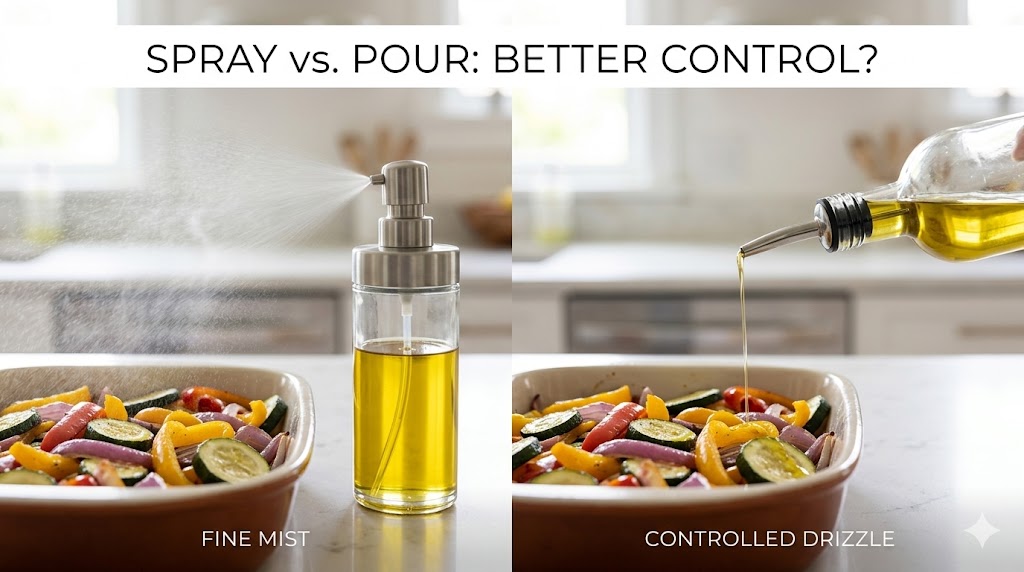
Olive oil is celebrated as one of the healthiest fats in a modern diet, but in 2026, the focus has shifted from what fat we use to how we apply it. Whether you are drizzling directly from a glass bottle or using a specialized kitchen oil spray bottle, your choice impacts calorie density, flavor profile, and even the longevity of your cookware.
As we embrace precision cooking—particularly with the surge in air fryer usage—the debate between spraying vs. pouring has become a central topic for health-conscious home cooks.
1. The Health Factor: Calorie Precision
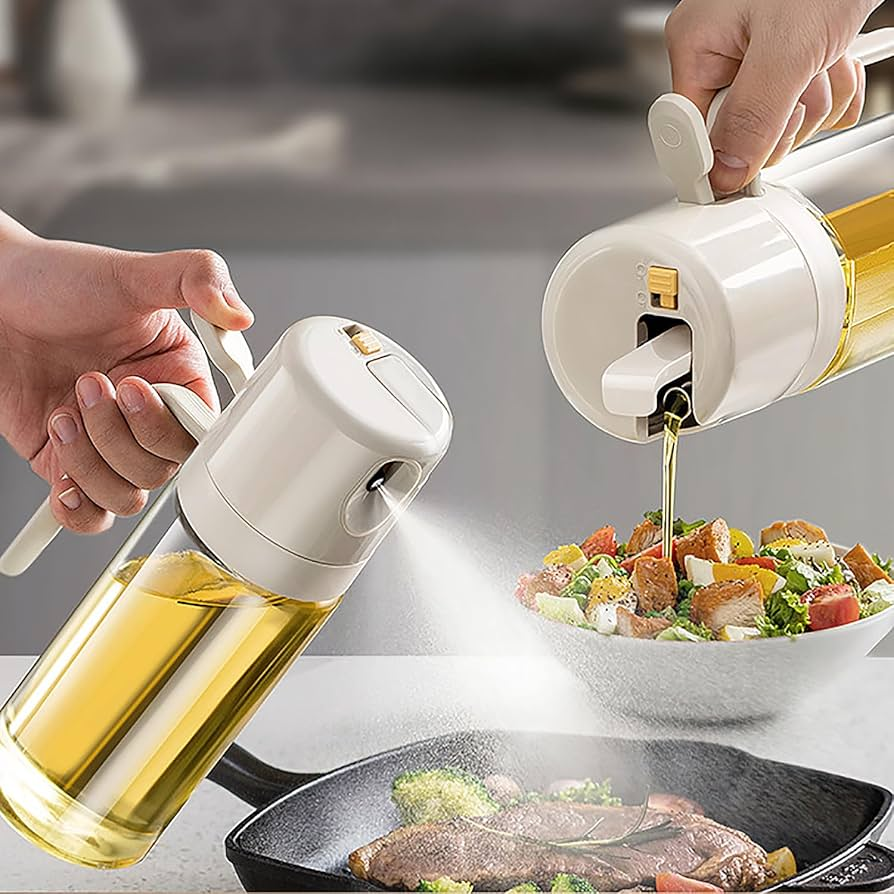
The primary advantage of a sprayer is the elimination of “hidden calories.” When pouring, a “quick drizzle” often accidentally turns into 2–3 tablespoons ($240$–$360$ calories).
- The Spray Advantage: A standard Yarramate Oil Sprayer releases approximately 0.2–0.3 grams of oil per pump. This allows you to coat an entire tray of vegetables with less than $1$ gram of oil ($9$ calories), whereas pouring often results in uneven pooling and excess fat consumption.
- Mouthfeel and Satiety: Research from the National Institutes of Health (NIH) suggests that an even distribution of oil (mist) can provide the same sensory “richness” as a heavy pour but with significantly lower lipid intake.
2. Precision in the Kitchen: Texture and Results
Precision isn’t just about health; it’s about the science of the “crunch.”
- Air Frying Performance: For those using an air fryer oil spray bottle, the mist is essential. A fine mist allows the Maillard reaction to occur evenly across the surface of the food, resulting in a lighter, crispier texture without the greasiness associated with pouring.
- The “Pour” Exception: Pouring remains superior for tasks that require deep saturation, such as marinating meats or creating a dipping bowl for artisanal bread. As the FDA notes, oil also acts as a preservative and heat conductor; in slow-roasting or braising, a heavier pour may be necessary for the recipe’s structural integrity.
3. Economic Impact: Stretching Your Pantry
In 2026, with the rising costs of premium cold-pressed olive oils, minimizing waste is a financial priority.
- Reduced Overpouring: A sprayer ensures every drop is utilized on the food, not left at the bottom of the pan.
- Oxidation Protection: Modern Anti-UV Dark Glass Sprayers protect sensitive oils from light, which the USDA FoodData Central identifies as a primary cause of rancidity.
- Cleanup Efficiency: Less oil in the pan means less detergent and water needed for cleanup, supporting sustainable kitchen practices.
Professional Tips for Oil Sprayer Maintenance
To ensure your sprayer performs optimally through 2026, follow these expert guidelines:
- Temperature Matters: Olive oil can thicken in cold environments. Store your sprayer at room temperature ($20^\circ\text{C}$–$25^\circ\text{C}$) to ensure a fine mist rather than a stream.
- Avoid Clogging: Use “filtered” oils. Extra virgin olive oil with high sediment levels can clog fine nozzles.
- Safety First: When using sprayers near open flames (like a gas range), the Mayo Clinic reminds cooks to spray the food before placing it near the heat source to avoid flare-ups.
Conclusion
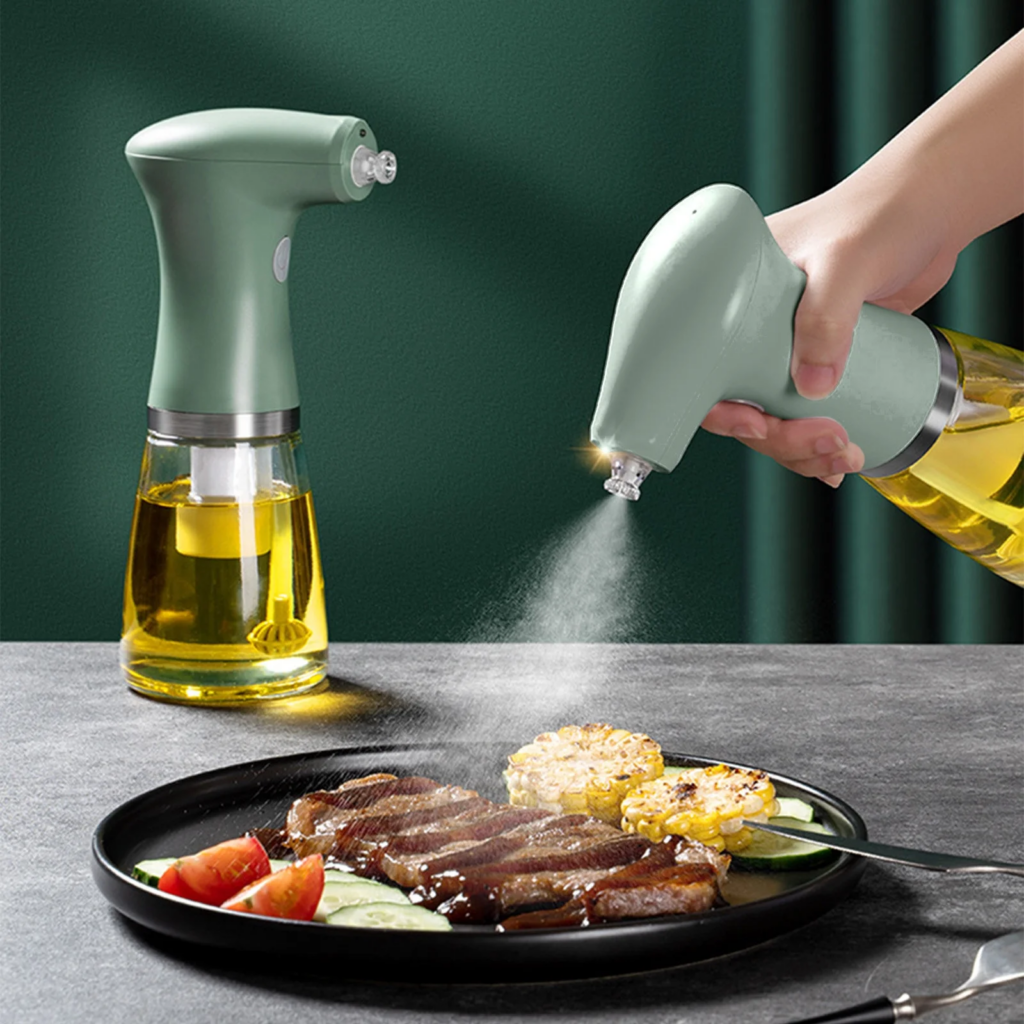
The olive oil sprayer is the clear winner for daily health management, portion control, and achieving “air-fried” perfection. While pouring still has a place in high-volume marinating and traditional dressings, the kitchen oil spray bottle has become an indispensable tool for the 2026 healthy kitchen. By switching to a sprayer, you essentially modernize your cooking process—saving calories, money, and time without sacrificing the rich flavor of your favorite olive oils.