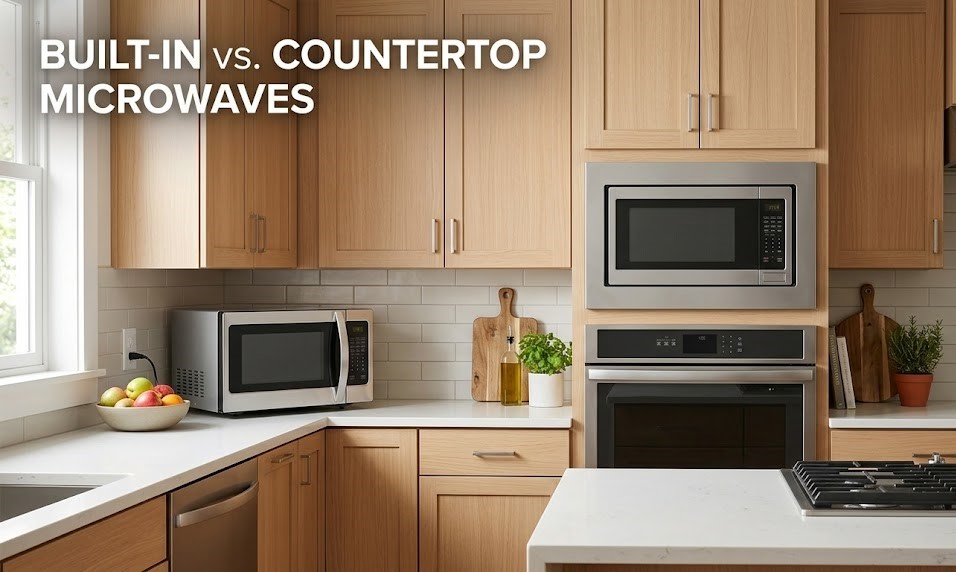
In the modern residential architecture and Kitchen design sectors of 2026, the microwave has transitioned from a mere reheating tool to a primary cooking station. As homeowners move toward minimalist, “invisible” kitchens, the debate between built-in and countertop microwave systems has become a central strategic choice in kitchen procurement. Deciding between a freestanding unit and a cabinetry-integrated model requires a deep analysis of kitchen ergonomics, capital expenditure, and the long-term utility of the workspace. This intelligence brief deconstructs the technical mechanics, economic trade-offs, and structural limitations of both deployment strategies.
Technical Mechanics: Deployment and Installation
While both architectures perform identical heating functions, their integration into the domestic infrastructure represents two distinct engineering approaches.
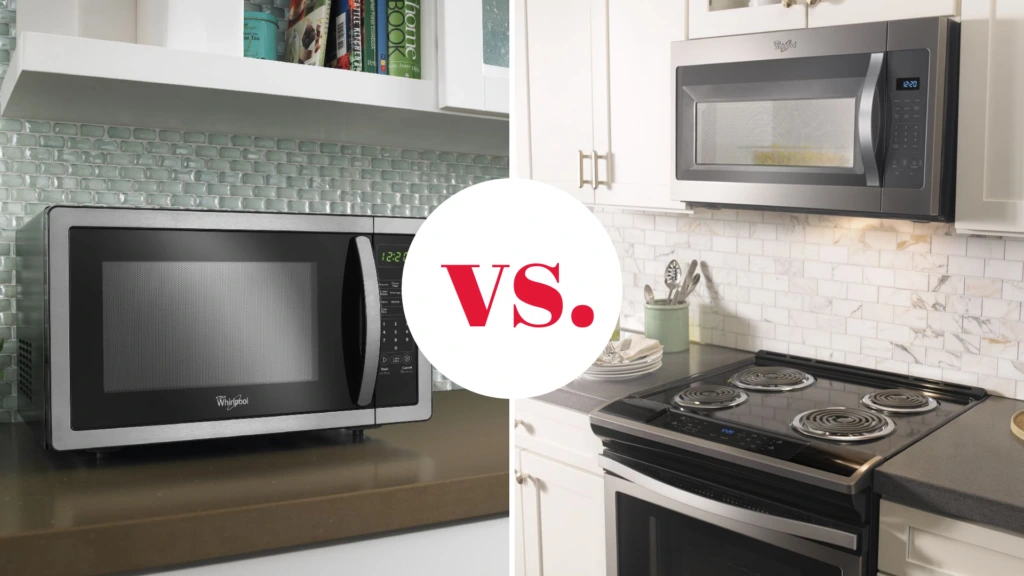
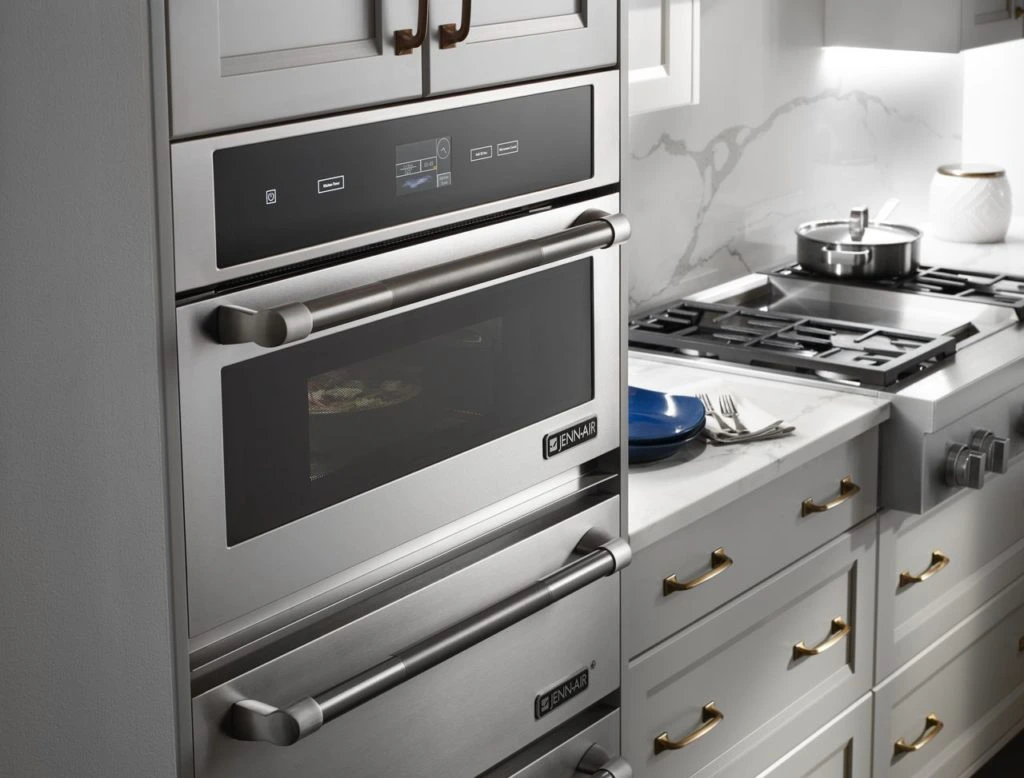
- Built-in Microwaves (Integrated Deployment): These units are engineered to be installed directly into kitchen cabinetry or wall units, often at eye level to optimize ergonomics. They frequently include specialized ventilation systems and “trim kits” to create a flush, seamless appearance. Advanced models also exist as Microwave drawers, which slide out from lower cabinets to provide easier access for heavy ceramic or glass dishes.
- Countertop Microwaves (Freestanding Deployment): These are autonomous appliances designed for placement on any flat horizontal surface with an electrical outlet. They rely on “plug-and-play” logistics, requiring zero professional installation or structural modifications to the kitchen.
- Ventilation and Power Dynamics: Built-in units often require dedicated ventilation channels behind the cabinetry to dissipate heat, whereas countertop models utilize integrated fans that exhaust directly into the room.
Economic Impact and Procurement Logistics
From a financial perspective, the choice between these two systems is a balance between low-cost flexibility and high-value property investment.
- Capital Expenditure (CAPEX): Countertop microwaves represent a minor operational cost, typically ranging from ₹5,000 to ₹18,000 for high-performance convection models. Built-in units are high-CAPEX assets, often starting at ₹35,000 and exceeding ₹1,00,000 for premium European brands.
- Installation and Maintenance: Built-in systems require professional measurements, custom cabinetry, and specialized labor, significantly increasing the “True Cost of Ownership.” In the event of a mechanical failure, replacing a built-in unit involves complex extraction and often requires sourcing an identical chassis size to fit the existing cabinet cavity.
Structural Vulnerabilities and Strategic Limitations
Despite their functional parity, both systems introduce specific operational friction into the kitchen environment.
- Countertop Clutter: Freestanding units consume valuable “horizontal real estate,” which can cripple workflow in high-density urban apartments. Every square inch occupied by a microwave is space lost for food preparation or secondary appliances.
- Serviceability Bottlenecks: Built-in microwaves are notoriously difficult to service. Accessing the internal circuitry or the high-voltage Magnetron often requires complete removal of the unit and the surrounding trim, resulting in higher repair labor costs.
- The Mobility Constraint: For individuals in the rental market, built-in units are a “lost asset,” as they cannot be moved to a new location. Countertop models provide the logistical freedom to reconfigure the kitchen layout as user needs evolve.
Conclusion
The strategic verdict for 2026 is based entirely on the kitchen’s architectural lifecycle. Choose a Built-in Microwave if you are executing a comprehensive kitchen renovation and prioritize a sleek, “invisible” aesthetic that maximizes counter space and property value. Choose a Countertop Microwave if you are a renter, a budget-conscious homeowner, or a high-frequency user who values the ease of replacement and maintenance. While built-in units signify a “premium” kitchen, the countertop model remains the definitive operational winner for flexibility and capital efficiency.