Enamelled cast iron cookware has become a modern kitchen essential, perfectly blending the superior heat retention of traditional cast iron with a smooth, non-reactive porcelain coating. Whether you are slow-cooking a traditional Indian dal or baking artisanal sourdough, enamel delivers consistent, gourmet results. However, because the surface is essentially a layer of glass fused to metal, improper cleaning is the leading cause of chips and dullness.
This guide explores how to maintain your cookware’s pristine finish while ensuring maximum longevity and food safety.
Step-by-Step: Cleaning Enamel Cast Iron Safely
1. The Cooling Phase
Never plunge a hot pan into cold water. Sudden temperature shifts cause thermal shock, which leads to microscopic cracks in the enamel that eventually turn into chips. Always allow the cookware to cool to room temperature naturally.
2. Standard Washing
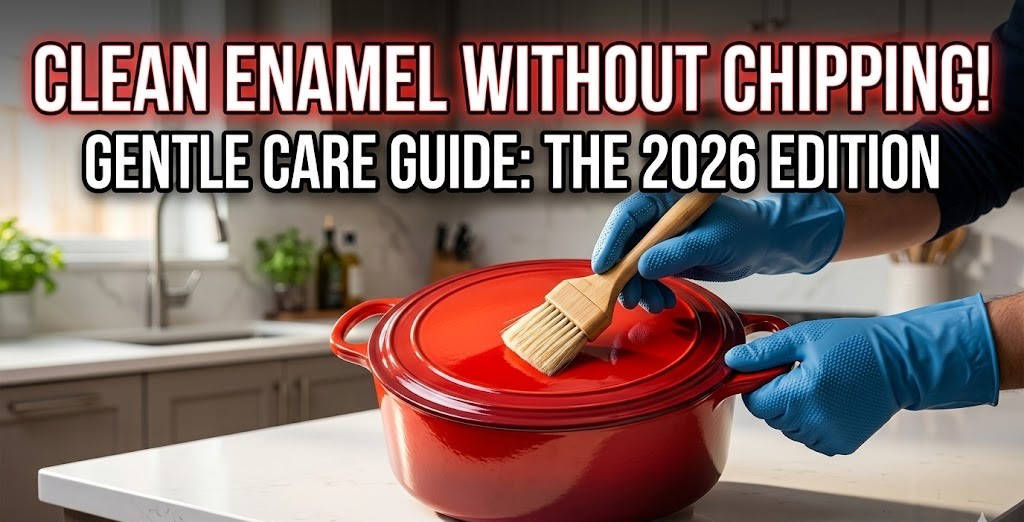
Once cooled, use warm water and a mild, bleach-free dish soap.
- Tools: Use a soft sponge, cloth, or a nylon brush.
- Avoid: Steel wool, metal scrubbers, and harsh scouring pads are the primary enemies of enamel; they create micro-scratches that trap food and dull the shine.
3. Dealing with Stubborn Stains
For “fond” or burnt-on gravies, do not scrape with metal spatulas. Instead:
- Soak: Fill the pan with warm, soapy water for 15–30 minutes.
- Baking Soda Paste: Create a paste of baking soda and water. Apply it to the stain and scrub gently with a soft sponge. Baking soda is a “gentle abrasive” that lifts stains without wounding the porcelain.
4. Drying and Storage
Wipe the cookware dry immediately with a soft towel. While the enamel is rust-proof, the exposed cast iron rim (where the lid sits) can still oxidize if left damp. When stacking, always place a felt protector or soft cloth between pans to prevent metal-on-enamel impact.
Comparison: Safe vs. Unsafe Cleaning Methods
| Feature | Safe Practice | Unsafe Practice (Avoid) |
| Temperature | Room temperature cooling | Sudden cold water immersion |
| Utensils | Silicone, wood, or nylon | Metal scrapers or knives |
| Scrubbers | Soft sponges, nylon brushes | Steel wool, copper mesh |
| Cleaning Agent | Mild dish soap, Baking soda | Bleach, oven cleaners |
| Dishwasher | Occasional (Handwash preferred) | Frequent high-heat cycles |
Professional Insights: Safety & Longevity
To keep your kitchen both efficient and healthy, follow these expert care guidelines:
- Chemical Safety: Avoid using heavy-duty degreasers or bleach. The FDA notes that harsh chemicals can linger on porous surfaces if not rinsed perfectly. Since enamel is non-porous, mild soap is all you need.
- Food Integrity: If your cooking surface has a large chip that exposes the raw iron, the Mayo Clinic notes that while iron leaching isn’t typically toxic, it can significantly alter the taste and color of acidic foods (like tomatoes).
- Ergonomic Handling: Cast iron is heavy. The American Chiropractic Association suggests using both handles (if available) when moving heavy cookware to prevent wrist strain, especially when the pan is full of liquid.
Conclusion
Cleaning enamel cast iron without damage is a matter of patience and the right tools. By avoiding thermal shock and abrasive metal tools, you preserve the non-reactive surface that makes this cookware so versatile. High-quality pieces, such as those from the Meyer Enamelled Collection, are designed for the rigors of Indian cooking, but a little mindful maintenance ensures they remain family heirlooms for generations.