Tag: Meal Prep.

  • Slow Cooker vs. Pressure Cooker: Which Should You Buy?

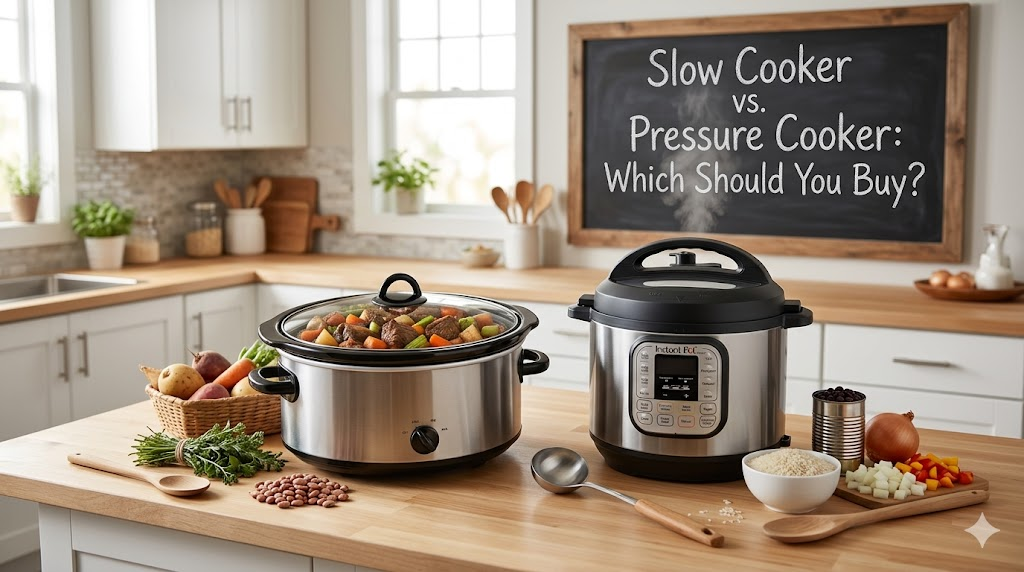
    Slow Cooker vs. Pressure Cooker: Which Should You Buy?

    Soups, stews, curries, and melt-in-the-mouth meats: both pressure cookers and slow cookers handle these cozy classics brilliantly. However, the way each appliance goes about cooking them is vastly different, meaning their benefits and drawbacks will cater to entirely different lifestyles.

    If you are wondering whether to add a slow cooker or a pressure cooker to your kitchen counter, here is a comprehensive breakdown of how these clever gadgets work, what they offer, and which one truly suits your daily routine.
    The Main Differences: Time vs. Planning

    The biggest difference between a slow cooker and a pressure cooker comes down to speed.

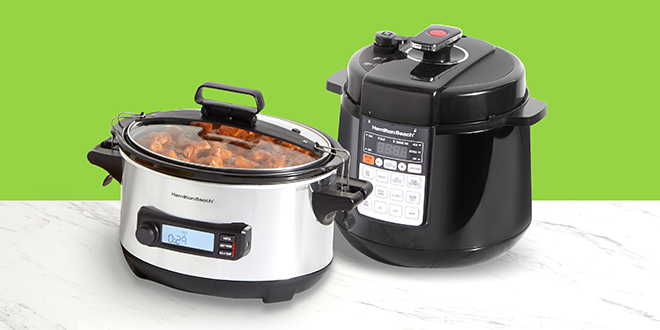
    While slow cookers use a gentle, low heat to simmer ingredients to perfection over several hours, pressure cookers seal the interior tightly under high pressure, trapping steam to whip up dinner incredibly rapidly.

    “The difference between the two types of cooker is mainly the time you have to spare,” explains Kathryn Farrell, buyer for Lakeland. “A pressure cooker can be up to 90% faster than cooking with a pan on the hob.”

    • The Slow Cooker Lifestyle: Requires you to plan your dishes in advance. You must be organized enough to prep your ingredients in the morning, but it provides the ultimate convenience of arriving home from work to a hot meal that is completely ready to eat.
    • The Pressure Cooker Lifestyle: Requires very little planning. It offers the convenience of deciding what you want for dinner at 5:00 PM and having it fully cooked, tender, and on the table by 5:45 PM.

    Slow Cooker Pros and Cons

    Pros:

    • True Hands-Free Cooking: Slow cookers are the masters of the ‘set and forget’ method. Pop in your ingredients, set the heat, and walk away for 8 hours.
    • Enhanced Flavors: As ingredients heat for hours, there is ample time for rich flavors to mingle, producing incredibly tasty results.
    • Energy Efficient: They use very low wattage, making them highly economical to run all day.

    Cons:

    • Requires Advance Planning: You have to start dinner right after breakfast.
    • Advance Prep Work: If your recipe includes meat or onions, you usually have to brown them in a separate pan on the hob before adding them to the slow cooker (unless your model features a sauté function).
    • Mushy Textures: Certain vegetables can become overly soft and mushy if left in the pot for too long.

    Pressure Cooker Pros and Cons

    Pros:

    • Lightning Fast: They produce tender meat, perfectly cooked pulses, and hearty stews in a fraction of the time.
    • Locks in Nutrients: “The shorter cooking time and sealed environment help to preserve vitamins and minerals that can be lost through prolonged cooking,” reveals Sarah Farquharson from Instant Pot.
    • Versatile: Most modern electric pressure cookers (often called multicookers) can also sauté, steam, and even make yogurt.

    Cons:

    • Steeper Learning Curve: Pressure cookers are less ‘set and forget.’ They require you to understand pressure release valves and specific liquid ratios.
    • More Expensive: While a basic slow cooker is very cheap, a quality electric pressure cooker is a larger upfront investment.

    Head-to-Head Comparison

    FeatureSlow CookerPressure Cooker
    Cooking SpeedVery Slow (4 to 8 hours)Very Fast (15 to 45 minutes)
    Best ForLarge families, batch cooking, stews.Busy professionals, last-minute meals, risotto.
    Hands-On TimeHigh at the start (morning prep).Medium (requires some monitoring).
    Price Range£30 – £200£60 – £200+

    Which is Best For You?

    Buy a Pressure Cooker if: You have a busy lifestyle with zero time for morning food prep before dashing out the door. If you want the ability to make hearty, comforting meals from scratch after you get home from work, a pressure cooker is your best friend.

    Buy a Slow Cooker if: You are cooking for a large family and everyone eats at different times. Slow cookers are ideal for batch cooking on weekends and keeping food warm safely for hours on end.

    The Ultimate Compromise: The Multicooker

    What if you cannot decide? If you want the convenience of arriving home to a slow-cooked stew on a Tuesday, but need to pressure-cook a fast batch of rice on a Wednesday, invest in a hybrid multicooker (like the Ninja Foodi or Instant Pot).

    A multicooker saves on both space and cost, offering a massive range of techniques in a single, versatile appliance, giving you the luxury of both time-saving speed and slow-cooked comfort!
  • Blenders vs. Food Processors: Which is Right for Your Kitchen?

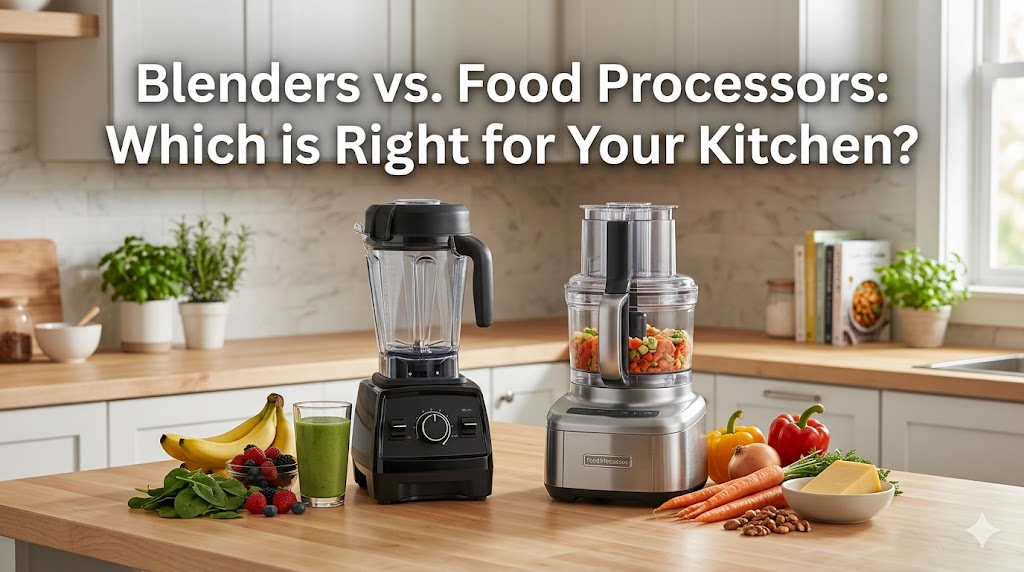
    Blenders vs. Food Processors: Which is Right for Your Kitchen?

    If you enjoy getting creative in the kitchen, you might be looking for a new appliance to take your culinary flair to the next level. However, choosing between a food processor and a blender can be rather confusing, with many people mistakenly believing that they offer the exact same qualities and functions.

    To help you make the right investment, we consulted kitchen appliance experts to expose the strengths and weaknesses of each gadget. Whether you are hunting for the best blender for morning smoothies or a processor to make weekly meal prep a breeze, here is everything you need to know.

    What Can a Blender Do That a Food Processor Can’t?

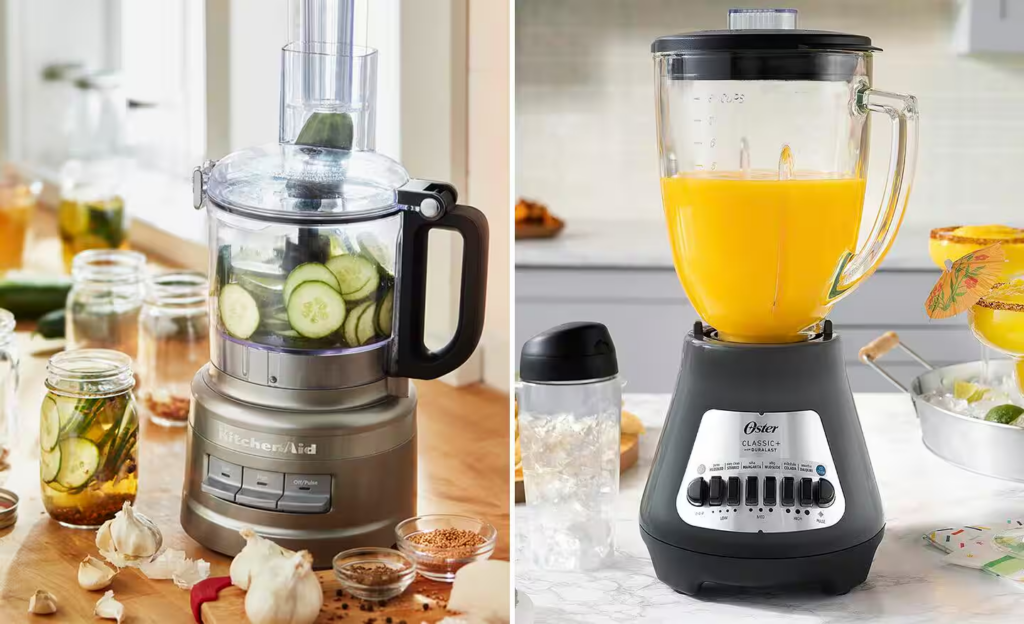
    Thanks to the design of its tall jug and upward-facing blades, a blender can easily transform ingredients into smoothies, drinks, dips, soups, and sauces.

    “Blenders, in general, can produce a smoother consistency more quickly for low viscosity liquids,” explains Stephen Catherall, UK sales manager at Magimix. “This is great for things like smoothies with harder and tougher ingredients and silky-smooth soups.”

    Furthermore, many high-powered blenders can effortlessly crush ice, making them the perfect tool for finishing off summer cocktails or frozen drinks.

    What Can a Food Processor Do That a Blender Can’t?

    Due to the rounder, wider bowl and S-shaped blade, a food processor is built to tackle ingredients in a completely different way.

    “Any food that you would consider cutting with a knife on a chopping board will produce better results in a food processor than in a blender,” says Stephen. “Think chopping herbs, onions, carrots, garlic, celery, or nuts.” Even meat can be chopped easily in a food processor as it doesn’t get stuck under the blades.

    Food processors excel at:

    • Grating & Slicing: Perfect for shredding cheese, carrots, beetroot, or slicing courgettes into ribbons for quick, tasty salads.
    • Kneading Dough: Food processors knead dough successfully, whereas blender blades spin far too fast for effective dough kneading.
    • Dicing & Whisking: Many processors come with specialized attachments to help you achieve professional-level food prep.

    Pros and Cons: The Head-to-Head Comparison

    The Food Processor

    “Food processors offer fantastic multifunctionality in the kitchen and can help you produce a wide variety of dishes,” explains Steven Carter-Bailey, food expert at ProCook. “They are better at producing coarse or fine consistencies, as well as everything in between—you have more control than with a blender.”

    • Pros: Highly versatile, great for solid foods, multiple attachments for slicing/grating, speeds up meal prep.
    • Cons: Often large and bulky to store, can be fiddly to clean, and some models produce quite a lot of noise.

    The Blender

    “One advantage of a blender is that it has a smaller footprint, so it can sit neatly in one area of the kitchen worktop,” notes Steven. “Blenders are also quick and easy to clean, with the jug often being dishwasher safe.”

    • Pros: Quick and easy to use, perfect for silky smooth liquids, compact footprint, great for crushing ice.
    • Cons: Blades are not as sharp (making them less effective for thick/dry ingredients), and the design can lead to blockages if there isn’t enough liquid in the jug.

    How Much Should You Spend?

    • Blenders: Prices start around £29.99 for personal, on-the-go bullet models and can increase to £600 for robust, professional-grade jug styles.
    • Food Processors: Budget solutions start around £74.99, with prices ranging up to £800+ for expert models featuring a massive host of attachments and large capacities.

    Generally, blenders are more affordable. However, if your main goal is cutting down on daily food preparation and chopping time, a food processor is a highly justifiable purchase.

    Which One is Best For You?

    The right choice comes down entirely to your cooking habits:

    • Choose a Blender if: You frequently prepare your own sauces, purees, and smoothies. If you love healthy beverages on the go or need to crush ice, a blender is the perfect addition to your kitchen. Expert Pick: Salter NutriPro for compact power, or the Salter PowerPro for large batch blending.
    • Choose a Food Processor if: You want to conquer diverse cooking tasks like chopping, slicing, shredding, and baking. It is the undisputed champion for home bakers, busy families, and budding kitchen connoisseurs. Expert Pick: The Magimix 4200XL (for average families) or 5200XL (for large crowds).