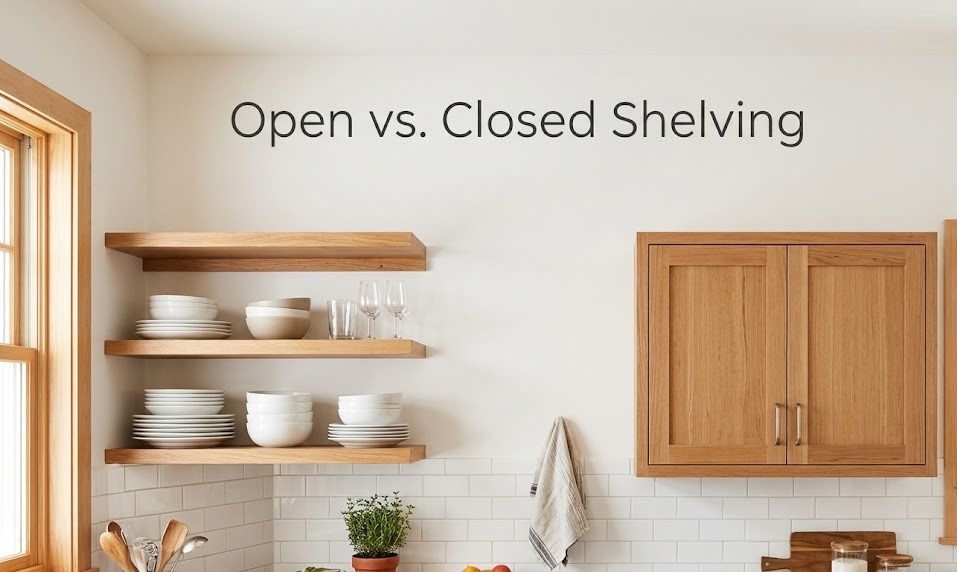
In the domestic logistics and interior architecture sectors of 2026, the kitchen operates as the most high-density, multi-functional zone within a residence. Particularly in environments characterized by high-heat, heavy-spice culinary traditions (such as Indian kitchens), the selection of storage infrastructure directly impacts daily operational efficiency and sanitation. This intelligence brief deconstructs the architectural debate between open shelving and closed cabinetry, analyzing the maintenance liabilities, ergonomic workflows, and material requirements of each system.
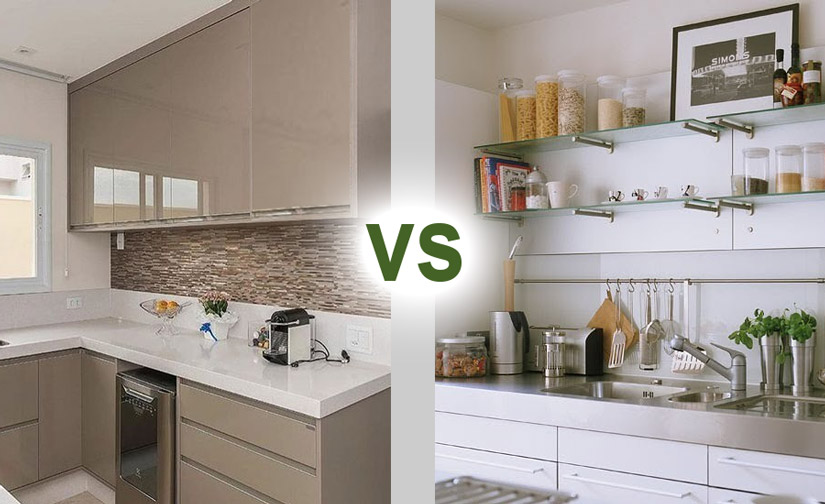
The Open Shelving Architecture (The Display Model)
Open shelving relies on floating platforms and exposed racks to store and display culinary assets.
- Operational Advantages: This architecture creates a visually expansive, airy environment, which is highly strategic for compact urban apartments. It provides frictionless, immediate access to high-frequency items without the ergonomic barrier of opening and closing doors.
- Structural Vulnerabilities: The primary liability of open shelving is its severe maintenance requirement. In kitchens utilizing heavy oils, spices, and high-heat cooking, aerosolized grease and dust settle rapidly on exposed surfaces. Furthermore, this model demands absolute organizational discipline; it physically prohibits the concealment of mismatched or visually chaotic storage containers.
The Closed Cabinet Architecture (The Concealment Model)
Closed cabinetry utilizes traditional wall-mounted or under-counter frameworks secured by opaque doors or shutters.
- Operational Advantages: This is the pragmatic, low-maintenance architecture. It effectively seals internal inventory from environmental grease and dust, drastically reducing cleaning protocols. More importantly, it provides a visual shield, allowing for the rapid, disorganized storage of bulky cookware (like pressure cookers) or mismatched bulk containers without degrading the aesthetic integrity of the room.
- Structural Vulnerabilities: Heavy deployment of closed upper cabinets can make a small kitchen feel visually oppressive or claustrophobic. It also introduces slight mechanical friction into the daily workflow by requiring users to continuously open and close doors to locate items.
The Hybrid Deployment Strategy
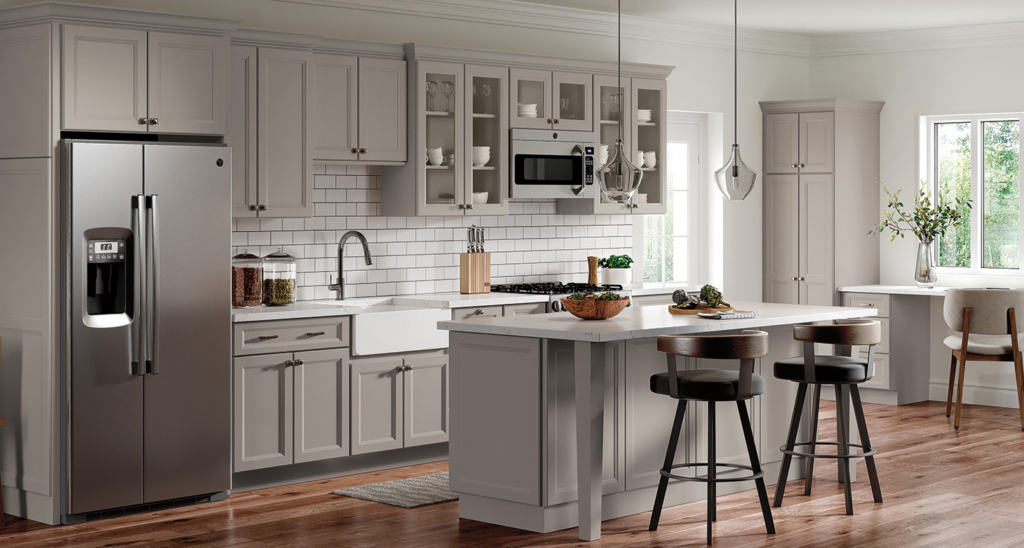
From a strategic interior design perspective, strict adherence to a binary choice is an operational failure. The most effective 2026 architecture is the “Balanced Middle” or hybrid deployment.
- Logistical Execution: Designers allocate closed, heavy-duty lower cabinetry for the concealment of large, cumbersome, or unsightly items (pots, pans, bulk staples). Conversely, open shelving is deployed strategically at eye level strictly for highly curated, frequently used items (daily coffee mugs, matching spice decanters, or aesthetic décor). This hybrid model maximizes functional storage volume while maintaining a light, open visual footprint.
Material Infrastructure and Environmental Resilience
Regardless of the chosen architecture, the underlying hardware—specifically the structural plywood—must withstand severe environmental stress.
- Tensile Strength: Open shelving, lacking the structural reinforcement of a closed box frame, requires highly calibrated, superior-strength plywood to prevent warping or structural failure under the weight of heavy ceramics or glass jars.
- Biological and Chemical Resistance: In humid or tropical environments, the core material must possess industrial-grade termite and borer resistance. Furthermore, as indoor air quality regulations tighten in 2026, the use of zero-emission, eco-friendly finishes is a mandatory health and safety protocol for domestic food preparation zones.
Conclusion
The strategic verdict confirms that kitchen storage cannot be dictated solely by aesthetic trends; it must be engineered around the user’s operational reality. Open shelving is optimal for disciplined individuals who prioritize visual space and accessibility but are willing to absorb the high cleaning overhead. Closed cabinetry is the ultimate pragmatic choice for high-volume, chaotic cooking environments. Ultimately, deploying a hybrid system built on resilient, pest-resistant, zero-emission infrastructure provides the highest return on investment for the modern, multi-functional kitchen.