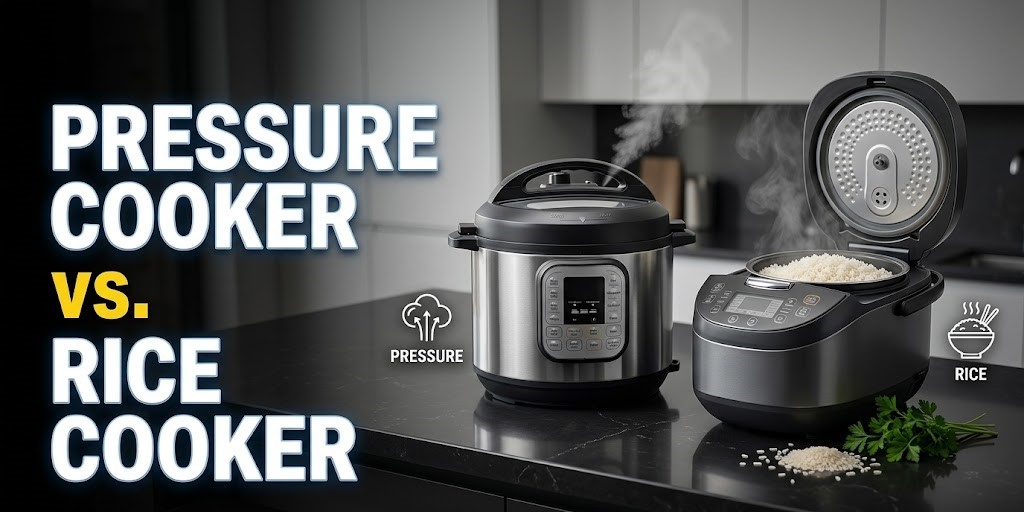
In the modern culinary landscape of 2026, the strategic deployment of kitchen capital requires an understanding of thermodynamic appliance mechanics. The decision between acquiring a Pressure cooker and a Rice cooker dictates a household’s daily operational efficiency, energy expenditure, and menu versatility. This intelligence brief deconstructs the physical mechanics, economic trade-offs, and behavioral implications of automated grain preparation versus high-pressure thermal cooking.
Historical Context and Foundational Evolution
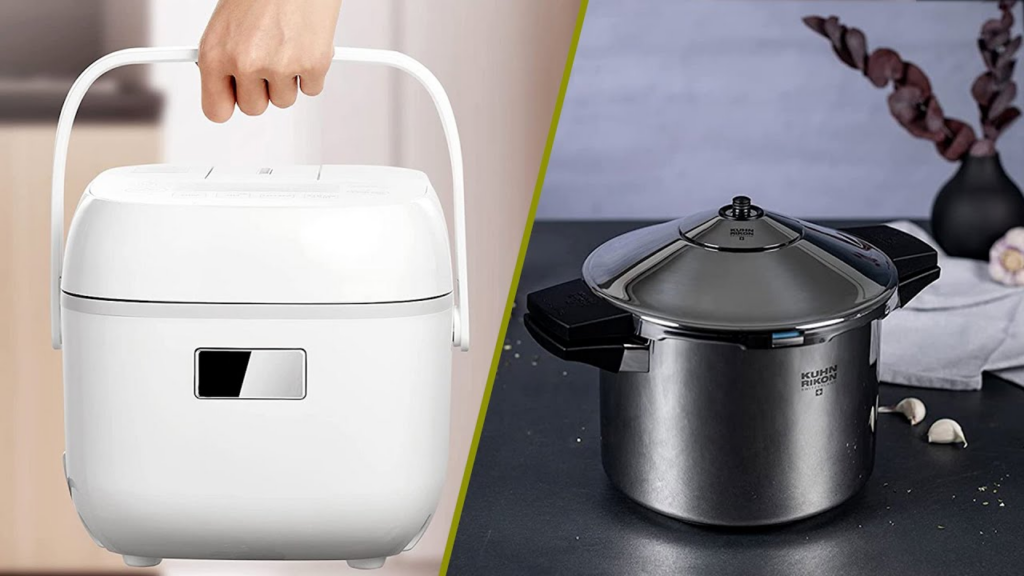
The mechanization of domestic cooking represents a critical shift in household labor economics. The pressure cooker, conceptualized in the 17th century by Denis Papin, was popularized post-World War II as a method to tenderize cheap cuts of meat rapidly. It relied entirely on manual monitoring. Conversely, the automatic electric rice cooker, commercialized in Japan in the 1950s, introduced the concept of autonomous culinary hardware. It shifted the paradigm from active human supervision to passive, sensor-driven execution. By 2026, both appliances have integrated modern safety valves and digital logic boards, yet they remain anchored to their fundamentally divergent thermal philosophies.
Technical Mechanics and Thermodynamic Architecture
The structural architecture of these two appliances serves completely different thermodynamic objectives.
- The Pressure Cooker (Thermal Acceleration): This device operates on the principles of Gay-Lussac’s law. By creating an airtight seal, the internal steam pressure builds, raising the boiling point of water up to approximately 250°F (121°C). Mechanically, this hyper-thermal environment drives moisture into food fibers, reducing cooking times by up to 70% and accelerating the breakdown of tough collagens in meats or complex starches in legumes.
- The Rice Cooker (Automated Phase-Change): This device is an automated thermal logic board. It consists of a heating element, a cooking pan, and a thermostat. It relies on the physics of phase change; water cannot exceed 212°F (100°C) until it evaporates. Once the rice absorbs all the water, the temperature at the bottom of the pan spikes. The thermostat detects this immediate temperature rise and autonomously triggers the mechanical switch, shifting the device from “boil” to “keep warm,” ensuring perfectly cooked grains without human intervention.
Economic Impact and Energy Expenditure
From a microeconomic perspective, both appliances represent energy-efficient alternatives to prolonged stovetop boiling, but they achieve this through different vectors.
- Pressure Cooker Economics: This appliance minimizes energy consumption by drastically reducing the total time the heat source is active. Because it is highly versatile (capable of cooking stews, beans, meats, and grains), it yields a high Return on Investment (ROI) by consolidating the functions of multiple pots and pans, provided the user is willing to actively monitor the process.
- Rice Cooker Economics: While it uses electricity for a longer duration than a pressure cooker, it minimizes labor costs. The economic value is measured in time reclaimed; the user is freed to execute other tasks while the appliance operates autonomously.
Sociocultural and Behavioral Implications
The selection between these appliances reflects distinct behavioral demographics and culinary priorities in 2026. The rice cooker appeals to households that prioritize consistency, automation, and a grain-heavy diet (common in Asian and Latin American cuisines). It supports a “set-it-and-forget-it” domestic workflow. In contrast, the manual pressure cooker appeals to the pragmatic, multi-cuisine cook who prioritizes speed and raw versatility over automation. It requires active engagement, mechanical understanding of steam release valves, and timing precision.
Regulatory, Ethical, and Safety Frameworks
The manufacturing of these appliances involves strict consumer safety regulations, primarily due to the inherent dangers of high-pressure steam and electrical heating elements. Modern pressure cookers must incorporate redundant mechanical fail-safes (such as controlled gasket-release systems and metallic safety plugs) to prevent explosive decompression. Ethically, the promotion of hard-anodized or high-grade stainless steel in both appliances prevents the leaching of heavy metals or toxic non-stick chemicals (PFAS) into food, aligning with 2026 mandates for bio-compatible cookware.
Competitive Analysis and Strategic Positioning
In the domestic hardware market, these devices occupy adjacent tactical niches.
- The Pressure Cooker competes on the axis of speed and multi-utility. It is the ultimate tool for rapid meal prep across a wide spectrum of ingredients but requires a learning curve and active monitoring.
- The Rice Cooker competes on the axis of flawless automation and single-task perfection. It guarantees perfectly textured grains with zero supervision but lacks the thermal capability to accelerate the cooking of dense proteins or legumes. For optimal kitchen efficiency, the strategic consensus frequently dictates the concurrent deployment of both systems: the rice cooker autonomously prepares the carbohydrate base, while the pressure cooker rapidly prepares the complex protein or vegetable main course.
Predictive Modeling: The Future of Culinary Hardware (2026–2030)
Predictive modeling for 2030 indicates a rapid convergence of these two technologies into “Smart Multi-Cookers.” While multi-cookers exist today, future iterations will integrate advanced AI thermal profiling. These devices will autonomously detect the weight, moisture content, and density of the ingredients placed inside (via localized load cells and steam sensors). The appliance will then automatically determine whether to deploy high-pressure steam for rapid breakdown or utilize automated phase-change logic for delicate grains, completely eliminating the need for human input regarding time or pressure settings.
Conclusion
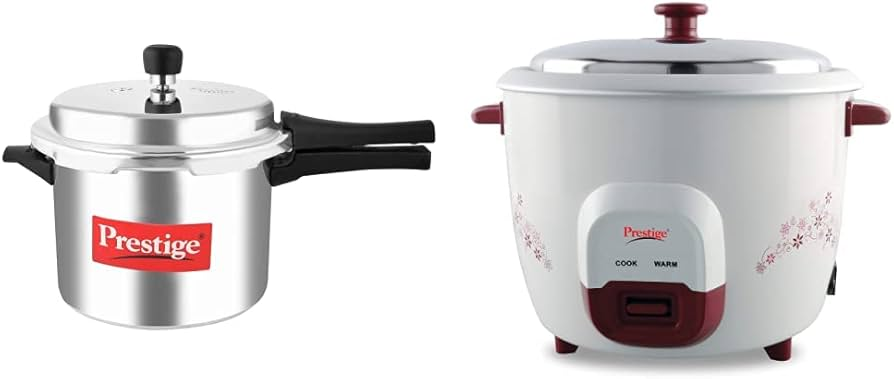
The strategic debate between the Pressure Cooker and the Rice Cooker in 2026 is fundamentally a calculation of user engagement versus culinary versatility. The pressure cooker is a high-speed thermal engine that handles everything from tough meats to dense legumes, rewarding the active cook with drastically reduced meal prep times. The electric rice cooker is an autonomous robot dedicated to the flawless, hands-free preparation of grains. To optimize a modern kitchen, consumers must align their hardware investment with their primary dietary habits: choose the pressure cooker for rapid, varied meal execution, or the rice cooker for guaranteed, unsupervised carbohydrate consistency.