Tag: Coffee Maker

  • French Press vs. Coffee Maker: Which Is the Right Choice for Me?

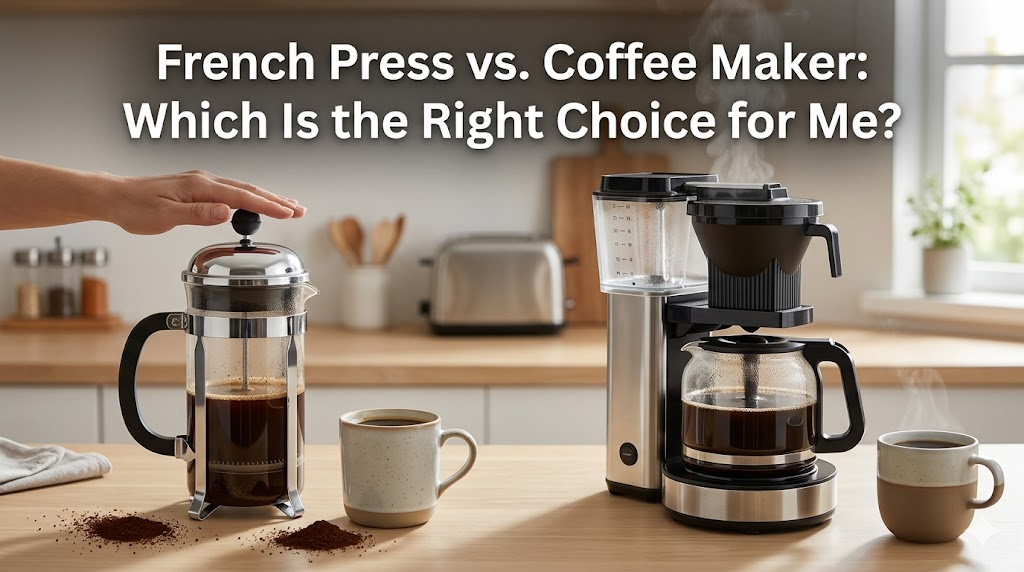
    French Press vs. Coffee Maker: Which Is the Right Choice for Me?

    When it comes to brewing the perfect cup of coffee, there is no single right answer. It all comes down to your personal preference and your daily lifestyle.

    If you have a busy morning routine and need your espresso to fit in seamlessly with minimal effort, a coffee machine will be an ideal addition to your kitchen. However, if you have the time to enjoy your coffee at a slower pace and would like to put your barista skills to good use, a traditional French press can provide a much more enriching experience.

    Here is a comprehensive look at the cost, convenience, and flavour profiles of both brewing methods to help you find the perfect match for your mornings.

    Understanding the Brewing Methods
    The Coffee MachineCoffee machines are electric appliances that create coffee via a pod system or by grinding beans in a built-in grinder. In both cases, high-pressure steam and hot water are forced through the ground coffee to drip into your cup. You can choose from different pods to create cappuccinos, espressos, and lattes, giving you a massive variety of drinks at the touch of a button.

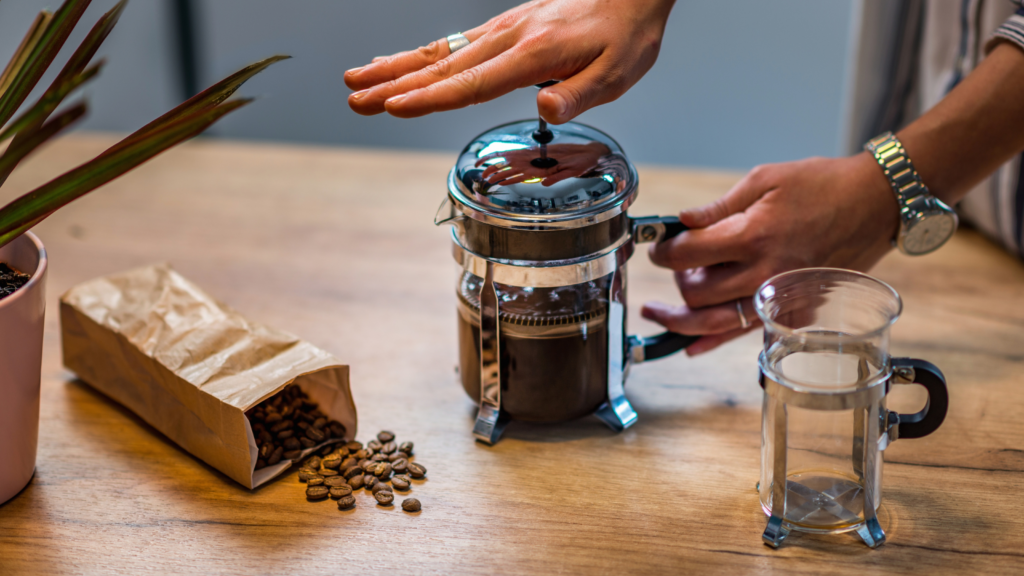
    The French Press When using a French press (or cafetière), you grind the coffee beans just before you need them to ensure the freshest flavour. You add the coarse grounds to the pot, followed by nearly boiling water, and let it steep. After about four minutes, you push the metal plunger to the bottom of the pot to separate the grounds, and your coffee is ready to pour.

    The French Press: Pros, Cons, and Value

    A French press typically creates a brew that is much richer and bolder in flavour. It also allows for total versatility, as you can adjust the strength by changing the amount of coffee grounds or tweaking the steeping time.

    Pros:

    • Eco-Friendly and Affordable: With glass or stainless steel designs starting at under £22, it is highly accessible. It also creates zero waste, unlike plastic pod-based machines.
    • Batch Brewing: A standard French press can make around four drinks at once, making it ideal if you are serving multiple people.
    • Space-Saving: It is compact, easy to clean, and takes up minimal cupboard space.

    Cons:

    • Time-Consuming: It requires a more hands-on approach and takes longer to create your morning brew.
    • Sediment: Because it uses a metal mesh filter rather than paper, some fine sediment may slip through into your cup, which deters some coffee lovers.

    The Coffee Machine: Pros, Cons, and Value

    The best coffee machines are the ideal choice for those with busy lifestyles. Convenient and easy to use, the touch of a button is all that is needed to brew the perfect cup while you get on with your day.

    Pros:

    • Speed and Convenience: Delivers your favourite hot drink in seconds with virtually no physical effort.
    • Consistency: Automatic machines deliver the exact same high-quality shot of coffee time after time.
    • Variety: Easily switch between different types of coffee beverages depending on your mood.

    Cons:

    • Higher Costs: Coffee machines command a higher price point, with basic models starting around £100 and premium models exceeding £300. You also have the recurring expense of buying specific capsules or filters.
    • Environmental Impact: Pod-based machines create a significant amount of waste after every single drink.
    • Bulky Design: Many automatic espresso machines feature large footprints that take up valuable kitchen counter space.

    Expert Tips for the Perfect Brew

    Whichever method you choose, technique is everything. Here is what the professionals recommend:

    Mastering the French Press David Cutler, head of training at Lavazza, recommends sticking to a 1:16 coffee-to-water ratio. This works out to 15 grams of medium-to-coarse coffee per 250ml mug, brewed for exactly four minutes. Anything finer can result in over-extraction and a muddy cup.

    Additionally, Ben Fishlock, barista at SOroast, warns against using fully boiling water. “You will scorch the flavour out of your coffee. Stick to about 91 degrees, right as the kettle starts making a bit of noise.”

    Mastering the Coffee Machine If you are using a manual or semi-automatic machine, precision is key. Espresso should typically brew somewhere around the 20 to 30-second mark. If it runs too fast, you need to grind your beans finer; if it is too slow, adjust them coarser.

    The Final Verdict

    If you are a minimalist who prefers simplicity, has a tighter budget, and enjoys taking the time to refine your taste profile, a French press is the perfect solution for your coffee cravings.

    But for those with a fast-paced life in a busy household, where you want café-style variety (like lattes and flat whites) with absolute minimal effort, investing in an automatic coffee machine will tick every single box.

    Also Read : Slow Cooker vs. Pressure Cooker: Which Should You Buy?
  • French Press vs. Coffee Maker: Which Is the Right Choice for Me?

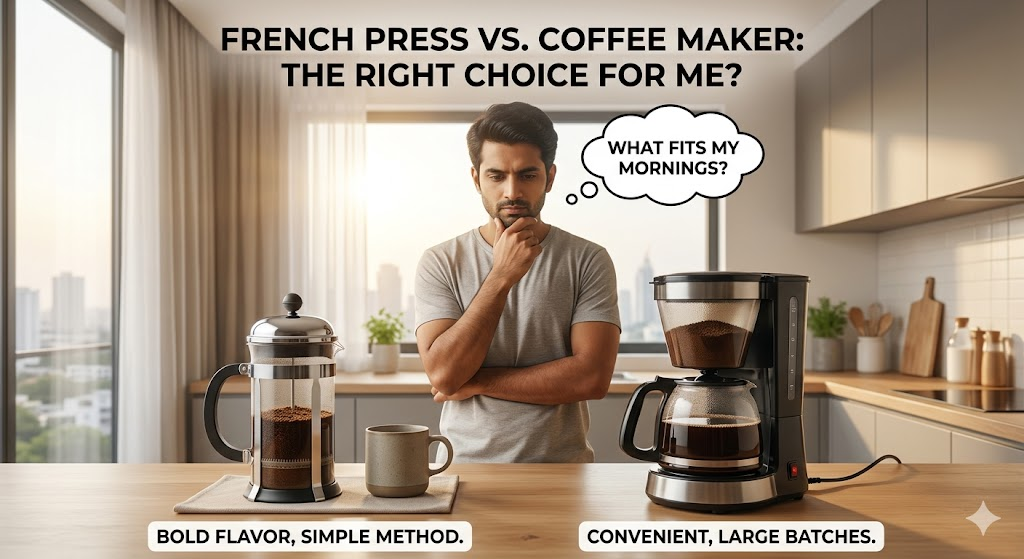
    French Press vs. Coffee Maker: Which Is the Right Choice for Me?

    When it comes to brewing the perfect cup of coffee, there is no one-size-fits-all solution; it all comes down to your personal taste and your daily lifestyle.

    If you have a chaotic morning routine and need your caffeine fix seamlessly with minimal effort, an automatic coffee maker will be a lifesaver. However, if you prefer a slower pace, want to hone your barista skills, and crave a bolder flavor profile, the traditional French press (or cafetière) might be exactly what you need.

    Here is a comprehensive breakdown of the cost, convenience, and flavor of both brewing methods to help you find the perfect match for your kitchen.

    The French Press: For the Coffee Purist

    A French press creates coffee by steeping coarse coffee grounds in nearly boiling water, followed by pressing a metal mesh filter down to separate the grounds from the liquid.

    The Pros:

    • Richer Flavor: Because it doesn’t use a paper filter, a French press allows the coffee’s natural oils to remain in your cup, resulting in a robust, full-bodied flavor.
    • Highly Customizable: You have complete control over the steeping time and the coffee-to-water ratio.
    • Eco-Friendly & Affordable: There is zero waste (no plastic pods or paper filters), and high-quality glass or stainless steel presses can easily be found for under £30.
    • Batch Brewing: A standard French press makes around four cups at once, perfect for entertaining or fueling up for a long morning.
    • Space-Saving: It is compact and easily stored in a kitchen cupboard.

    The Cons:

    • More Effort: It requires boiling water separately, timing the steep, and manually plunging.
    • Sediment: The metal mesh filter allows some micro-grounds (sediment) to slip through, which some coffee drinkers find gritty.
    • Cleanup: Scooping out wet grounds and washing the plunger is more tedious than tossing a pod.

    The Coffee Maker: For the Busy Bee

    Whether you choose a convenient pod-based model (like Nespresso) or a fully automatic espresso machine, these appliances use high-pressure steam and hot water to brew your drink at the touch of a button.

    The Pros:

    • Ultimate Convenience: Insert a pod or press a button, and you have coffee in under a minute. Perfect for fast-paced mornings.
    • Consistency: Automatic machines deliver the exact same shot of coffee time after time.
    • Drink Variety: Many machines can create espressos, cappuccinos, lattes, and flat whites with built-in milk frothers.
    • Easy Cleanup: Pod machines require almost zero daily cleanup, while automatic bean-to-cup machines often have self-cleaning cycles.

    The Cons:

    • Higher Price Tag: Quality coffee machines require a significant upfront investment (often ranging from £100 to over £300+).
    • Ongoing Costs & Waste: Buying proprietary coffee pods is expensive and creates a substantial amount of environmental waste compared to buying bags of coffee beans.
    • Counter Space: Espresso machines are bulky and require dedicated countertop real estate.

    Head-to-Head Comparison

    FeatureFrench PressCoffee Maker (Pod/Auto)
    Brew Time4–5 MinutesUnder 1 Minute
    Flavor ProfileBold, heavy, full-bodiedClean, consistent, varied
    Upfront CostLow (Under £50)High (£100 – £300+)
    Eco-FriendlyYes (Zero waste)No (Pod waste)
    Kitchen SpaceMinimalRequires dedicated counter space

    Expert Tips for the Perfect Brew

    Whichever method you choose, technique matters. Here is how the pros get the most out of their morning brew:

    Mastering the French Press

    • The Golden Ratio: David Cutler, Head of Training at Lavazza, recommends a 1:16 coffee-to-water ratio (about 15 grams of medium-to-coarse ground coffee per 250ml of water).
    • Watch the Temperature: “The biggest tip is to not fully boil the kettle, as you will scorch the flavour out of your coffee,” warns Ben Fishlock from SOroast. Aim for about 91°C—just as the kettle starts making a bit of noise—and brew for exactly four minutes.

    Mastering the Coffee Machine

    • Dial in the Grind: If you are using a manual or semi-automatic espresso machine, precision is key. Espresso should brew in about 20–30 seconds. If your coffee pours out too fast, your grind is too coarse; if it drips out too slowly, your grind is too fine.

    The Final Verdict

    If you are a minimalist who prefers simplicity, wants to save money, and enjoys the relaxing ritual of brewing a bold cup of coffee, the French press is your best bet.

    However, if you live a fast-paced life, want a wide variety of café-style drinks (like lattes and cappuccinos), and prioritize speed and convenience above all else, investing in an automatic coffee maker will be the perfect addition to your kitchen.