Tag: Culinary Automation

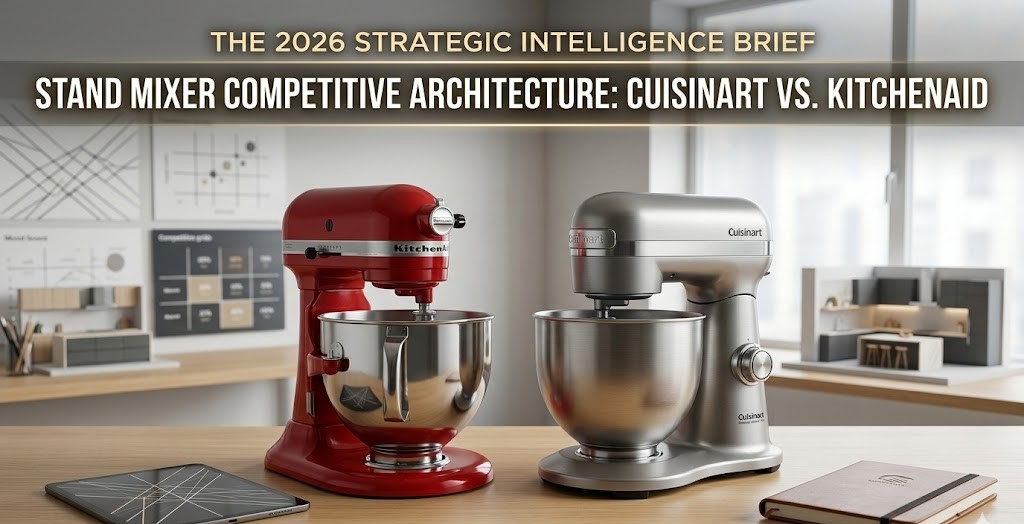
  • The 2026 Strategic Intelligence Brief: Stand Mixer Competitive Architecture – Cuisinart vs. KitchenAid

    The 2026 Strategic Intelligence Brief: Stand Mixer Competitive Architecture – Cuisinart vs. KitchenAid

    In the consumer appliance sector of 2026, the stand mixer remains a high-value anchor point for domestic and semi-professional kitchens. The market is functionally a duopoly dominated by Cuisinart and KitchenAid. Choosing between these two brands requires a strategic analysis of mechanical engineering, motor torque efficiency, aesthetic design, and capital investment. This intelligence brief deconstructs the competitive advantages, structural limitations, and microeconomic positioning of both culinary hardware platforms.

    1. Historical Context and Foundational Architecture

    The stand mixer is a foundational piece of kitchen engineering, designed to mechanize the labor-intensive tasks of whipping, beating, and Kneading. KitchenAid (owned by Whirlpool Corporation) is the legacy incumbent, having introduced its iconic Model “H” in 1919. Its design philosophy is rooted in heavy, generational-use cast metal and “direct-drive” transmission. Cuisinart, operating under Conair Corporation, entered the stand mixer market much later, bringing a distinct philosophy of modern precision, lighter-weight chassis design, and digital integration (such as built-in timers), appealing to a more pragmatic, budget-conscious demographic.

    2. Technical Mechanics and Motor Architecture

    The structural mechanics and motor power of these two brands present the most critical point of divergence.

    • Cuisinart Mechanics: Cuisinart models frequently utilize a standard belt-driven or indirect transmission system but compensate with high raw wattage. Their motors typically range from 500 to 1,000 watts. This high wattage allows them to maintain consistent speed under load. Furthermore, Cuisinart’s integration of digital timer functions allows for precise, unattended mixing intervals.
    • KitchenAid Mechanics: KitchenAid utilizes a Direct-drive mechanism (specifically in their bowl-lift and premium tilt-head models). While their wattage appears lower on paper—ranging from 250 Watts in the Classic Series to 970 Watts in the Professional Series—the direct-drive transmission channels kinetic energy far more efficiently from the motor to the beater. This allows a 325-watt KitchenAid to generate equivalent or superior torque compared to a higher-wattage, indirect-drive competitor when facing dense bread doughs.

    3. Economic Impact and Capital Expenditure (CAPEX)

    From a microeconomic perspective, the acquisition of a stand mixer is a significant Capital Expenditure (CAPEX) for the home baker.

    • The Cuisinart Economy: Cuisinart operates on a “Value-Maximized” pricing strategy. They offer high-wattage motors, large bowl capacities (5.5 to 7.0 Quarts), and robust performance at a significantly lower initial price point than KitchenAid. This makes Cuisinart the optimal economic choice for consumers requiring high-capacity baking capability without a luxury budget.
    • The KitchenAid Economy: KitchenAid demands a premium initial CAPEX. However, this is rationalized as a long-term investment. The heavy cast-zinc construction and repairable internal gear systems ensure a lifespan measured in decades. Furthermore, the universal “Power Hub” interface at the front of the mixer—which remains compatible with attachments dating back to the 1930s—protects the consumer’s investment in accessories (meat grinders, pasta rollers) even if the base unit is upgraded.

    4. Sociocultural and Behavioral Implications

    Socioculturally, the stand mixer has evolved from a pure utility tool into a high-visibility kitchen status symbol. KitchenAid dominates this behavioral sphere. The brand’s decision to offer dozens of custom colors and limited-edition finishes transforms the appliance into a central element of interior design. It signals domestic proficiency and artisanal aspiration. Cuisinart, while sleek and modern, is typically viewed through a pragmatic lens; it is selected for its functional utility and space-saving, lightweight footprint rather than its aesthetic prestige.

    5. Regulatory, Ethical, and Ecological Frameworks

    Both brands must adhere to stringent manufacturing and safety regulations, particularly concerning food-contact surfaces. The primary ecological distinction lies in their manufacturing lifecycles. KitchenAid’s heavy reliance on cast metal and repairable, mechanical gearboxes aligns with “Right to Repair” ethics and reduces electronic waste, as the machines can frequently be rebuilt rather than replaced. Cuisinart models, while durable, utilize more lightweight composites and integrated digital boards, which can complicate long-term repairability if electronic components fail, potentially accelerating their path to e-waste.

    6. Competitive Analysis and Strategic Positioning

    In the 2026 market matrix, the brands are positioned to capture distinct consumer profiles:

    • Cuisinart: Positioned for the pragmatist. It wins on high capacity (often boasting larger standard bowls than entry-level KitchenAids), modern features (digital timers), lighter weight for easy storage, and immediate cost-efficiency.
    • KitchenAid: Positioned for the traditionalist and semi-professional. It wins on unyielding durability, efficient direct-drive torque for heavy doughs, an unparalleled, universally compatible attachment ecosystem, and premium aesthetic status.

    7. Predictive Modeling: The Future of the Stand Mixer (2026–2030)

    Looking toward 2030, predictive models indicate a convergence of these two distinct philosophies driven by smart technology. We anticipate future KitchenAid models will be forced to adopt the digital conveniences pioneered by brands like Cuisinart, such as integrated load cells (built-in scales) and automatic shut-off timers. Conversely, Cuisinart will likely need to adopt more efficient, direct-drive brushless DC motors to reduce raw wattage draw while maintaining high torque. Ultimately, the market will demand appliances that combine the generational durability of a KitchenAid with the digital precision of a Cuisinart.
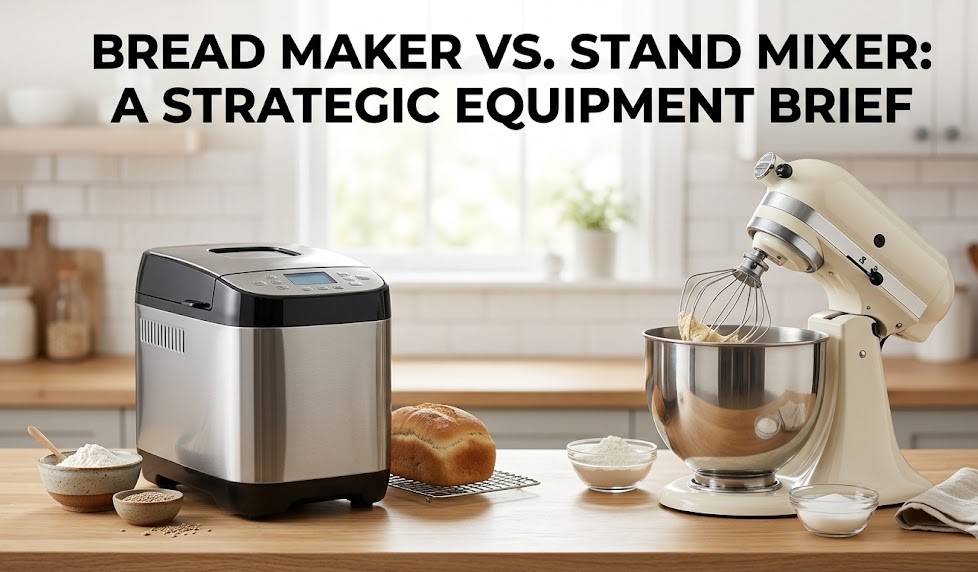
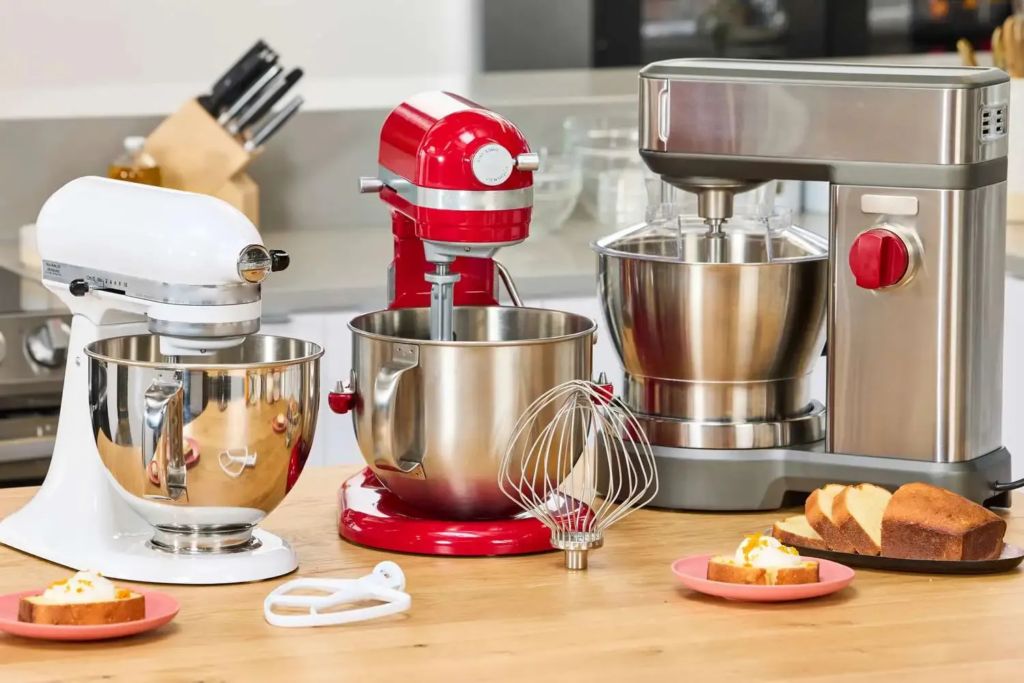
  • The 2026 Strategic Intelligence Brief: Culinary Automation vs. Manual Versatility – Bread Makers and Stand Mixers

    The 2026 Strategic Intelligence Brief: Culinary Automation vs. Manual Versatility – Bread Makers and Stand Mixers

    In the consumer appliance sector of 2026, the strategic deployment of kitchen capital often centers on optimizing the baking workflow. The decision between acquiring a Bread machine and a Mixer (appliance) (specifically, the stand mixer) dictates an individual’s operational engagement with food preparation. This intelligence brief deconstructs the mechanical architecture, microeconomic trade-offs, and sociocultural implications of automated bread production versus versatile, multi-stage culinary preparation.

    1. Historical Context and Foundational Evolution

    The mechanization of dough preparation represents a critical milestone in domestic engineering. The stand mixer, pioneered by companies like Hobart (which later launched KitchenAid) in the early 20th century, was originally designed to scale down commercial bakery power for the residential kitchen. It fundamentally changed the labor economics of home baking. Conversely, the bread maker, first commercialized in Japan in 1986, introduced a radical paradigm shift: full automation. While the stand mixer mechanized only the kinetic phase (mixing/kneading), the bread maker synthesized the kinetic and thermal phases (mixing, proofing, and baking) into a single, closed-loop appliance.

    2. Technical Mechanics and Structural Architecture

    The structural architecture of these two appliances serves entirely different engineering philosophies.

    • The Bread Maker (Closed-Loop Automation): This device utilizes a unified architectural chamber containing a motorized paddle and a perimeter heating element. It relies on a microcontroller to execute strict pre-programmed algorithms governing time, kinetic speed, and thermal output. The mechanical limitation is its rigid form factor; it produces a strictly uniform shape dictated by the internal non-stick pan.
    • The Stand Mixer (Open-System Kinetic Hub): This device is a high-torque orbital motor suspended over a stationary bowl. Utilizing planetary action, it drives heavy attachments (such as a dough hook) to mechanically align gluten strands, closely mimicking manual Kneading. It relies on user intervention to monitor dough elasticity and requires a secondary thermal environment (a conventional oven) to complete the baking cycle.

    3. Economic Impact and Capital Expenditure (CAPEX)

    From a microeconomic perspective, purchasing culinary hardware requires an analysis of upfront capital expenditure versus long-term utility.

    • Bread Maker Economics: This represents a lower initial CAPEX. It is highly cost-effective for households strictly focused on daily bread consumption, reducing the variable cost of purchasing premium bakery loaves. However, its Return on Investment (ROI) is capped by its single-utility nature.
    • Stand Mixer Economics: This represents a high initial CAPEX, often double or triple the cost of a bread maker. However, its modular architecture—featuring power hubs for meat grinders, pasta rollers, and varying mixing paddles—transforms it into a multi-utility culinary hub. The long-term ROI is higher as it consolidates the need for multiple independent appliances, provided the user engages in diverse cooking and baking practices.

    4. Sociocultural and Behavioral Implications

    The selection between these two appliances reflects distinct behavioral demographics in 2026. The bread maker appeals to the “time-poor” consumer who seeks the psychological comfort and nutritional control of home-baked goods without the requisite labor or time investment. It supports a “set-it-and-forget-it” lifestyle. In contrast, the stand mixer caters to the artisanal or hobbyist demographic. It requires active monitoring, tactile engagement, and manual shaping (e.g., scoring a boule or braiding a challah). The stand mixer is not merely a tool; it is a sociocultural status symbol within the domestic kitchen, signaling a commitment to the craft of culinary arts.

    5. Regulatory, Ethical, and Ecological Frameworks

    The manufacturing and lifecycle of these appliances involve specific ecological and safety frameworks. Bread makers frequently rely on non-stick coatings (such as PTFE or ceramic) for their internal pans, which are subject to stringent consumer safety regulations regarding thermal degradation and chemical leaching. Ecologically, bread makers are highly integrated electronic systems prone to planned obsolescence; a failed heating element often renders the entire unit e-waste. Conversely, premium stand mixers utilize exposed stainless steel bowls and heavy-cast metal gears, adhering to highly durable, generational-use manufacturing principles that significantly reduce their long-term environmental footprint.

    6. Competitive Analysis and Strategic Positioning

    In the domestic hardware market, these devices occupy adjacent but distinct strategic positions. Bread makers compete on the axis of convenience and programmable logic, with brands focusing on specialized algorithms for gluten-free, sourdough, or rapid-bake cycles. Stand mixers, dominated by legacy brands like KitchenAid and Cuisinart, compete on the axis of motor torque, attachment ecosystems, and aesthetic design. The strategic positioning is clear: the bread maker is marketed as a pragmatic daily appliance, while the stand mixer is marketed as an aspirational, lifelong culinary investment.

    7. Predictive Modeling: The Future of Culinary Hardware (2026–2030)

    Predictive models for the remainder of the decade indicate a convergence of IoT (Internet of Things) capabilities in both platforms.

    • Next-Gen Bread Makers: We anticipate the integration of cloud-connected algorithms allowing users to download highly specific, micro-adjusted proofing profiles from master bakers directly to the machine’s firmware via smartphone applications.
    • Next-Gen Stand Mixers: Future stand mixers will integrate localized sensor technology, utilizing built-in load cells (scales) for precise ingredient input and torque-sensors that actively monitor dough resistance, automatically shutting off the motor when optimal gluten development is achieved to prevent over-kneading.