Tag: Kitchen Tips

  • Best Pans for an Induction Cooktop

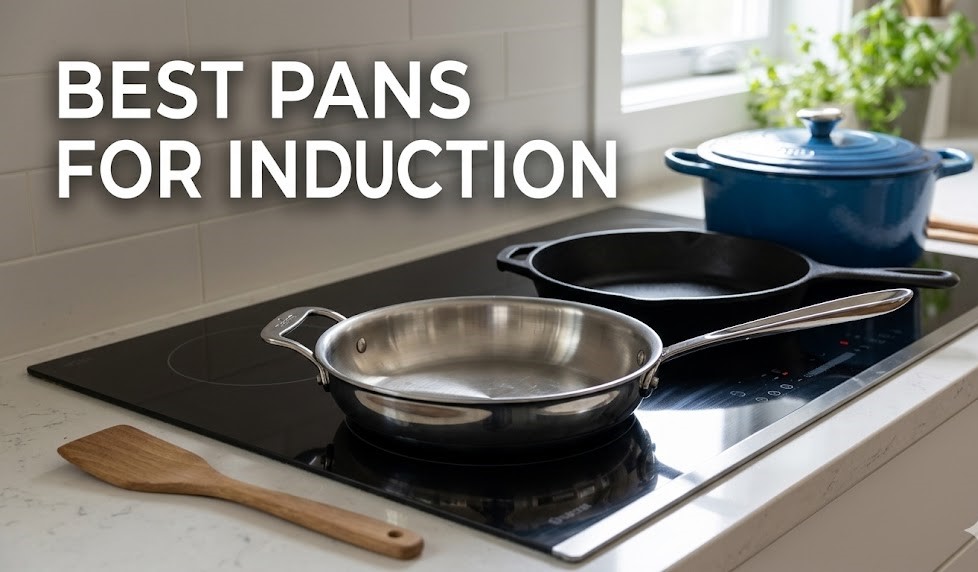
    Best Pans for an Induction Cooktop

    Induction cooktops have transformed home cooking with their precise temperature control and exceptional energy efficiency, earning a top spot among professional chefs and dedicated home cooks alike.

    However, to get the absolute best performance and results from your investment, you must choose the right cookware. At All-Clad, our premium cookware collections feature high-quality materials and expert craftsmanship that deliver exceptional cooking performance. Most of our collections are completely compatible with induction cooktops, thanks to their magnetic stainless steel bases, offering you even more versatility in your kitchen.
    Why You Need Specific Cookware for Induction Cooktops

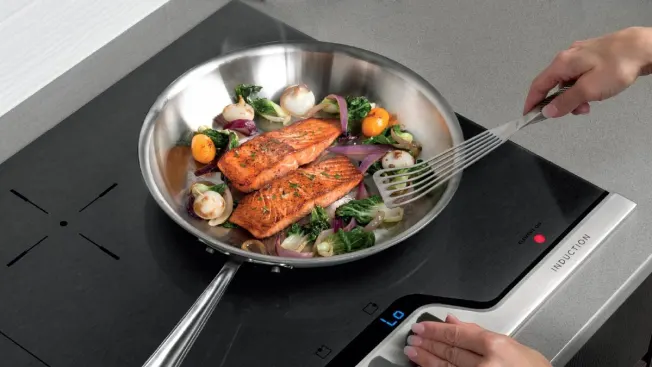
    Induction cooktops rely on direct contact between a pan’s magnetic base and the induction stove to generate heat. Unlike traditional gas or electric ranges that transfer heat via a flame or hot coil, induction cooking heats the pan directly using an electromagnetic field. This offers incredibly rapid heating while keeping your actual kitchen much cooler.

    Because of this unique technology, your pans must have a magnetic bottom to function with the stovetop. Aluminum, copper, or glass pans without magnetic layers will simply not work on an induction stove.

    What to Look for in the Best Induction Pans

    When selecting the best cookware for your induction range, keep these key factors in mind:

    • Magnet Compatibility: A simple test is to place a refrigerator magnet at the bottom of your pots or pans. If it sticks firmly, the cookware is induction-compatible! If the magnet slides off, the pan will not work.
    • Flat, Sturdy Bases: A perfectly flat base ensures maximum contact with the glass induction stove surface for even heat distribution.
    • Quality Materials: Multi-layer stainless steel and aluminum cores, like in All-Clad’s bonded collections, provide rapid, even heating without frustrating hot spots.
    • Oven-Safe Versatility: Many high-quality pans transition seamlessly from your induction cooktop straight into your oven for finishing dishes.

    Recommended All-Clad Products for Induction Cooking

    All-Clad offers several collections engineered to deliver precise results on induction cooktops, thanks to their bonded construction with a magnetic stainless exterior:

    Stainless Steel Collections:

    • D3® Stainless Steel & D3® Everyday
    • D5® Stainless (Brushed & Polished)
    • G5® Graphite Core
    • Copper Core®

    Nonstick & Hybrid Collections:

    • HA1® Expert & NS Pro® (Note: Square shapes in these lines do not have a Stainless Steel Base and are not induction compatible).
    • D3® Pro Nonstick, D5® Pro Nonstick, and Copper Core® Pro Nonstick.

    Tips for Using Stainless Steel on an Induction Cooktop

    Using stainless steel on an induction surface offers superior searing, browning, and deglazing. All-Clad’s stainless steel cookware features bonded layers that combine the rapid heat conductivity of aluminum or copper with the incredible durability of a magnetic exterior.

    Here are a few tips for cooking on induction:

    1. Preheat gradually: Because induction heats so quickly, preheat your pan slowly on a medium setting rather than blasting it on high.
    2. Use oil: Use your desired amount of cooking oil to enhance searing and prevent sticking.
    3. Avoid thermal shock: Avoid sudden temperature changes (like running a hot pan under cold water) to protect your pans from warping and to keep your induction cooktop surface safe.
    4. Keep it clean: Always ensure your pans have a perfectly clean, dry bottom to maintain good magnetic contact and avoid scratching the glass stove.
    Frequently Asked Questions

    What pans work with induction cooktops? Only pans with a magnetic base work. Suitable pans include those made with cast iron, enameled cast iron, and magnetic-grade stainless steel.

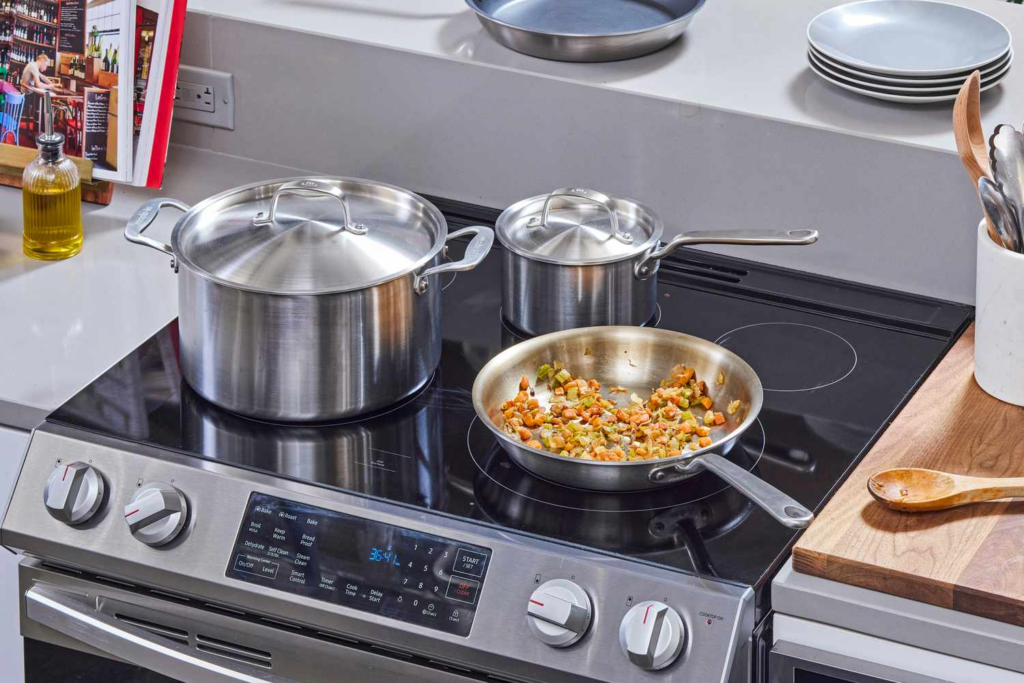
    Can you use stainless steel pans on an induction cooktop? Yes, stainless steel pans can be used flawlessly on an induction cooktop as long as they have a magnetic base.

    How can you tell if a pan is suitable for induction cooktops? You can easily check by placing a magnet on the bottom of your pan. If the magnet sticks securely, your pan is compatible. Additionally, most modern cookware will feature an “induction compatible” symbol on the bottom of the pan or note it clearly in the product description.
  • Cleaning and Care: How to Clean Stainless Steel Pans and Keep Them Looking New!

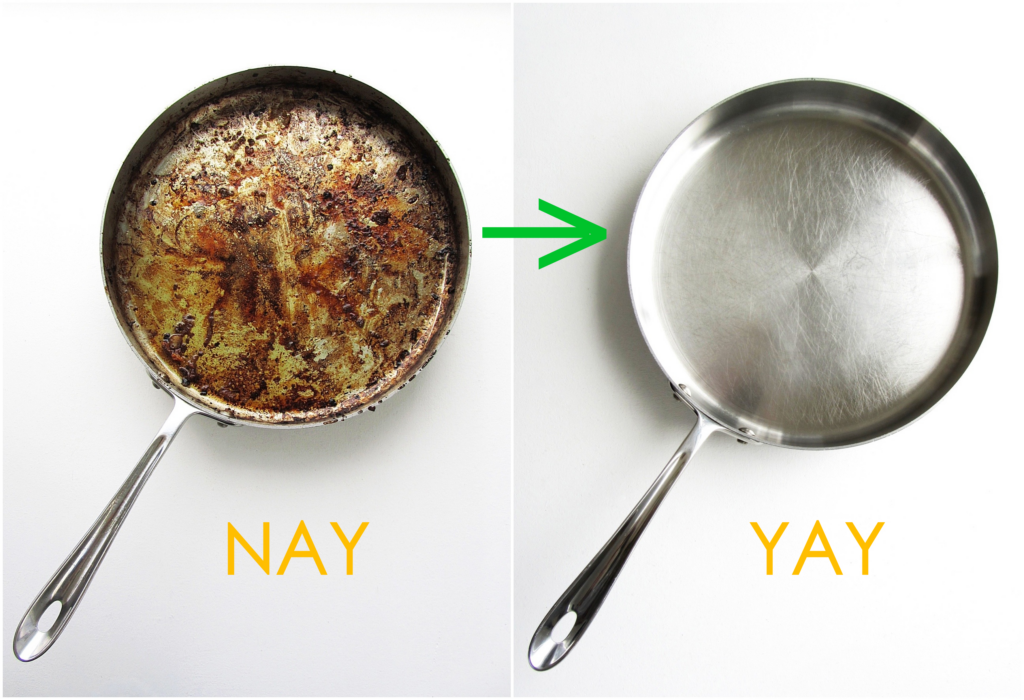
    Cleaning and Care: How to Clean Stainless Steel Pans and Keep Them Looking New!

    There’s nothing quite like a brand-new stainless steel pan—bright, reflective, and ready for everything from weeknight sautés to serious searing. The good news is that with the right routine, stainless steel can stay beautiful and perform at a high level for years.

    Knowing how to cook with stainless steel is just as important as knowing how to clean it. Proper preheating, using the right amount of oil, and letting food naturally release all help protect your pan’s surface while improving your cooking results. By combining smart cooking techniques with the simple maintenance habits below, you’ll enjoy the full benefits of stainless steel—durability, versatility, and professional-quality performance—for decades.

    Daily Care: The Best Way to Clean Stainless Steel Pans After Cooking

    Start simple. Most of the time, stainless steel cleans up incredibly easily if you follow a few key habits:

    1. Cool Completely: Start your daily cleaning routine by letting your stainless steel pans cool completely. Never submerge a hot pan in cold water, as this risks thermal shock, which can permanently warp its structure.
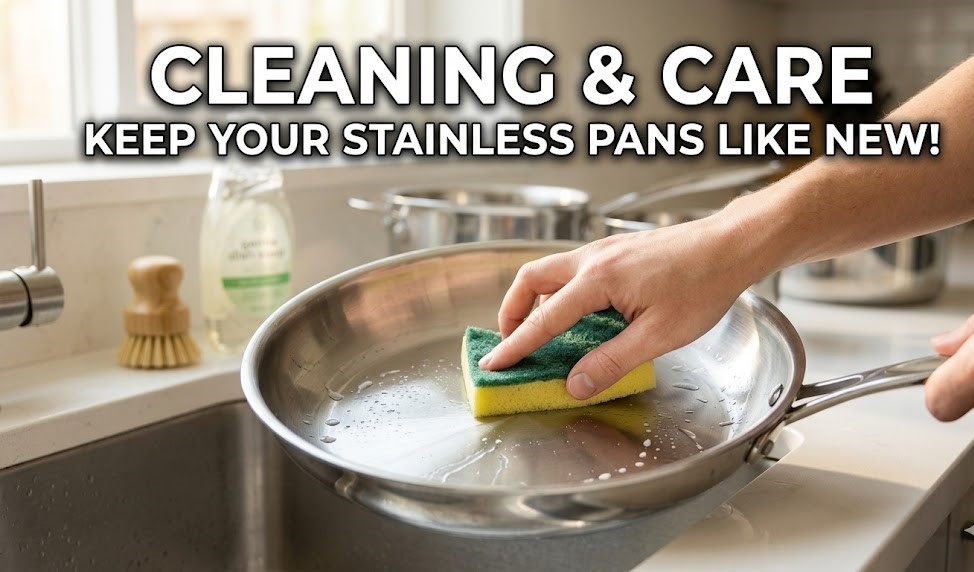
    2. Wash Gently: For everyday food residue, use warm water with a gentle dish soap and a soft sponge to clean both the interior and exterior surfaces.
    3. Dry Thoroughly: Remember to dry your cookware thoroughly with a clean cloth right after washing to prevent hard water spots.
    4. Soak When Needed: When faced with stubbornly stuck-on food, fill the pan with hot water and let it soak for 15 minutes. This simple step makes cleanup much easier and preserves your cookware’s finish by eliminating the need for harsh scrubbing.

    How to Properly Remove Stains and Burnt Food

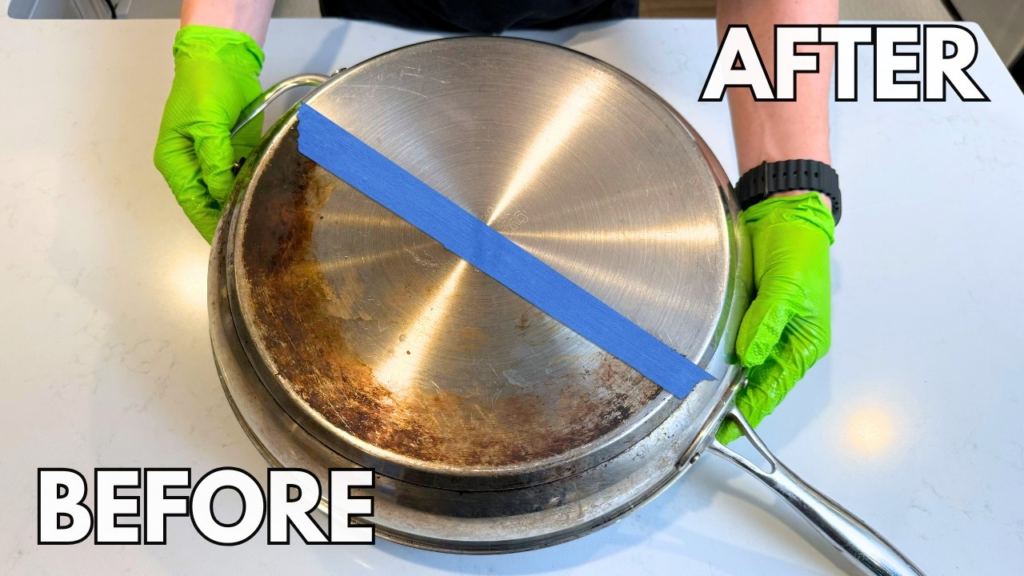
    For those challenging cooking mishaps, create a thick paste using baking soda and water. Apply this mixture to burnt areas and wait for 5-10 minutes while it works its magic. A non-abrasive sponge will then easily lift away the residue.

    For much tougher stains and professional-level results, use the All-Clad Stainless Steel and Aluminum Cleaner. This specialized formula combines natural minerals with environmentally safe ingredients to restore your cookware’s original brilliance. It effectively removes mineral deposits and cooking residue without scratching. Apply a small amount with a damp cloth, working in circular motions to reveal the metal’s natural luster. (Note: Premium stainless steel cleaners should not be used on hard anodized, copper, or nonstick cookware.)

    Tackling Water Spots and Pan Discoloration

    Discoloration or hard water spots (often characterized by a rainbow-like tint on the metal) call for a specialized approach. White vinegar acts as a brilliant, natural stainless steel cookware cleaner.

    Mix equal parts water and white vinegar in the pan, bring it to a gentle simmer, and then remove it from the heat. The acidic solution naturally breaks down burnt residue and mineral buildup, making cleanup significantly easier. Let the pan cool, wash it with soap and water, and then dry it thoroughly. Your pan will look cleaner and dramatically brighter!

    Maintaining Your Cookware: Preventing Warping and Surface Damage

    Maintaining your pan’s structural integrity starts with proper heat management. Consider preheating your pan gradually over medium heat rather than starting with high temperatures. This practice prevents thermal shock and ensures your cookware maintains its perfectly flat cooking surface for years. For example, when searing meat, bring your pan to temperature over 2-3 minutes rather than blast-heating it.

    When cooking, match your pan size to your burner diameter for even heat distribution. For maximum protection during storage, place felt pot protectors between stacked pans to prevent the metal bottoms from scratching the polished interiors.

    What NOT to Use on Stainless Steel Cookware

    Protect your cookware’s longevity by avoiding harsh cleaning materials.

    • Abrasives: Metal scouring pads and steel wool will leave permanent scratches across your pan’s pristine finish.
    • Harsh Chemicals: Skip bleach-based cleaners and oven sprays, which can corrode the metal’s composition. Your pans will also suffer damage from undiluted chlorine products or ammonia solutions.
    • Metal Tools: When removing stuck food, stay away from metal utensils and opt for wooden spoons or high-heat silicone kitchen tools instead.