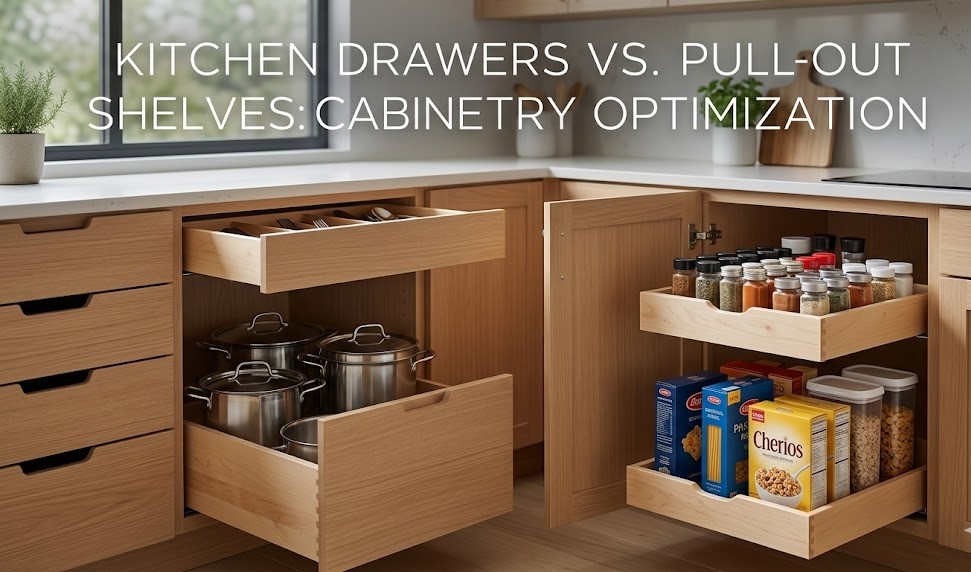
In the modern kitchen design and Residential construction sectors of 2026, the transition from static shelving to dynamic storage solutions is a mandatory operational upgrade. The choice between integrated kitchen drawers and retrofit pull-out shelves is a critical decision that impacts ergonomic efficiency, storage volume, and long-term property value. This intelligence brief deconstructs the technical mechanics, economic trade-offs, and structural limitations of these two primary cabinetry architectures.
Historical Context: The Shift to Dynamic Storage
Traditionally, kitchen cabinets relied on fixed shelving, which required high physical effort and “rummaging” to access items at the rear. The evolution toward Universal Design has prioritized accessibility, leading to the rise of pull-out mechanisms. While drawers were once reserved for cutlery, the development of heavy-duty Dovetail joint construction and soft-close glides has made them the preferred choice for primary cookware storage.
Technical Mechanics: Operational Logic and Ergonomics
The primary difference between these systems lies in the access protocol and the flexibility of the vertical space.
- Kitchen Drawers (Single-Step Access): Drawers operate on a single-motion protocol. Pulling the drawer face exposes the entire contents at once. This is highly efficient for high-frequency cooking environments. They excel at organizing smaller utensils through the use of customizable dividers and integrated slots.
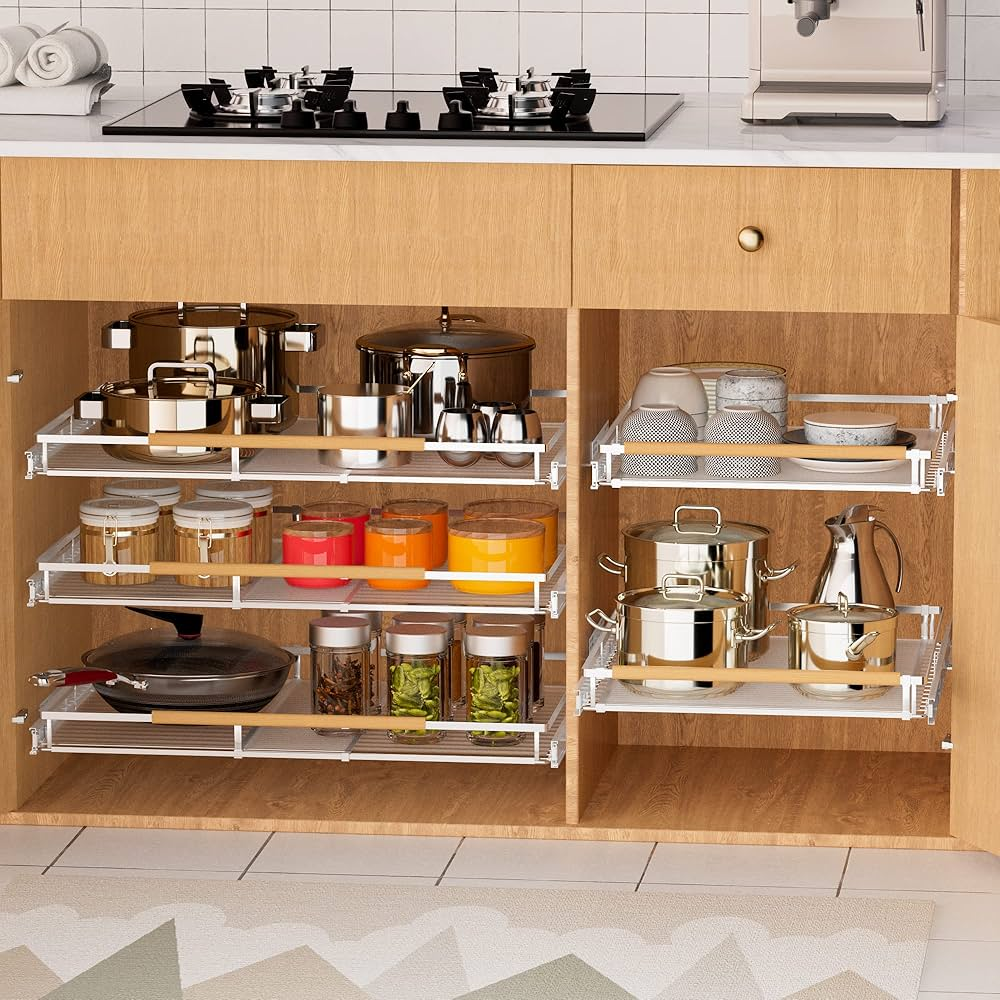
- Pull-Out Shelves (Two-Step Access): Pull-outs require a two-motion protocol (opening the cabinet door, then pulling the shelf). Their primary technical advantage is height adjustability. Because they are not fixed to the drawer face, they can be moved vertically to accommodate oversized appliances, such as stand mixers or air fryers, which may change over time.
- Biomechanical Impact: Both systems eliminate the need for “hunkering” or bending to reach deep cabinet corners, significantly reducing lumbar strain and improving accessibility for users with limited mobility.
Economic Impact and Procurement Logistics
From a procurement perspective, the decision is often dictated by whether the project is a new installation or a retrofit upgrade.
- Capital Expenditure (CAPEX): Full kitchen drawers typically represent a higher upfront investment as they require complete cabinet box replacement or specific drawer-base units.
- Operational Expenditure (OPEX): Pull-out shelves are the more cost-effective retrofit solution. They can be installed into existing standard cabinets without major demolition, making them ideal for budget-conscious upgrades that still desire “luxury” functionality.
- Lifecycle and Durability: High-quality drawers with solid wood dovetail boxes have a lifecycle of 15–25 years. Pull-out shelves made of Baltic birch or metal offer similar durability, provided the sliding hardware is rated for heavy loads (e.g., 100 lbs).
Structural Vulnerabilities and Strategic Limitations
Despite their advantages, both systems introduce specific operational friction that must be accounted for during the design phase.
- Width Reduction: Pull-out shelves typically reduce the usable interior width of a cabinet by approximately 5 inches to accommodate the mounting brackets and gliding hardware.
- Visibility and Clutter: Drawers, while sleek when closed, can lead to visual clutter if they are not equipped with internal organization systems. They also offer less visibility of tall items compared to open-front pull-out shelves.
- Weight Constraints: While heavy-duty glides exist, overloading a drawer or pull-out shelf can cause hardware fatigue or sagging, leading to mechanical failure of the soft-close mechanism over time.
Conclusion
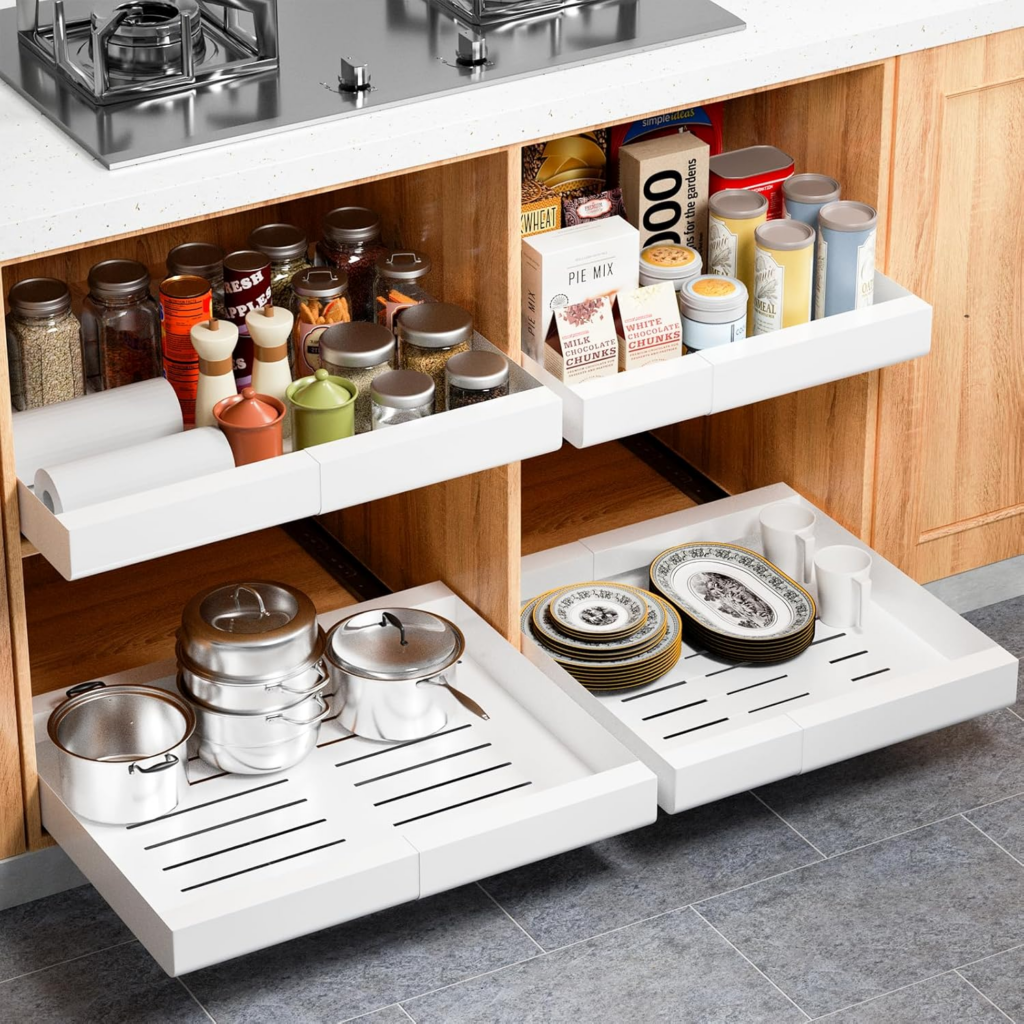
The strategic verdict for 2026 is that integrated drawers are the superior choice for new kitchen builds due to their single-step efficiency and sleek appearance. However, pull-out shelves remain the definitive operational winner for homeowners looking to modernize existing cabinetry without the capital intensity of a full renovation. For optimal efficiency, a hybrid approach—using deep drawers for heavy pots and adjustable pull-outs for bulky appliances—provides the highest return on investment.