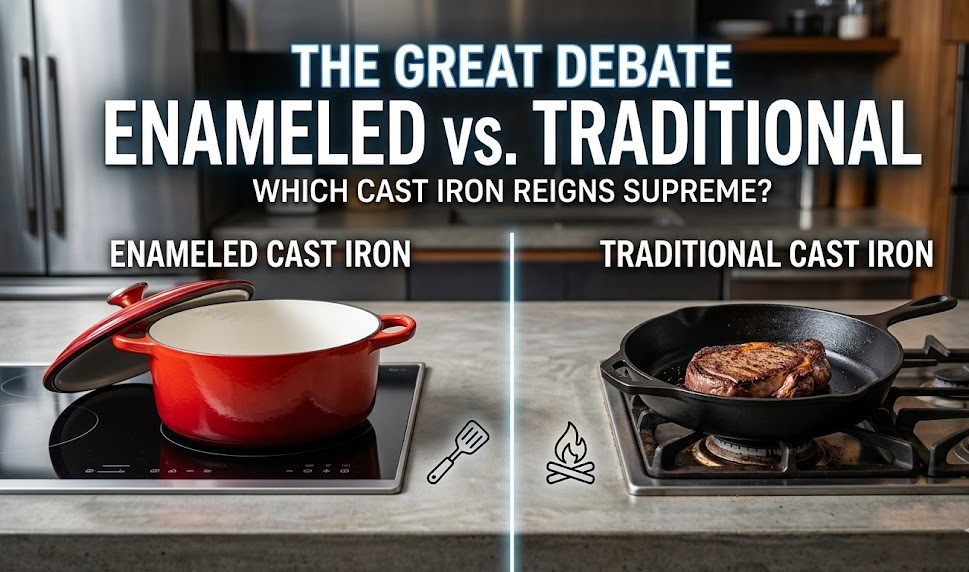
Deciding between traditional and enameled cast iron is a common dilemma for modern cooks. Both are induction-ready, induction-compatible kitchen staples known for their longevity and superior heat retention. However, the choice between them often comes down to your specific cooking style—whether you prefer high-heat searing and rustic durability or low-and-slow simmering with effortless maintenance.
In 2026, as home cooks prioritize non-toxic, chemical-free cookware, understanding the structural differences between these two materials is essential for building a healthy, high-performance kitchen.
1. Traditional (Bare) Cast Iron: The Rustic Workhorse
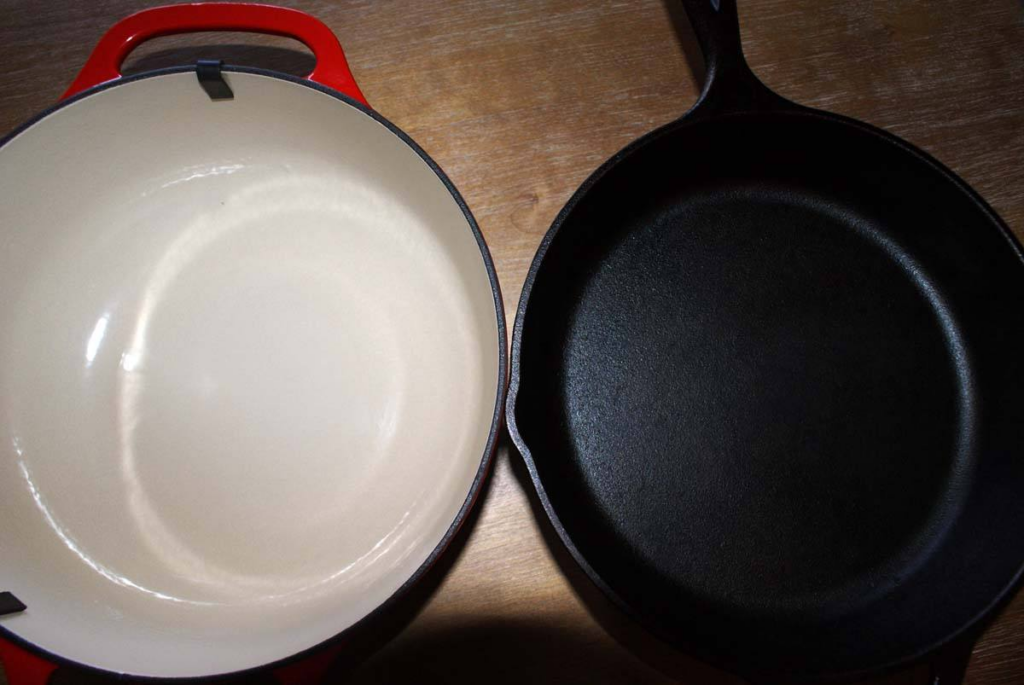
Traditional cast iron is an alloy typically composed of 98% iron and 2% carbon. It is uncoated and requires “seasoning”—a process of baking oil into the metal to create a natural, non-stick patina.
- Durability: Virtually indestructible. It can be used over open flames, grills, or campfires.
- High Heat: Unmatched for searing steaks or baking crusty cornbread at extreme temperatures.
- Health Fact: Cooking in bare cast iron can slightly increase the iron content of your food, which can be beneficial for those managing iron-deficiency anemia (as noted by the NIH).
2. Enameled Cast Iron: The Modern Classic
Enameled cast iron is essentially traditional cast iron coated with a layer of vitreous enamel (glass). This creates a non-reactive, smooth surface that eliminates the need for seasoning.
- Non-Reactive: Unlike bare iron, enamel does not react with acidic foods like tomatoes, wine, or lemons. According to the FDA, non-reactive surfaces are ideal for long-simmering sauces to ensure flavor purity.
- Low Maintenance: Rust-resistant and easy to clean with mild soap.
- Slow Cooking: Superior for braising stews and casseroles in the oven at low-to-medium heat.
Side-by-Side Comparison
| Parameter | Traditional Cast Iron | Enameled Cast Iron |
| Maintenance | High (Requires seasoning) | Low (No seasoning needed) |
| Durability | High (Lifelong) | Medium (Enamel can chip) |
| Acidic Foods | Not recommended | Perfectly Safe |
| Max Heat | Extremely High | Low to Medium |
| Best For | Searing, Frying, Grilling | Stews, Sauces, Braising |
Professional Tips for Longevity
To keep your cast iron in peak condition through 2026 and beyond, follow these expert guidelines:
- Avoid Thermal Shock: Never plunge a hot pan into cold water. This can cause bare iron to crack and enamel to “craze” or chip.
- Utensil Choice: While bare iron can handle metal spatulas, the American Academy of Nutrition and Dietetics suggests using wooden or silicone tools on enameled surfaces to prevent scratching.
- Rust Prevention: For bare cast iron, always dry immediately on a warm stovetop burner after washing. Moisture is the primary enemy of uncoated iron ore.
- Safety: Because cast iron retains heat for a long time, the Mayo Clinic reminds cooks to always use oven mitts, as the handles become just as hot as the cooking surface.
Conclusion
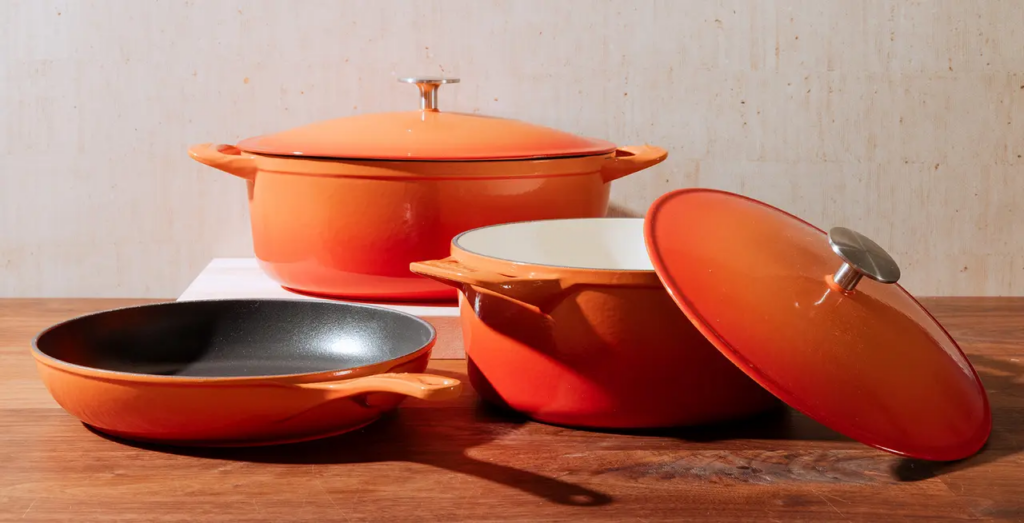
The “better” option depends entirely on your menu. Traditional cast iron is a lifelong investment for those who love high-heat techniques and don’t mind a little maintenance. Enameled cast iron is the ultimate choice for the modern cook who values aesthetic variety and the ability to cook acidic sauces without worry. If your budget allows, owning both is the most versatile strategy: use bare iron for your burgers and cornbread, and save the enamel for your slow-cooked Sunday stews.