Tag: Cookware Care

  • Saucepan vs. Pot: What’s the Difference?

    Saucepan vs. Pot: What’s the Difference?

    By All-Clad Editorial Team | Published: May 16, 2025

    Saucepans and stockpots are essential kitchen pieces, but knowing exactly when to use each can significantly elevate your cooking results. Explore the distinct differences between saucepans and pots with our expert advice, and learn how to pick the right Cookware for your culinary creations.
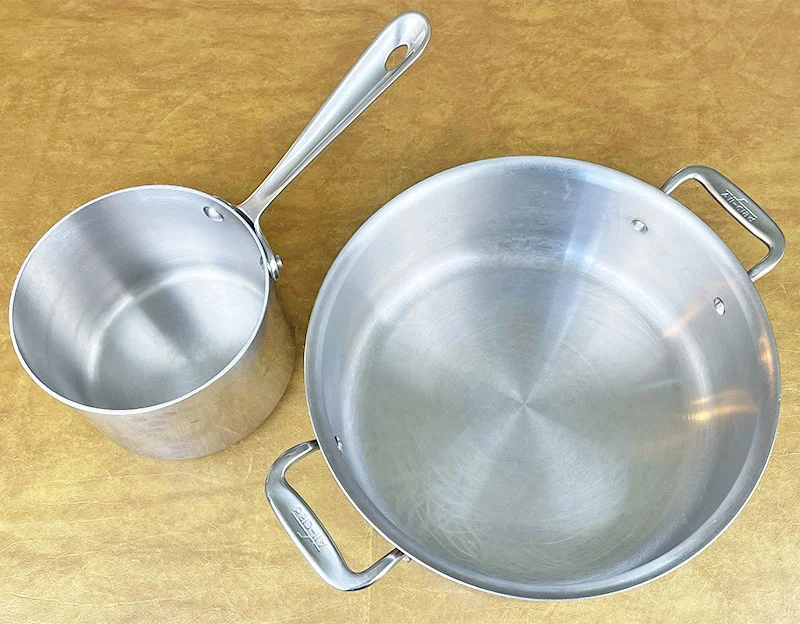
    What Is a Saucepan?

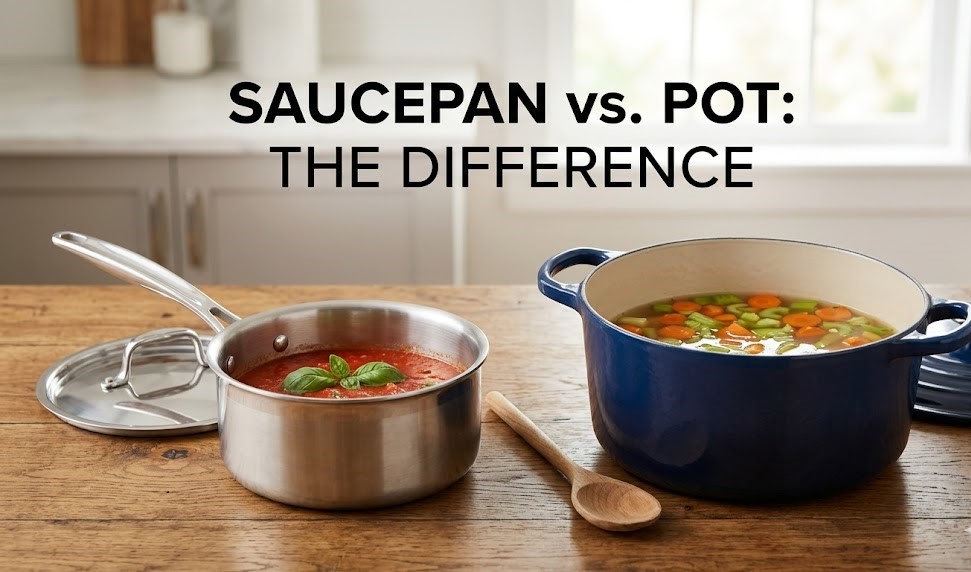
    Distinct in design, a Saucepan features tall, straight sides and a single long handle, making it perfect for creating everything from delicate sauces to deglazing or heating liquids. The smaller surface area ensures superior heat retention while minimizing rapid evaporation.

    • Sizes and Capacity: Stainless steel saucepans typically range from 1 to 4 quarts, offering the right size for focused cooking tasks.
    • Design Features: The flat bottom and straight edges promote incredibly even heating, while a tight-fitting lid easily locks in moisture and flavor during cooking.
    • Best Culinary Uses: From reducing wine sauces to simmering grains, the saucepan excels at liquid-based cooking methods. The carefully engineered design prevents boil-overs and allows for precise temperature control.

    Features and Uses of Stockpots

    A Stock pot brings exceptional performance to your kitchen with deep, straight walls and a wide base. This design maintains consistent temperatures for slow-simmering stews and large-batch cooking.

    • Sizes and Capacity: Master batch cooking with sizes ranging heavily from 4 to 12 quarts.
    • Design Features: Chef-inspired designs include two sturdy handles on either side for confident lifting, while the premium construction ensures even heat distribution from the base all the way to the rim.
    • Best Culinary Uses: The tall edges prevent splashing during heavy boiling. Whether you’re preparing a hearty soup, boiling pasta, or blanching fresh vegetables, these versatile pots deliver exceptional performance.

    How to Choose the Right Cookware

    When preparing your favorite recipes, matching the right cookware to your dish makes all the difference in the world.

    • When to use a Saucepan: For small batches and sauce-based dishes, reach for a saucepan. The precise heat control, tall edges, and narrower surface area help reduce liquids perfectly while preventing hot splatter.
    • When to use a Stockpot: Choose a pot when cooking larger portions or dishes requiring substantially more liquid. The wider base and generous capacity provide ample room for ingredients to move freely. Consider your serving size: a 3-quart saucepan works beautifully for family sides, while an 8-quart pot handles large dinner party portions with ease.
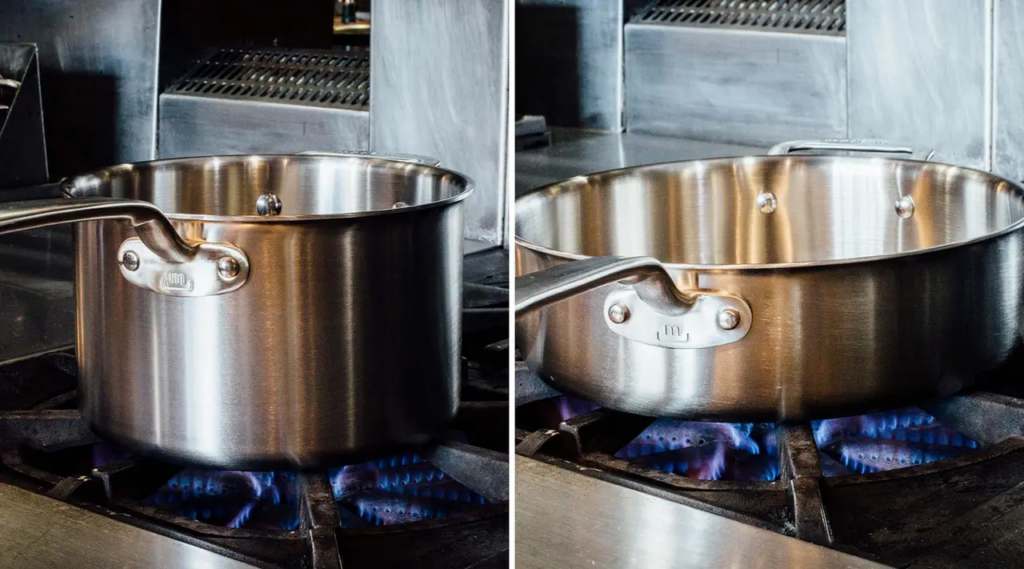
    Caring for Your Cookware

    Maintain your cookware’s brilliant performance by letting it cool completely before cleaning. Hand wash your pots and pans with warm, soapy water and a soft cloth—this gentle approach preserves the Stainless steel finish for a lifetime.

    • Protect the Surface: During cooking, always use wooden or Silicone utensils to protect the cooking surface from unwanted scratches.
    • Prevent Pitting: When cooking with salt, make sure to add it only after liquids have reached a rolling boil to prevent pitting the metal.
    • Control the Heat: Keep heat settings at medium or lower. Multi-layered bonded construction ensures superior heat retention without ever requiring high, scorching temperatures. Match your burner size to your pan’s base for optimal heat distribution.
    • Smart Storage: Store your saucepans and pots with protective cloth layers between them to avoid scratches in your cabinets.

    Elevate Your Cooking

    Transform your kitchen into a professional cooking space. The right cookware becomes your trusted partner in creating memorable meals, whether you’re reducing a delicate sauce or simmering a hearty stew for the whole family. With the right pieces in your kitchen arsenal, you will cook with complete confidence and create dishes that delight.
  • Cleaning and Care: How to Clean Stainless Steel Pans and Keep Them Looking New!

    Cleaning and Care: How to Clean Stainless Steel Pans and Keep Them Looking New!

    There’s nothing quite like a brand-new stainless steel pan—bright, reflective, and ready for everything from weeknight sautés to serious searing. The good news is that with the right routine, stainless steel can stay beautiful and perform at a high level for years.

    Knowing how to cook with stainless steel is just as important as knowing how to clean it. Proper preheating, using the right amount of oil, and letting food naturally release all help protect your pan’s surface while improving your cooking results. By combining smart cooking techniques with the simple maintenance habits below, you’ll enjoy the full benefits of stainless steel—durability, versatility, and professional-quality performance—for decades.

    Daily Care: The Best Way to Clean Stainless Steel Pans After Cooking

    Start simple. Most of the time, stainless steel cleans up incredibly easily if you follow a few key habits:

    1. Cool Completely: Start your daily cleaning routine by letting your stainless steel pans cool completely. Never submerge a hot pan in cold water, as this risks thermal shock, which can permanently warp its structure.
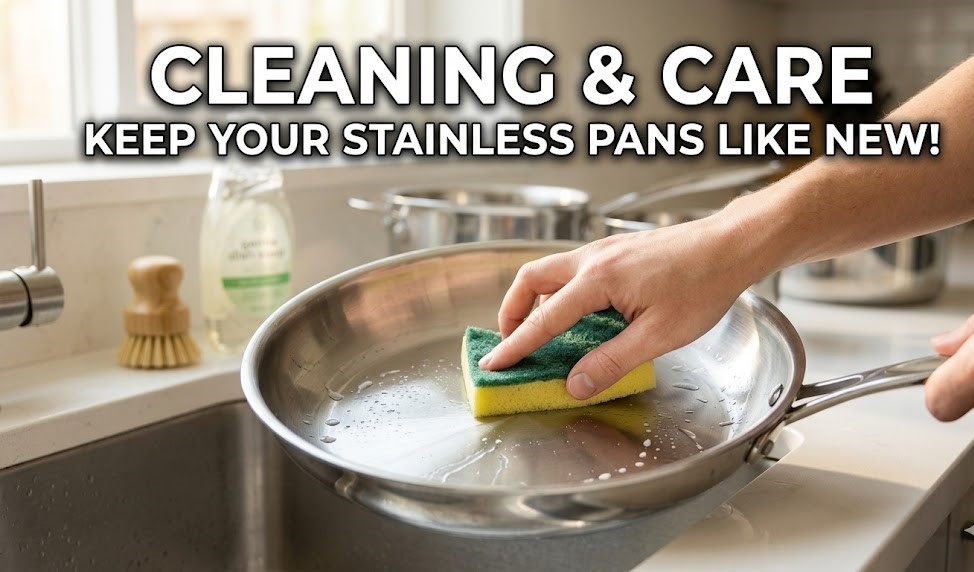
    2. Wash Gently: For everyday food residue, use warm water with a gentle dish soap and a soft sponge to clean both the interior and exterior surfaces.
    3. Dry Thoroughly: Remember to dry your cookware thoroughly with a clean cloth right after washing to prevent hard water spots.
    4. Soak When Needed: When faced with stubbornly stuck-on food, fill the pan with hot water and let it soak for 15 minutes. This simple step makes cleanup much easier and preserves your cookware’s finish by eliminating the need for harsh scrubbing.

    How to Properly Remove Stains and Burnt Food

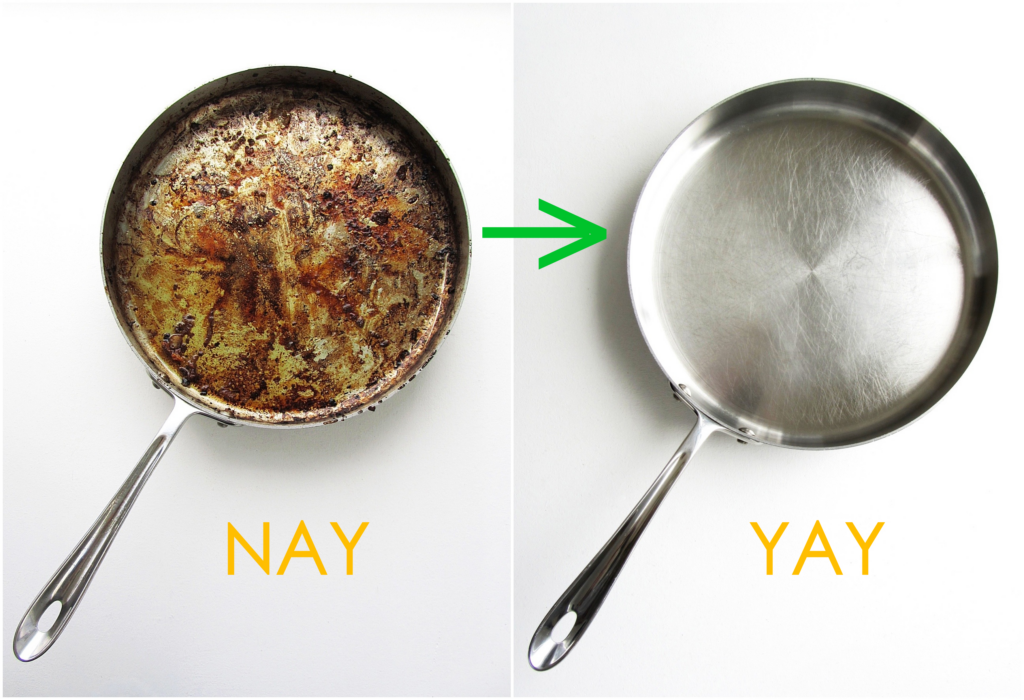
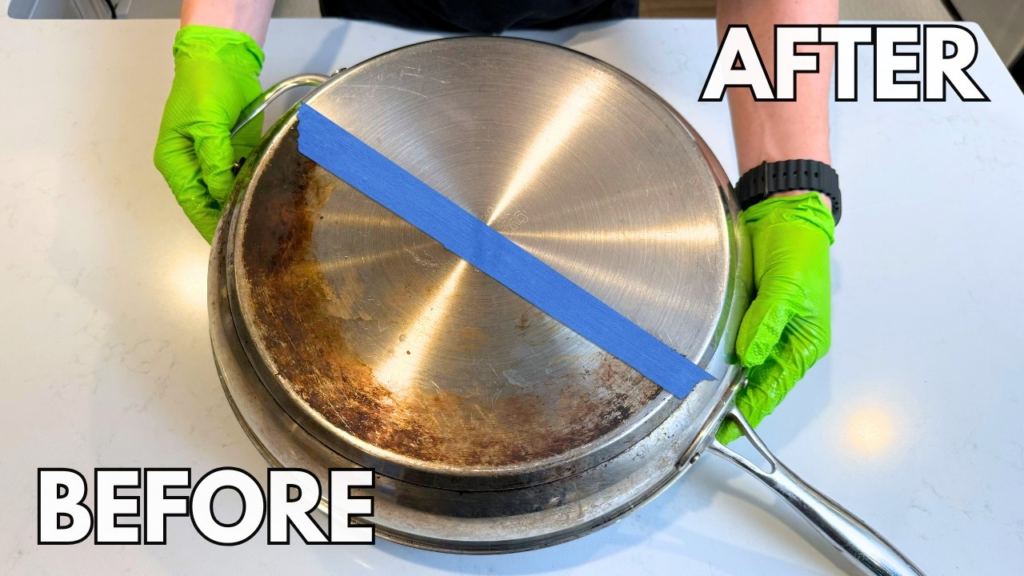
    For those challenging cooking mishaps, create a thick paste using baking soda and water. Apply this mixture to burnt areas and wait for 5-10 minutes while it works its magic. A non-abrasive sponge will then easily lift away the residue.

    For much tougher stains and professional-level results, use the All-Clad Stainless Steel and Aluminum Cleaner. This specialized formula combines natural minerals with environmentally safe ingredients to restore your cookware’s original brilliance. It effectively removes mineral deposits and cooking residue without scratching. Apply a small amount with a damp cloth, working in circular motions to reveal the metal’s natural luster. (Note: Premium stainless steel cleaners should not be used on hard anodized, copper, or nonstick cookware.)

    Tackling Water Spots and Pan Discoloration

    Discoloration or hard water spots (often characterized by a rainbow-like tint on the metal) call for a specialized approach. White vinegar acts as a brilliant, natural stainless steel cookware cleaner.

    Mix equal parts water and white vinegar in the pan, bring it to a gentle simmer, and then remove it from the heat. The acidic solution naturally breaks down burnt residue and mineral buildup, making cleanup significantly easier. Let the pan cool, wash it with soap and water, and then dry it thoroughly. Your pan will look cleaner and dramatically brighter!

    Maintaining Your Cookware: Preventing Warping and Surface Damage

    Maintaining your pan’s structural integrity starts with proper heat management. Consider preheating your pan gradually over medium heat rather than starting with high temperatures. This practice prevents thermal shock and ensures your cookware maintains its perfectly flat cooking surface for years. For example, when searing meat, bring your pan to temperature over 2-3 minutes rather than blast-heating it.

    When cooking, match your pan size to your burner diameter for even heat distribution. For maximum protection during storage, place felt pot protectors between stacked pans to prevent the metal bottoms from scratching the polished interiors.

    What NOT to Use on Stainless Steel Cookware

    Protect your cookware’s longevity by avoiding harsh cleaning materials.

    • Abrasives: Metal scouring pads and steel wool will leave permanent scratches across your pan’s pristine finish.
    • Harsh Chemicals: Skip bleach-based cleaners and oven sprays, which can corrode the metal’s composition. Your pans will also suffer damage from undiluted chlorine products or ammonia solutions.
    • Metal Tools: When removing stuck food, stay away from metal utensils and opt for wooden spoons or high-heat silicone kitchen tools instead.
  • Breaking Myths About Cast Iron Cookware: Facts Every Cook Should Know

    Breaking Myths About Cast Iron Cookware: Facts Every Cook Should Know

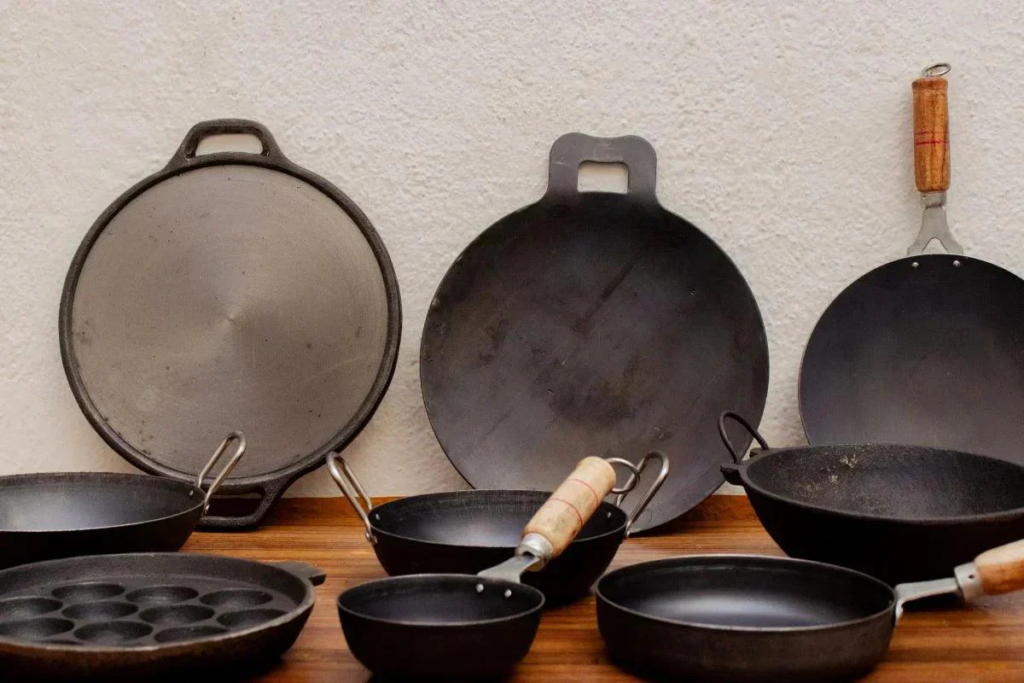
    Cast iron cookware has been a kitchen staple for centuries, yet it remains one of the most misunderstood tools in the culinary world. From fears of rust to confusion over “seasoning,” myths often prevent home cooks from investing in what is arguably the most durable material available. In reality, cast iron is a nutritional and functional powerhouse that actually improves with age.

    Whether you are using traditional pre-seasoned pans or modern enamel-coated cast iron, understanding the science behind the metal will transform your cooking experience.

    Debunking Common Cast Iron Myths

    Myth #1: Cast Iron is High-Maintenance and Hard to Clean

    The Truth: While it requires a different approach than stainless steel, it isn’t “difficult.”

    • Enamel-Coated: Requires zero seasoning and can be washed with standard mild soap.
    • Traditional: Simply needs to be dried immediately after washing and rubbed with a light coat of oil. According to the USDA FoodData Central, maintaining the integrity of the cooking surface prevents oxidation and ensures a natural non-stick finish.

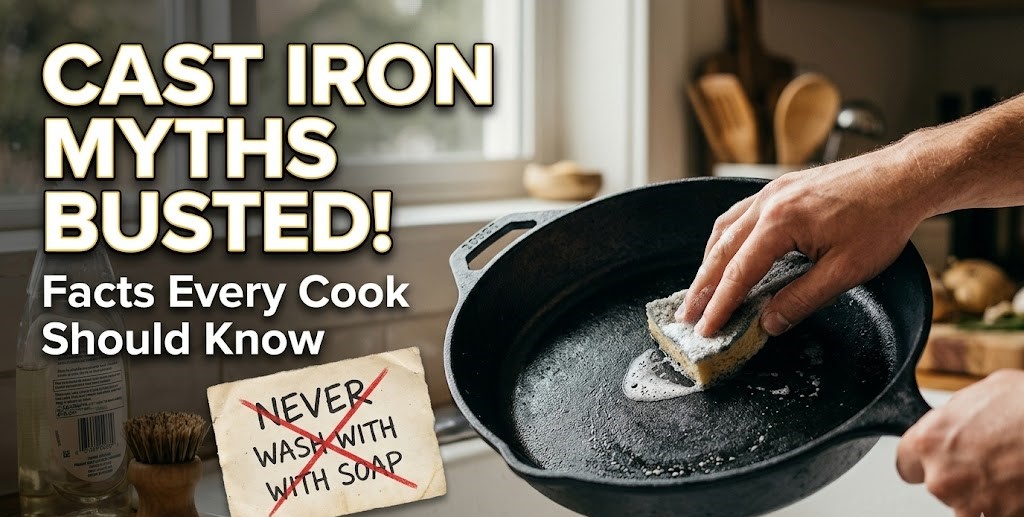
    Myth #2: You Can’t Use Soap on Cast Iron

    The Truth: This is a carryover from the days when soap contained harsh lye. Modern mild dish soaps will not strip away a well-bonded layer of seasoning. However, the FDA guidelines on food contact surfaces suggest avoiding abrasive scourers that can physically scratch the iron or enamel.

    Myth #3: Cast Iron Reacts Dangerously with Acidic Foods

    The Truth: * Enamel-Coated: Completely non-reactive and safe for simmering tomato sauces or citrus-heavy stews for hours.

    • Pre-Seasoned: Can leach a metallic taste if acidic foods are cooked for long periods. However, a quick sauté of tomatoes in a well-seasoned pan is perfectly safe and can even slightly increase the iron content of your food (NIH), which is beneficial for those managing iron-deficiency anemia.

    The Science of Heat Retention

    A common complaint is that cast iron takes too long to heat up. While it has lower thermal conductivity than aluminum, it possesses superior heat capacity.

    • Steady Cooking: Once hot, cast iron stays hot. This prevents temperature drops when you add a cold steak or a large batch of vegetables to the pan.
    • Even Distribution: It radiates heat effectively, making it ideal for baking bread or slow-cooking stews. The American Heart Association notes that consistent heat can help in cooking proteins more evenly without the need for excessive added fats.

    Longevity and Safety in 2026

    In an era of “throwaway” non-stick pans coated with PFOAs or PFAs, cast iron is the ultimate sustainable choice.

    1. Chemical-Free: Naturally seasoned iron provides a slick surface without synthetic coatings.
    2. Indestructible: Unlike Teflon, which can peel and release fumes at high temperatures, cast iron can be stripped and re-seasoned even if it rusts.
    3. Rust Prevention: Rust only forms if the pan is left wet. To protect your investment, always dry your pan on a warm stovetop burner after washing. For more on safe metal usage in the kitchen, check the CDC’s information on environmental health.