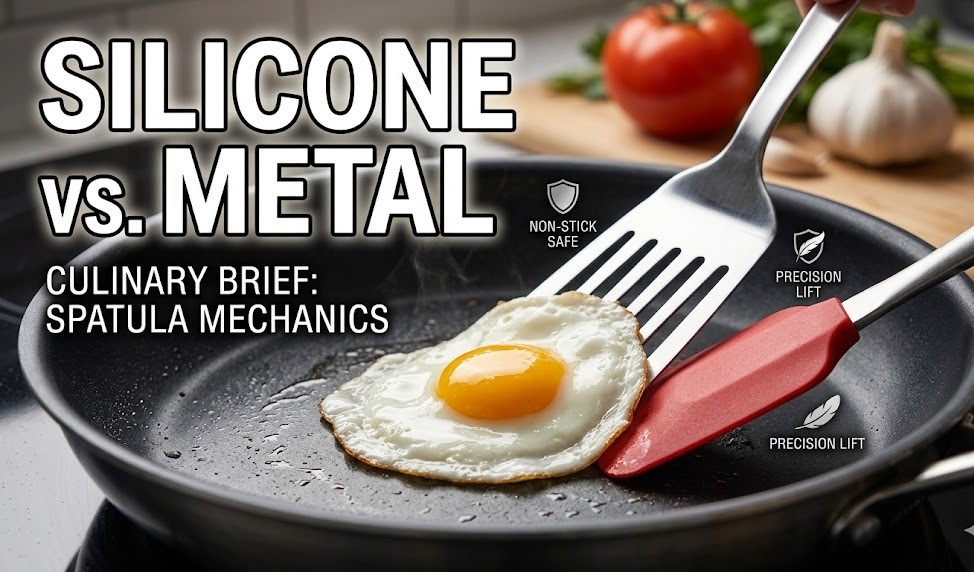
In the domestic and professional culinary sectors of 2026, the selection of basic kitchen implements is no longer viewed as arbitrary. The mechanical interaction between a cooking utensil and the cookware surface dictates not only the physical integrity of the food but also the lifespan of expensive culinary hardware. This intelligence brief deconstructs the structural architecture, economic implications, and strategic deployment of the two primary turning implements: the Silicone spatula and the Stainless steel (metal) spatula.
Historical Context and Foundational Evolution
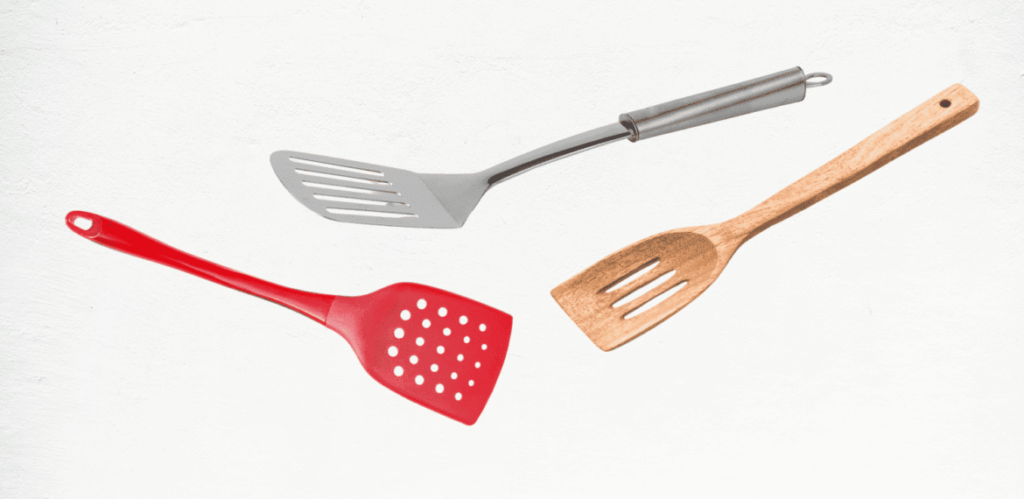
Historically, the spatula evolved from flat wooden paddles used to stir cauldrons into specialized metal blades designed for the high-heat searing of meats on cast iron. However, the mid-to-late 20th-century proliferation of Non-stick surface cookware (utilizing PTFE/Teflon coatings) created an immediate mechanical crisis: traditional metal spatulas aggressively scratched and destroyed these chemical coatings. This vulnerability necessitated the foundational evolution of the food-grade silicone spatula, engineered specifically to provide thermal resistance without compromising the delicate chemical layers of modern non-stick pans.
Technical Mechanics and Structural Architecture
The mechanical divide between silicone and metal spatulas centers on the physics of rigidity versus flexibility.
- Silicone Mechanics: Engineered from synthetic polysiloxane, these spatulas offer high flexibility and a soft, ergonomic grip. Mechanically, they adapt to the curvature of the pan, allowing for a seamless glide beneath delicate proteins (like fish or eggs) without breaking them. However, their structural weakness is a defined thermal ceiling; prolonged exposure to direct, extreme heat can cause polymer degradation.
- Metal Mechanics: Crafted typically from hardened stainless steel, metal spatulas offer zero flexibility but immense tensile strength and absolute thermal immunity. They provide the mechanical leverage required to separate heavily seared, caramelized proteins from uncoated metal surfaces (like cast iron or carbon steel griddles) without bending or yielding under pressure.
Economic Impact and Capital Expenditure (CAPEX)
From a microeconomic perspective, the spatula itself represents a negligible Capital Expenditure (CAPEX), typically costing under $20. However, the strategic error of utilizing the wrong spatula results in massive secondary costs through rapid cookware depreciation. Deploying a rigid metal spatula on a premium non-stick skillet will immediately compromise the coating, transforming a highly functional pan into toxic electronic waste. Therefore, the silicone spatula acts as an economic shield, protecting the long-term ROI of the consumer’s primary cookware investment.
Sociocultural and Behavioral Implications
Behaviorally, the choice of spatula influences the physiological comfort of the cook. Silicone spatulas, with their shock-absorbing polymer handles, significantly reduce wrist strain and hand fatigue during prolonged, repetitive motions (such as folding batter or continuous stirring). Conversely, the metal spatula is culturally associated with the aggressive, high-energy environment of outdoor grilling and professional diner kitchens. The tactile feedback of a metal edge scraping against cast iron provides a psychological satisfaction linked to the Maillard reaction (browning of food), whereas silicone provides a silent, frictionless experience.
Regulatory, Ethical, and Ecological Frameworks
The intersection of kitchen utensils and chemical safety remains highly scrutinized. The misuse of metal spatulas on non-stick pans releases dangerous “forever chemicals” (PFAS/PTFE flakes) directly into the food supply, presenting a severe bioethical and health hazard. Silicone spatulas effectively neutralize this risk. Ecologically, however, metal spatulas possess a distinct advantage: high-quality stainless steel tools are functionally immortal and infinitely recyclable. Silicone, while highly durable and rust-proof, will eventually degrade, tear, or absorb odors, and its recycling infrastructure remains vastly inferior to that of commercial steel, often resulting in landfill accumulation.
Competitive Analysis and Strategic Positioning
In the culinary hardware matrix, silicone and metal spatulas do not directly compete; they occupy mutually exclusive tactical niches.
- Silicone dominates the baking, non-stick, and low-to-medium heat sectors. It is the mandatory tool for delicate operations and preserving coated hardware.
- Metal dominates the high-heat searing, grilling, and uncoated cast-iron sectors. It is the mandatory tool for structural leverage and precise scraping. Strategic kitchen management requires the concurrent deployment of both systems, utilizing each strictly within its engineered operational parameters to maximize efficiency and safety.
Predictive Modeling: The Future of Culinary Implements (2026–2030)
Predictive modeling for 2030 indicates a rapid shift toward “Hybrid Architecture” in basic kitchen tools. We anticipate the obsolescence of purely floppy silicone turners, replaced entirely by ultra-thin, spring-steel cores completely encapsulated in high-thermal-grade silicone (rated up to 600°F). This will provide the unyielding leverage and ultra-thin edge of a metal spatula combined with the non-stick protection of a polymer. Furthermore, integration of smart-materials—where the silicone visibly shifts color when it approaches its maximum thermal tolerance—will become standard, preventing accidental melting and chemical leaching during high-heat applications.
Conclusion
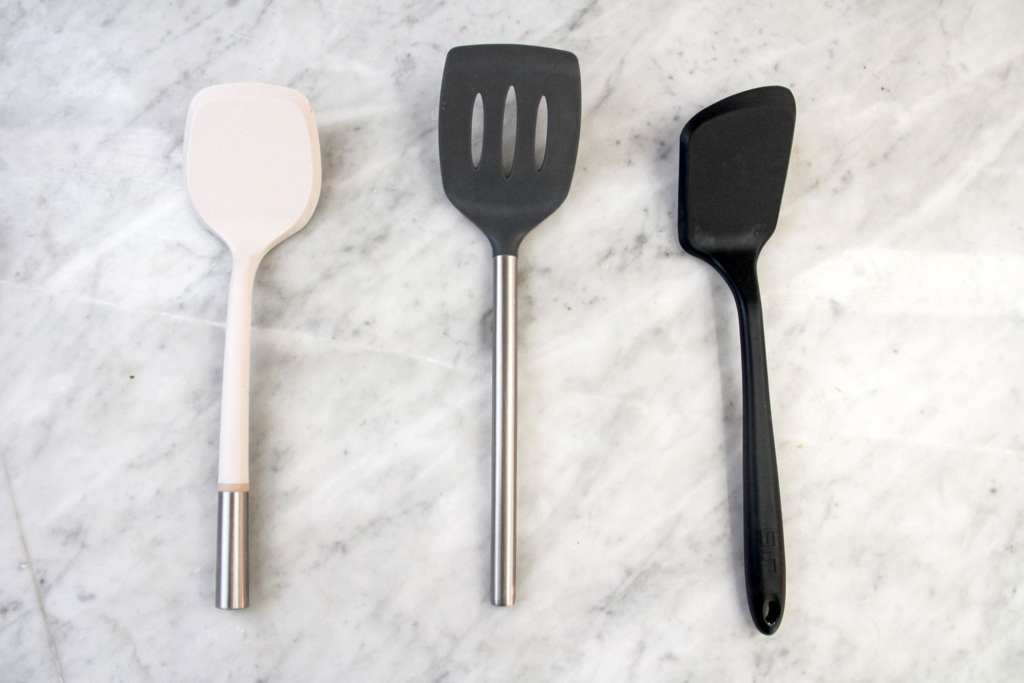
The strategic verdict for 2026 is that neither the silicone nor the metal spatula is universally superior; rather, their efficacy is entirely context-dependent. Silicone spatulas prioritize ergonomic comfort, hygiene, and the absolute protection of delicate foods and non-stick surfaces. Metal spatulas prioritize sheer mechanical leverage, precision, and invulnerability to extreme heat. To operate a kitchen with maximum efficiency and protect expensive cookware investments, consumers must abandon the “single tool” mindset and recognize these spatulas as distinct, specialized instruments engineered for completely different thermodynamic and mechanical environments.