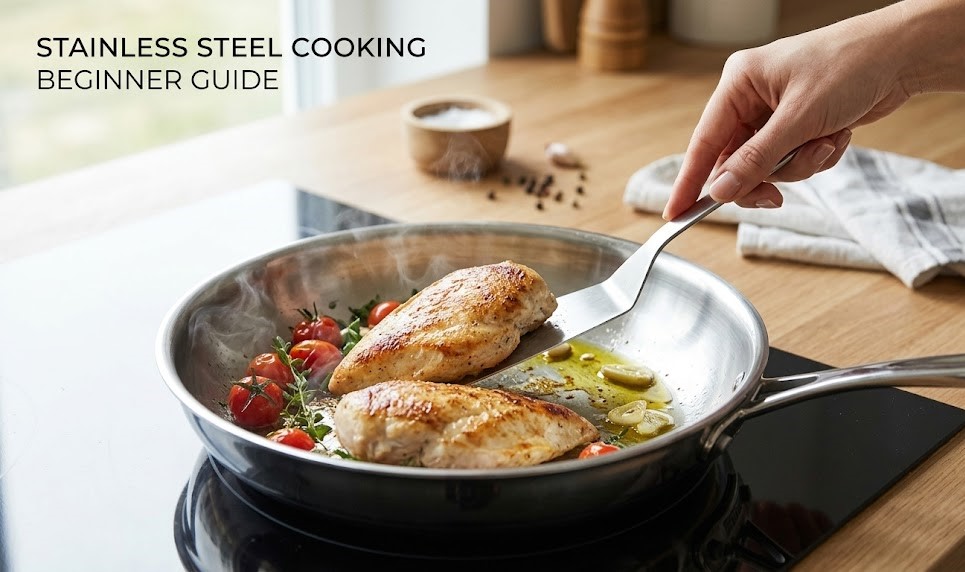
There’s a reason that stainless steel cookware is trusted by professional chefs around the world—it’s one of the most versatile cooking surfaces you can find. However, for some home cooks used to cooking on a coated non-stick surface, the idea of stainless steel can be daunting. Will your food stick? Will it be easy to clean?
Let’s go over the four key ways to keep food from sticking to your stainless steel cookware, ensuring your meals remain intact and unstuck, all while protecting the integrity of your pan for years to come.
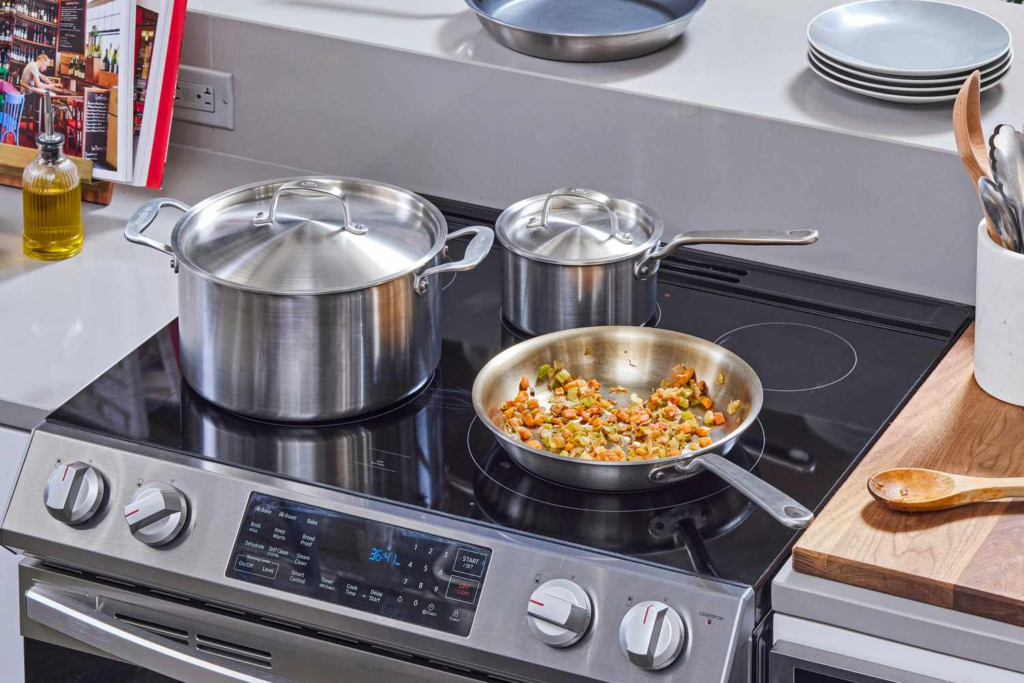
4 Rules for Using Stainless Steel Pans
1. Preheat Your Pan
In the same way you preheat your oven before baking, remember to preheat your pan before adding any food to the cooking surface. A preheated pan means that your food will be cooking from the moment it touches the surface, ensuring that it cooks evenly.
The Water Test: A neat trick to know if your pan is ready is the “water test.” Place a few drops of water in your preheated pan. When they form perfect spheres that dance across the surface, your pan has reached 350-375°F (the ideal range for most tasks).
- If the water evaporates instantly with an aggressive sizzle, your pan is too hot.
- If the drops sit and slowly evaporate, the temperature needs to rise.
- The perfect droplet will glide smoothly for 3-5 seconds before disappearing.
2. Keep a Moderate Heat Level
Use medium to moderate heat to avoid damaging your pan and the food inside of it. Overheating your pan can also burn any oils you are using to cook with. The only time to turn the heat up to high is when you are boiling liquids.
3. Fat is Your Friend
Using fat when cooking with stainless steel is absolutely crucial for preventing food from sticking. Begin by preheating your pan over medium heat for 2-3 minutes, then add a fat source such as butter or oil.
Since different fats have unique smoke points, you will want to ensure you choose one based on your cooking temperature to avoid rendering it bitter:
- Butter: Use at low heat (great for cooking eggs).
- Olive Oil: Use for moderate heat (sautéing vegetables or cooking a delicate fish).
- Grapeseed/Vegetable Oil: Use on higher heat when searing proteins.
4. Be Patient
Once you place your food in the pan, don’t be in a rush to move it around. If you move your food too early, it will stick to the cooking surface. The stainless steel surface will actively release your food when it is ready to be flipped. You can test this by gently nudging your food from side to side; if you encounter resistance, give it some more time.
Mastering Cooking Techniques
Searing, Sautéing, and Frying
Master the art of high-temperature cooking by understanding each method’s unique requirements.
- Searing: When searing meat, press down gently with tongs to ensure full contact with the pan’s surface, creating a golden crust. A splash of wine or broth helps deglaze those flavorful bits stuck to the pan (known as fond).
- Sautéing: Keep ingredients moving with quick wrist flips or a wooden spoon. This technique works beautifully for tender vegetables.
- Pan-Frying: This method demands more oil and steady heat. Maintain your oil temperature between 350-375°F for optimal results.
Cooking with Stainless Steel Pans in the Oven
Moving your stainless steel cookware from stovetop to oven opens up countless cooking possibilities. Most premium pans withstand temperatures up to 500-600°F, making them perfect for finishing thick steaks or baking casseroles. Remember that stainless steel handles become extremely hot during oven use—always keep protective mitts nearby for safe handling!
Maintaining and Caring for Your Cookware
Keeping your stainless steel cookware in top condition starts with proper cleaning.
Always let the pan cool completely before washing with warm water, mild soap, and a soft sponge. Never shock hot metal with cold water, as this can cause the metal to severely warp. For everyday messes, gentle circular motions with a non-abrasive sponge are enough to lift food without scratching the polished surface.
For tougher cleanup, simmer equal parts white vinegar and water in the pan to loosen stubborn residue, or make a baking soda paste to gently buff away stains. Always dry with a clean cloth to prevent water spots.
Why Stainless Steel Pans Are Worth the Investment
Investing in premium stainless steel cookware means choosing tools built to perform and last for decades. High-quality pans feature bonded materials—highly conductive metals like aluminum and copper are layered between stainless steel to provide exceptionally fast and even heat distribution. This superior construction helps eliminate hot spots and ensures precise temperature control.
While the initial cost may be higher than coated non-stick cookware, the long lifespan, unmatched durability, and reliable performance make stainless steel pans remarkably cost-effective over time.