Category: Kitchen

  • How to Cut a Watermelon: The Ultimate Guide to Perfect Slices Every Time

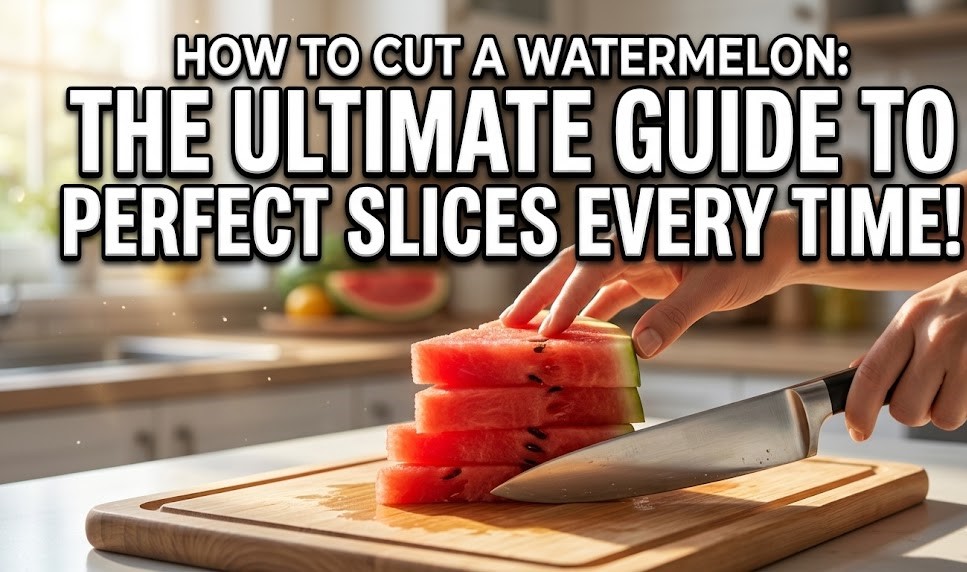
    How to Cut a Watermelon: The Ultimate Guide to Perfect Slices Every Time

    Cutting a Watermelon doesn’t need to be messy or difficult. With the right technique and a sharp knife, you can enjoy perfectly sliced fruit effortlessly for any summer gathering.
    Why Knife Choice Matters

    Your success in cutting a whole watermelon starts with selecting the right blade. A proper knife ensures clean cuts through the tough rind while protecting the delicate flesh inside.

    • Length and Balance: A longer blade lets you slice through the watermelon in one smooth motion, while proper weight distribution ensures control and stability—whether you’re cutting wedges, cubes, or half-moons.
    • Edge Retention: Maintaining sharp cutting power allows you to transform your watermelon into pristine pieces without crushing the fruit or creating jagged edges.

    Best Ways to Cut a Watermelon

    Here is how to transform your watermelon into different serving styles, whether you want to keep the rind or remove it entirely:

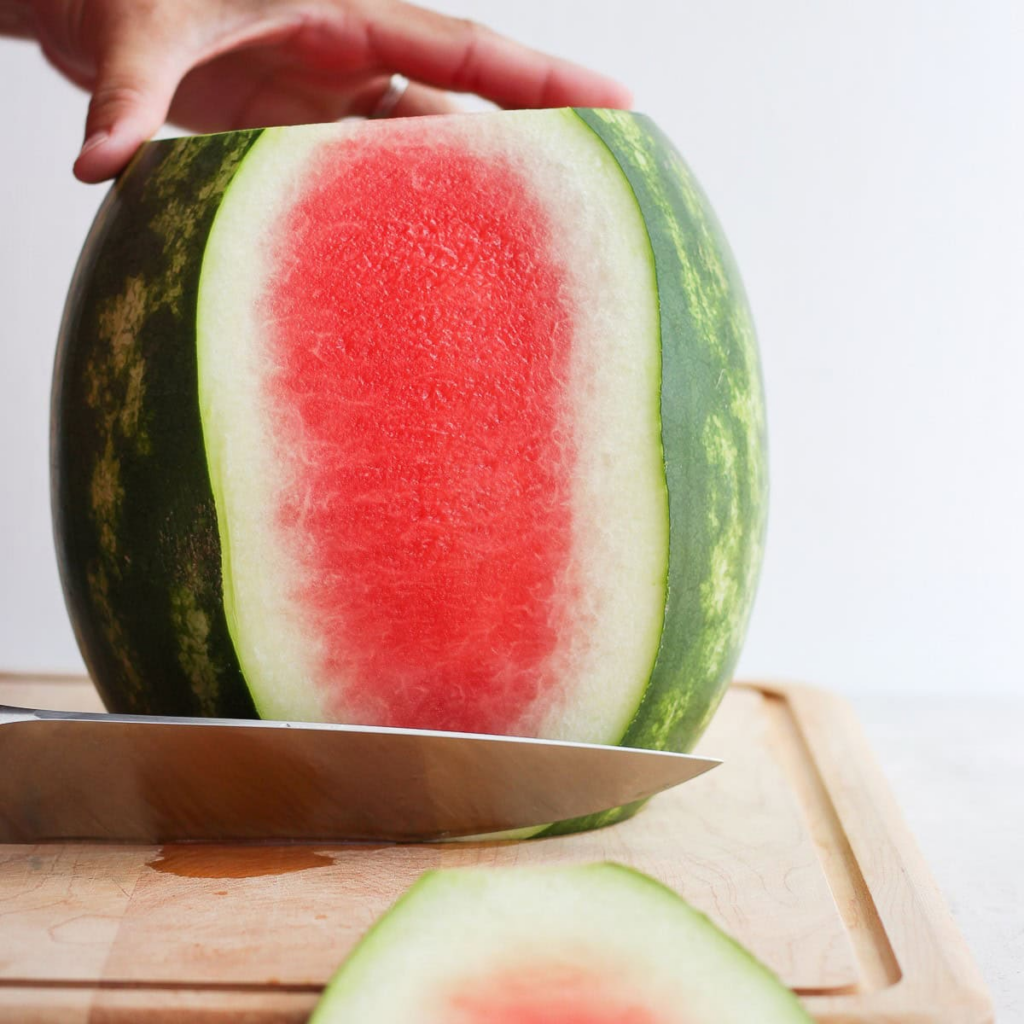
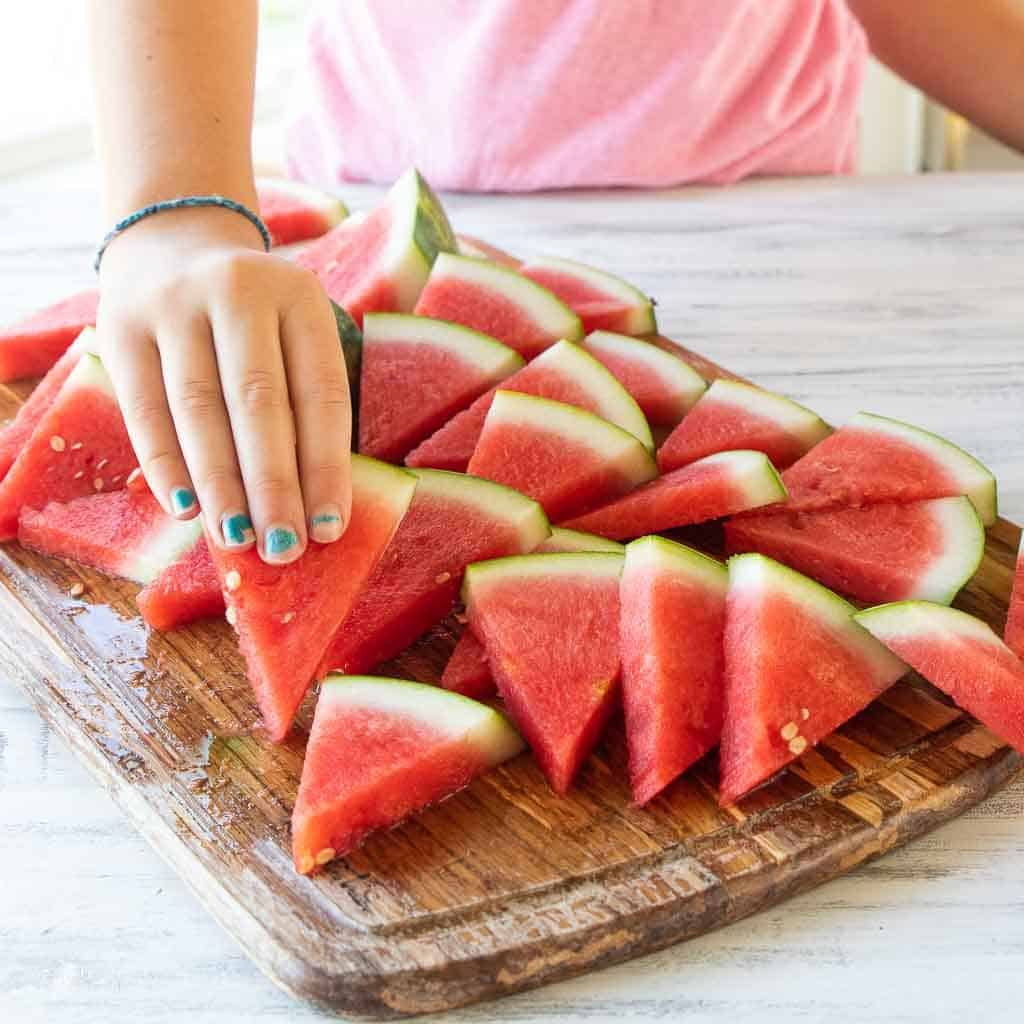
    • Classic Triangles: Place your halved watermelon cut-side down and slice it lengthwise into quarters. Working with one quarter at a time, make clean cuts across the flesh at 1-inch intervals. The rind provides a natural handle for easy snacking.
    • Party-Ready Cubes: After removing the rind, slice your watermelon into 1-inch thick planks. Stack these planks and cut them into 1-inch strips, then rotate 90 degrees to create uniform cubes. These are ideal for fruit salads or elegant appetizers.
    • Refreshing Sticks: Transform your halved melon by cutting it into 1-inch thick slabs, then slicing those slabs lengthwise into perfectly portioned sticks. This shape is perfect for dipping or arranging on platters.
    • Elegant Half-Moons: Create sophisticated half-moon slices by cutting the watermelon crosswise into 1-inch thick rounds, then halving each round.

    Tips for Safe and Efficient Cutting

    Position your watermelon halves with the flat side down on your cutting board to create a highly stable base for precise cuts.

    • Keep your fingers tucked while gripping the handle of your knife, maintaining control through each slice.
    • A damp paper towel placed under your cutting board safely prevents unwanted movement during cutting.
    • Watch the angle of your blade—a 45-degree approach works best for removing the rind cleanly.
    • Keep the knife handle and blade dry by wiping away excess juices as needed to prevent your hand from slipping.

    Best Knives for Cutting Watermelon

    • Chef’s knife: A standard 8-inch chef’s knife excels at watermelon preparation. The cutting edge delivers clean slices through both rind and flesh, while the ergonomic handle provides confident control.
    • Bread Knife: For larger melons, reach for an 8-inch bread knife. Its serrated edge easily grips the tough exterior without crushing the delicate fruit inside.
    • Santoku: A Santoku knife’s unique fluted blade design prevents watermelon pieces from sticking to the metal, making it perfect for creating precise, rapid cubes.
    Serving Your Watermelon: Creative Presentations

    Transform your expertly cut watermelon into stunning presentations that will elevate any summer dining experience.

    Create an eye-catching fruit board by arranging watermelon cubes alongside fresh mint leaves and crumbled Feta cheese. For an elegant twist, stack watermelon wedges in a cascading pattern on a serving platter, garnishing with fresh herbs.

    Turn watermelon into a refreshing summer appetizer by threading cubes onto skewers with fresh mozzarella, or craft a sophisticated watermelon Gazpacho that transforms this sweet fruit into a savory, chilled soup. For children’s parties, you can even use cookie cutters to punch out fun shapes from thin watermelon slices!
  • Kitchen Utensils for Stainless Steel Cookware: The Ultimate Guide

    Kitchen Utensils for Stainless Steel Cookware: The Ultimate Guide

    A Stainless steel material offers unmatched durability and versatility in the kitchen. Our premium stainless steel cookware resists corrosion, maintains its beautiful finish, and delivers consistent results. While this professional-grade material can withstand daily use, choosing the right Kitchen utensil enhances its exceptional performance and extends its already impressive lifespan.

    The key lies in pairing your cookware with tools that complement its superior construction—whether you’re searing a perfect steak or crafting delicate sauces. When you protect your pan’s cooking surface with appropriate utensils, you’re not just preserving its appearance; you’re ensuring optimal heat distribution and maintaining that coveted ability to deglaze and develop complex flavors. Think of it as investing in your cookware’s future, allowing it to remain your trusted kitchen companion for generations to come.

    Understanding Tool Materials: What Are The Best Cooking Utensils?

    Professional Metal Cooking Utensils

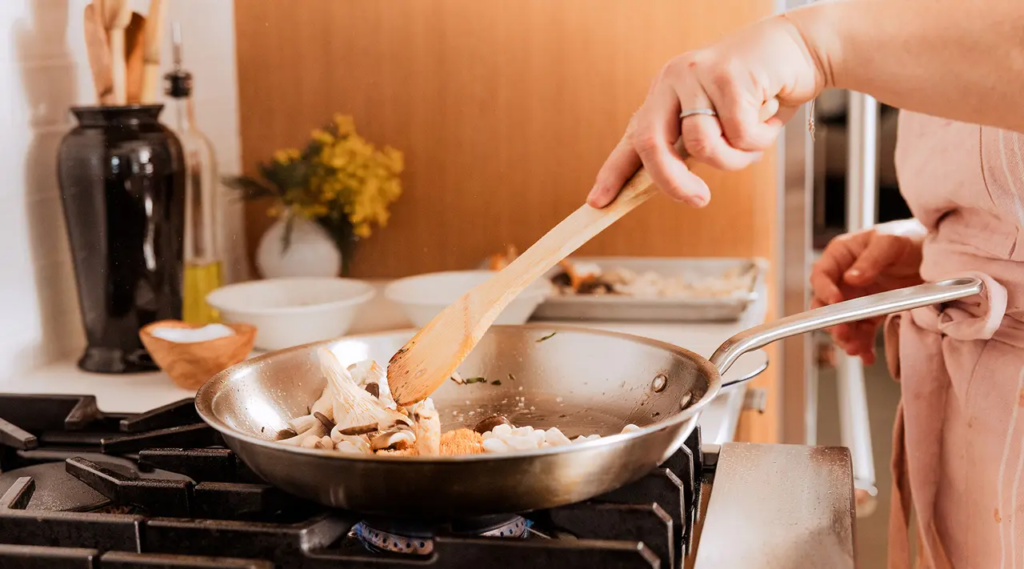
    Metal tools like stainless steel spatulas, spoons, and tongs are popular in professional kitchens for a reason: they are strong, precise, and perfect for tasks like searing meat or deglazing a pan. When you’re using bonded stainless steel cookware, especially pieces like frying pans or sauté pans, metal utensils can help you get a great sear or safely scrape up browned bits for rich sauces.

    Silicone Cooking Utensils

    Flexible, heat-resistant, and gentle on all surfaces, Silicone utensils are a great go-to for everyday cooking. They will not scratch your stainless steel cookware and are especially handy when working with delicate foods or high-heat tasks like stirring sauces, flipping eggs, or scraping out every bit of batter. Always look for high-quality, BPA-free silicone tools that can withstand high temperatures without warping or degrading over time.

    High-Quality Nonstick Utensils

    These utensils are lightweight, comfortable to use, and feature a safe Non-stick surface, making them a practical choice for everyday cooking. They are safe for stainless steel cookware and gentle enough to prevent scratching, which makes them a good option for newer cooks or busy kitchens. Just be mindful not to leave them resting in very hot pans or near direct heat sources, as extreme heat can affect their shape over time and affect their performance.

    Cooking Safely and Effectively with Stainless Steel

    Stainless steel cookware is designed for exceptional performance, durability, and long-term use. While our cookware is built to withstand high heat and heavy use, using the right utensils and techniques helps you get the most out of every piece.

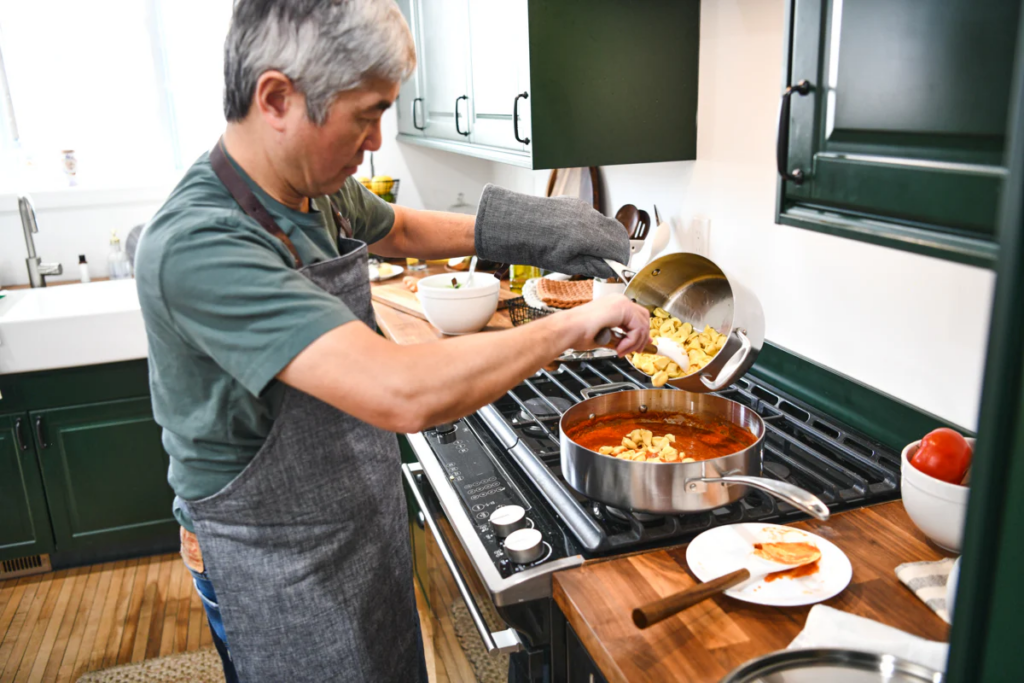
    • Control the heat: To maintain peak performance, we recommend cooking over medium heat and preheating the pan before adding oil or ingredients. All-Clad stainless steel conducts heat efficiently, so there’s no need for high temperatures in most cases.
    • Keep it clean: Keeping your cookware clean and dry between uses also helps it retain its signature appearance, whether you’re cooking every night or just on weekends.
    • Choose the right tool: Whether you’re flipping with stainless steel tongs or stirring with a silicone Spatula, matching the tool to the culinary task ensures professional results.

    Must-Have Tools for Stainless Steel Cooking

    For the ultimate stainless steel cooking experience, start with versatile spatulas in both metal and silicone varieties, paired with durable spoons and ladles available in your choice of silicone or stainless steel construction. Complete your essential collection with sturdy tongs for precise control, high-quality whisks, and efficient slotted tools perfect for draining and serving. Each piece is designed to complement your cookware while ensuring optimal performance and longevity.

    Explore All-Clad’s Professional Kitchen Tool Sets

    Crafted with the same meticulous attention to detail as our renowned cookware, All-Clad’s professional-grade utensils deliver unmatched durability and precision in every kitchen task. Our heavy-gauge stainless steel tools are thoughtfully engineered with ergonomic handles and perfectly balanced weight, ensuring comfortable control whether you’re deglazing a pan or serving your culinary masterpieces.

    These chef-inspired tools are specifically designed to complement our stainless steel cookware, featuring extended handles that keep your hands safely away from heat and precision-crafted edges that protect your pans’ cooking surface, making All-Clad utensils the perfect partner for your cooking adventures.

    How to Care for and Maintain Your Utensils

    Keeping your kitchen tools in prime condition ensures they’ll perform beautifully alongside your All-Clad cookware for years to come. Here’s how to maintain your investment:

    Daily Care Made Simple

    • Remove any food residue promptly to prevent staining or odor absorption.
    • Hand wash utensils in warm, soapy water immediately after use.
    • Dry thoroughly with a soft cloth to prevent water spots and maintain shine.
    • For dishwasher-safe tools, place them handle-up in your utensil basket.

    Smart Storage Solutions

    • Store utensils upright in a sturdy holder to prevent tangling and scratches.
    • Use drawer dividers to keep tools organized and protected.
    • Place soft dividers between stacked items to prevent scratching.
    • Keep tools away from direct heat sources and excessive moisture.

    Pro Tip: Invest in quality utensil holders and drawer organizers that match your kitchen’s style while effectively protecting your tools.


  • Master Your Kitchen: The Ultimate Guide to Choosing Between a Santoku and a Chef Knife

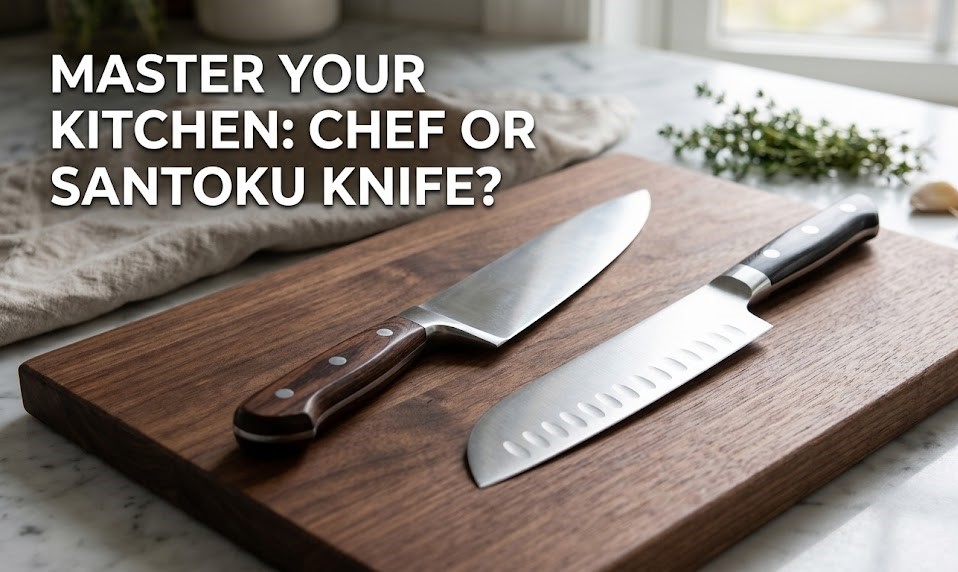
    Master Your Kitchen: The Ultimate Guide to Choosing Between a Santoku and a Chef Knife

    When selecting between premium knife offerings for your kitchen, understanding their practical applications makes all the difference. While both blades are essential multi-purpose tools, they each bring distinct strengths to your cutting board.

    Consider your personal cooking style and typical ingredients when making your choice. The classic chef knife proves invaluable for larger tasks and heavy-duty chopping, while the Santoku shines in detailed prep work requiring exactness and finesse.

    Santoku vs. Chef’s Knife: What’s the Difference?

    Understanding Blade Designs

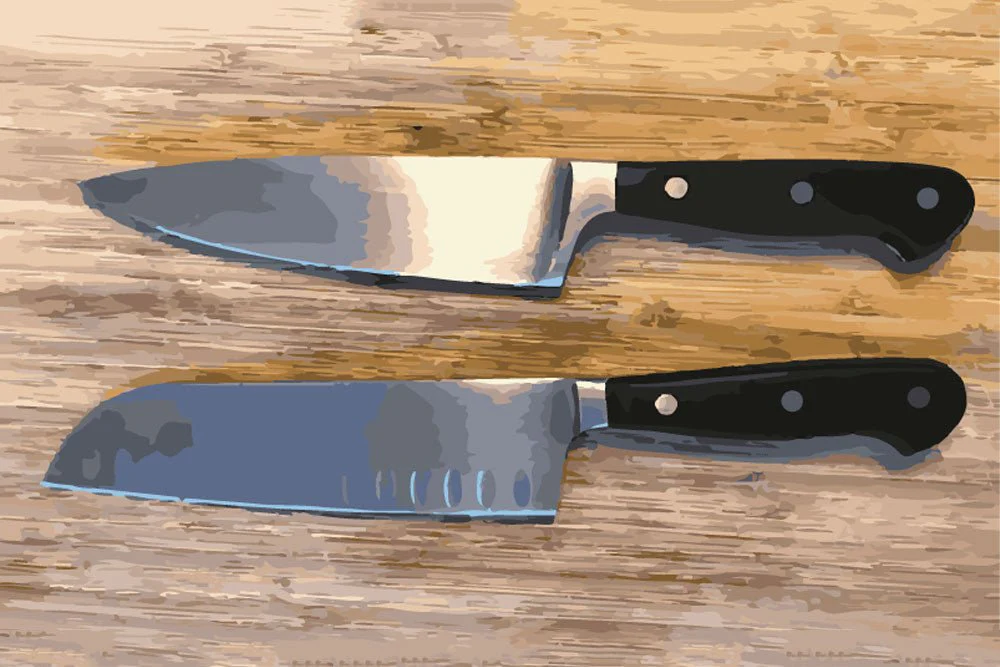
    The chef’s knife blade design showcases proven Western craftsmanship with its signature curved edge and longer blade length. It is perfectly suited for the characteristic “rocking motion” during cutting. Premium chef knives feature robust, full-tang construction and precision-honed edges that deliver exceptional performance for a wide range of heavy kitchen tasks, from dicing onions to breaking down whole poultry.

    The Santoku blade features a distinctive Japanese design with a shorter, straight cutting edge. Its wide, flat profile is beneficial for scooping up ingredients, while the precision-engineered edge ensures optimal cutting performance. Because the blade lacks a curved belly, its unique profile excels at rapid up-and-down cutting motions rather than rocking. Most Santoku blades also incorporate specialized grooves (a Granton edge) that prevent starchy or delicate food from sticking to the metal during use.

    Features of Santoku Knives: What Are Their Advantages?

    The name “santoku” translates to “three virtues,” representing its absolute mastery of three essential cutting techniques: slicing, dicing, and chopping.

    The Santoku knife represents Japanese precision engineering at its finest. Its balanced weight distribution and ergonomic design make it especially adept at precise cutting tasks, from creating paper-thin vegetable slices to portioning delicate fish fillets. The distinctive design features a shorter blade length, typically around 7 inches.

    Santoku knives excel at the following cutting techniques:

    • Push-cutting: For clean, highly precise vegetable slices.
    • Tap-chopping: For uniform dicing and rapid mincing.
    • Pull-slicing: For exceptionally thin, delicate cuts of fish and raw meat.
    • Vertical chopping: For finely processing herbs and aromatics.

    Features of Chef Knives: What Is a Chef Knife Used For?

    The chef’s knife stands as the quintessential kitchen tool, revered by professional chefs and home cooks alike for its exceptional, heavy-duty versatility. This iconic blade typically ranges from 6 to 12 inches in length, with the 8-inch version being the most popular for its optimal balance of power, weight, and control.

    The distinctive design features a broad heel that tapers to a pointed tip, creating a slight curve along the cutting edge known as the “belly.” This curved profile enables the characteristic rocking motion technique, where the knife pivots smoothly against the cutting board while maintaining constant contact. The wide, heavy blade serves multiple functions, from crushing whole cloves of garlic to scooping prepared ingredients.

    Chef knives excel at the following cutting techniques:

    • Rock chopping: For easily breaking down large piles of herbs and leafy vegetables.
    • Straight-down chopping: For firm, dense root vegetables like potatoes and carrots.
    • Draw cuts: For smoothly slicing through thicker meats and fish.
    • Cross-chopping: For heavy, fine mincing tasks.

    All-Clad Professional Knife Sets: The Best of Both Worlds

    If you can’t choose just one, comprehensive knife sets combine the versatility of both the chef knife and the Santoku knife into one professional collection.

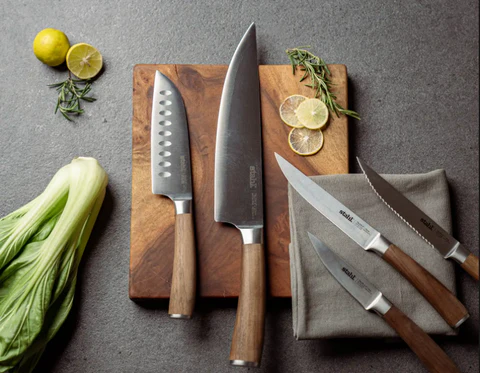
    • The 7-Piece Set: Features an 8-inch chef’s knife and a 7-inch Santoku knife, allowing home cooks to experience the best of both Western and Asian cutting techniques. It also includes essentials like a serrated utility knife, paring knife, honing steel, and kitchen shears housed in an acacia wood block.
    • The 12-Piece Set: Builds upon the foundational 7-piece block by adding premium steak knives and a long 8-inch bread knife for a complete kitchen solution.

    Choosing the Right Knife for You

    When investing in a knife, material quality is paramount. Premium kitchen knives are often crafted from X50CrMoV15 German stainless steel. This exceptional material combines high chromium content with the perfect balance of manganese, silicon, and carbon, delivering superior rust resistance and lasting durability.

    Additionally, look for blades that undergo an innovative cryogenic treatment with liquid nitrogen, which massively enhances both edge retention and overall corrosion resistance. Whether you choose the precise 7-inch Santoku or the robust 8-inch Chef Knife, investing in a precision-engineered 26-degree total cutting edge will achieve the ideal balance between razor-sharp performance and chip resistance in your kitchen.

  • Best Pans for an Induction Cooktop

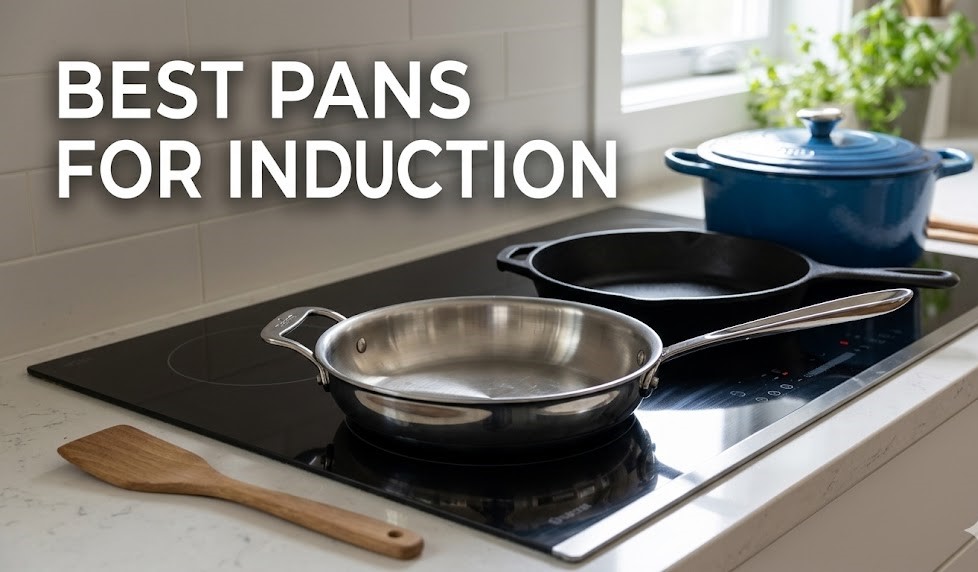
    Best Pans for an Induction Cooktop

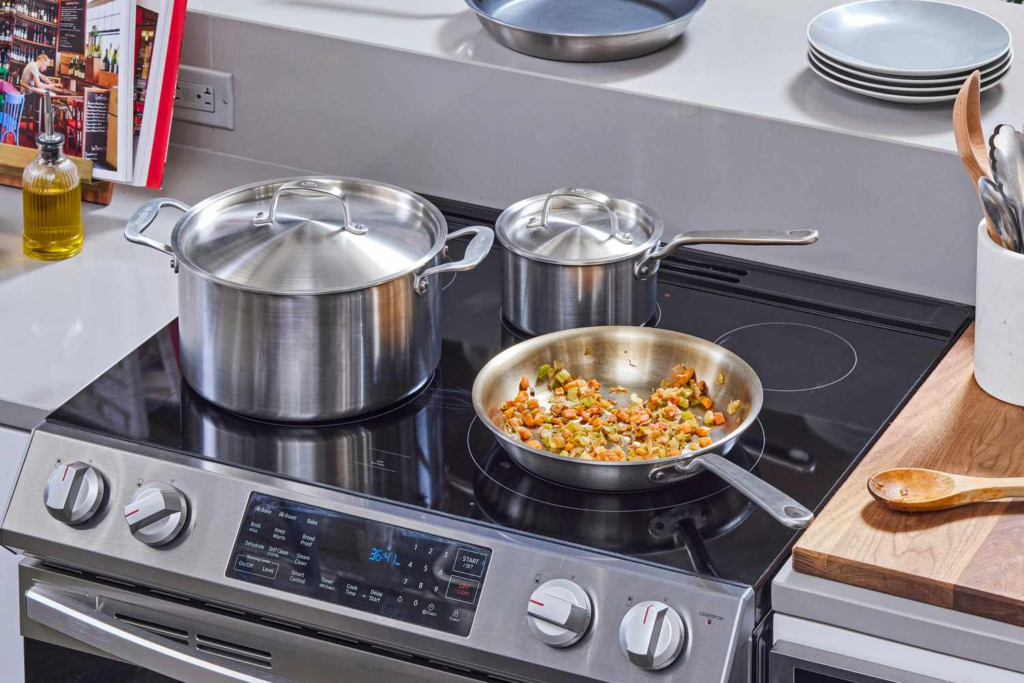
    Induction cooktops have transformed home cooking with their precise temperature control and exceptional energy efficiency, earning a top spot among professional chefs and dedicated home cooks alike.

    However, to get the absolute best performance and results from your investment, you must choose the right cookware. At All-Clad, our premium cookware collections feature high-quality materials and expert craftsmanship that deliver exceptional cooking performance. Most of our collections are completely compatible with induction cooktops, thanks to their magnetic stainless steel bases, offering you even more versatility in your kitchen.

    Why You Need Specific Cookware for Induction Cooktops

    Induction cooktops rely on direct contact between a pan’s magnetic base and the induction stove to generate heat. Unlike traditional gas or electric ranges that transfer heat via a flame or hot coil, induction cooking heats the pan directly using an electromagnetic field. This offers incredibly rapid heating while keeping your actual kitchen much cooler.

    Because of this unique technology, your pans must have a magnetic bottom to function with the stovetop. Aluminum, copper, or glass pans without magnetic layers will simply not work on an induction stove.

    What to Look for in the Best Induction Pans

    When selecting the best cookware for your induction range, keep these key factors in mind:

    • Magnet Compatibility: A simple test is to place a refrigerator magnet at the bottom of your pots or pans. If it sticks firmly, the cookware is induction-compatible! If the magnet slides off, the pan will not work.
    • Flat, Sturdy Bases: A perfectly flat base ensures maximum contact with the glass induction stove surface for even heat distribution.
    • Quality Materials: Multi-layer stainless steel and aluminum cores, like in All-Clad’s bonded collections, provide rapid, even heating without frustrating hot spots.
    • Oven-Safe Versatility: Many high-quality pans transition seamlessly from your induction cooktop straight into your oven for finishing dishes.

    Recommended All-Clad Products for Induction Cooking

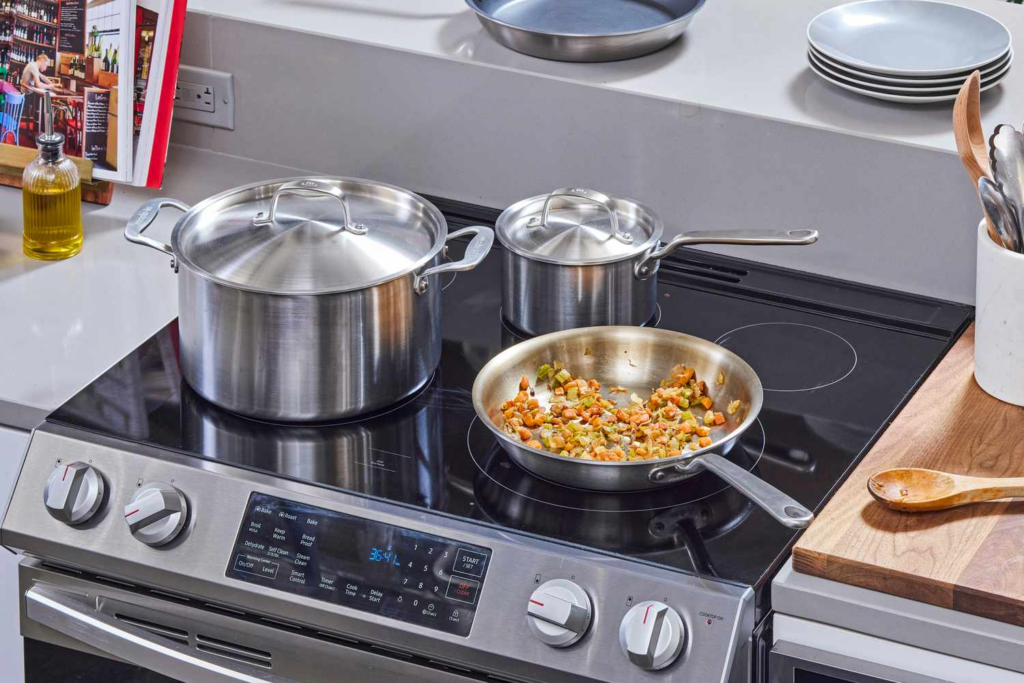
    All-Clad offers several collections engineered to deliver precise results on induction cooktops, thanks to their bonded construction with a magnetic stainless exterior:

    Stainless Steel Collections:

    • D3® Stainless Steel & D3® Everyday
    • D5® Stainless (Brushed & Polished)
    • G5® Graphite Core
    • Copper Core®

    Nonstick & Hybrid Collections:

    • HA1® Expert & NS Pro® (Note: Square shapes in these lines do not have a Stainless Steel Base and are not induction compatible).
    • D3® Pro Nonstick, D5® Pro Nonstick, and Copper Core® Pro Nonstick.

    Tips for Using Stainless Steel on an Induction Cooktop

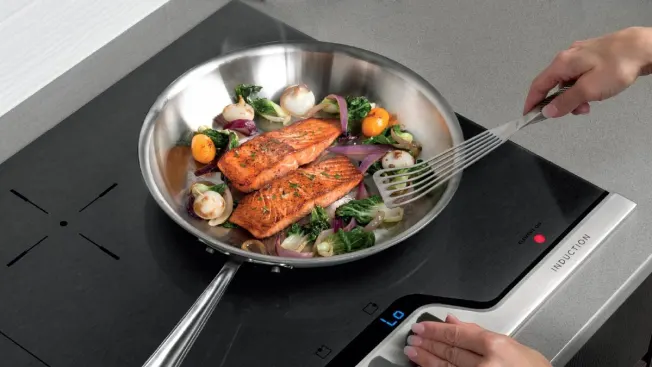
    Using stainless steel on an induction surface offers superior searing, browning, and deglazing. All-Clad’s stainless steel cookware features bonded layers that combine the rapid heat conductivity of aluminum or copper with the incredible durability of a magnetic exterior.

    Here are a few tips for cooking on induction:

    1. Preheat gradually: Because induction heats so quickly, preheat your pan slowly on a medium setting rather than blasting it on high.
    2. Use oil: Use your desired amount of cooking oil to enhance searing and prevent sticking.
    3. Avoid thermal shock: Avoid sudden temperature changes (like running a hot pan under cold water) to protect your pans from warping and to keep your induction cooktop surface safe.
    4. Keep it clean: Always ensure your pans have a perfectly clean, dry bottom to maintain good magnetic contact and avoid scratching the glass stove.

    Frequently Asked Questions

    What pans work with induction cooktops? Only pans with a magnetic base work. Suitable pans include those made with cast iron, enameled cast iron, and magnetic-grade stainless steel.

    Can you use stainless steel pans on an induction cooktop? Yes, stainless steel pans can be used flawlessly on an induction cooktop as long as they have a magnetic base.

    How can you tell if a pan is suitable for induction cooktops? You can easily check by placing a magnet on the bottom of your pan. If the magnet sticks securely, your pan is compatible. Additionally, most modern cookware will feature an “induction compatible” symbol on the bottom of the pan or note it clearly in the product description.

  • Best Pots for Making Soup: A Guide to Comfort in Every Season

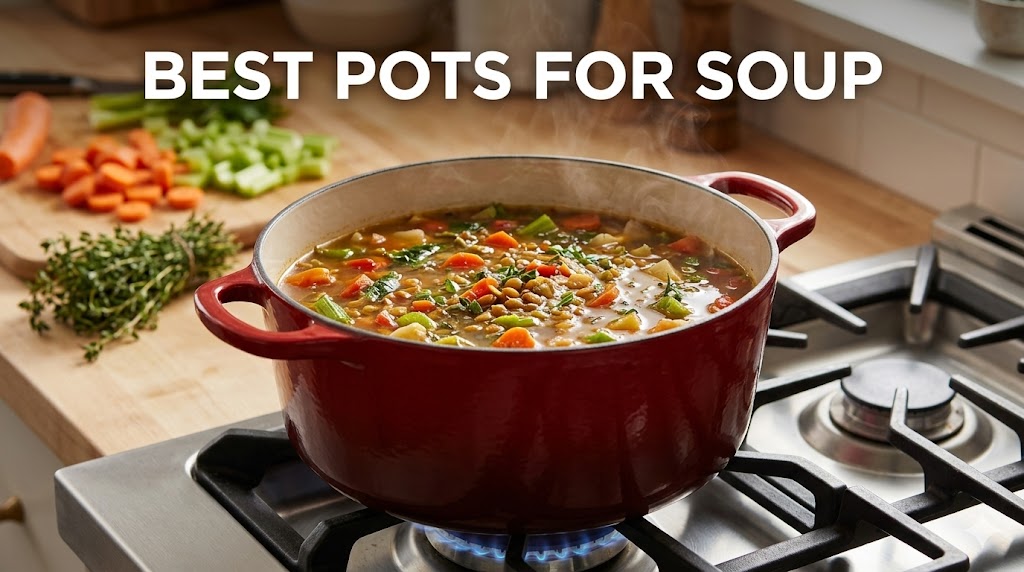
    Best Pots for Making Soup: A Guide to Comfort in Every Season

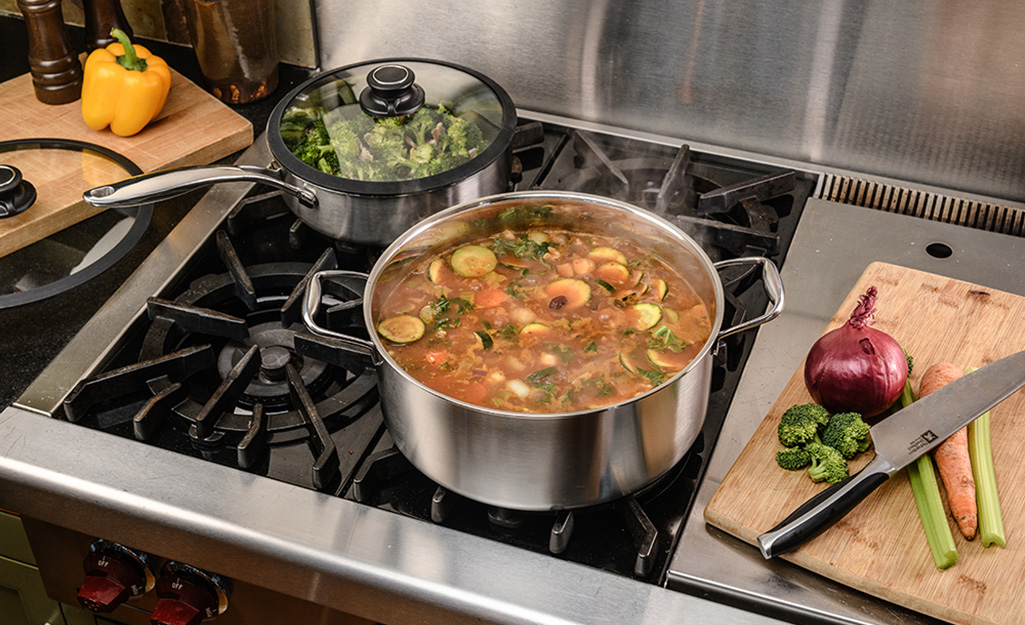
    Few dishes deliver comfort quite like a steaming bowl of soup. From hearty stews on cold winter nights to bright, brothy bowls in the warm summer months, soup is truly timeless. To get consistent, delicious results, the best pots for making soup must combine even heat distribution, thoughtful materials, and the perfect size for your cooking needs.

    Here is your complete guide to finding the ultimate vessel for your next batch of comfort food.

    Types of Vessels for Making Soup

    No matter the recipe—whether it’s a delicate broth or a robust, chunky stew—the vessel you choose fundamentally shapes both flavor and texture. The right pot helps ingredients cook evenly, release their natural richness, and blend into a comforting bowl that feels complete. From small saucepans to massive stockpots, each piece brings its own advantages to your kitchen routine.

    1. The Saucepan

    A classic saucepan shines for smaller batches, heating creamy bisques, or reheating leftovers. Its tall sides limit evaporation, and its wide base helps build flavor when sautéing aromatics like garlic and onions. If you cook for one or two people, a compact saucepan keeps portions right-sized and cleanup incredibly simple.

    2. Multipots for Large Batches

    When you’re cooking for a crowd—or cooking once and freezing for the month—large pots offer ample space so ingredients can move freely and cook evenly. Think family-sized chili, chicken noodle soup for the week, or a massive vegetable minestrone. Multipots are versatile multitaskers, ideal for boiling, steaming, and crafting homemade stocks.

    3. Stainless Steel Stock Pots

    A stainless steel stock pot is a timeless essential for cooks who value flavor, performance, and extreme durability. Premium stainless steel pots feature multi-layered construction with a thick base that handles high heat with ease. Great stockpots share key traits: a wide base to maximize browning, tall sides to manage volume and reduce splatter, sturdy handles you can grip securely with oven mitts, and a tight-fitting lid to control steam. (For many home cooks, the 6 to 8-quart capacity is the absolute sweet spot).

    4. Nonstick Stock Pots

    If you prioritize easy cleanup, nonstick stock pots drastically reduce sticking—especially with thick, cream-based soups and starchy recipes like potato leek. Just remember to use silicone or wooden utensils to protect the coating!

    Our Top Picks for the Best Soup Pots

    The best large stock pot balances capacity, stability, and heat control. Look for a durable material, a thick bonded base, and strong handles. Here are our top All-Clad recommendations:

    • All-Clad D5 Stainless Brushed Soup Pot with Lid (4 qt): Premium stainless steel with a bonded base for steady heat; ideal when clarity of flavor matters for smaller families.
    • Enameled Cast Iron Dutch Oven with Lid (6 qt): The best Dutch oven for hearty stews and slow simmers; offers superb heat retention and an elegant table presence.
    • All-Clad D5 Stainless Polished Ultimate Soup Pot with Ladle (6 qt): A polished showpiece with an included ladle; perfect for serving and entertaining with exceptional performance.
    • HA1 Expert Nonstick Soup Pot with Lid (4 qt): A practical pot for weeknights; the nonstick interior supports lighter cooking and simple cleanup.
    • Essentials Nonstick Stockpot with Multi-purpose Insert (7 qt): A flexible stockpot with an insert for pasta, blanching, or steaming—excellent large-pot utility all in one piece of cookware.

    How to Make Soup: Tips for Home Cooks

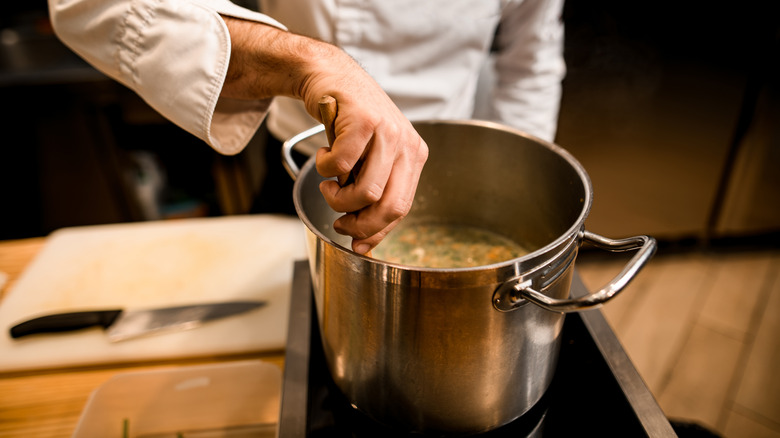
    • Build flavor at the bottom: Sweat onions, celery, and carrots (mirepoix) over medium heat on the bottom of the pot to build a flavorful foundation before adding your liquid.
    • Simmer, don’t boil hard: Bring your soup to a boil, then immediately drop it to hold a gentle simmer. This ensures clear stocks and tender textures for your meat and vegetables.
    • Season in layers: Add salt early in the cooking process and adjust at the very end. Finish your soup with a splash of acidity (like lemon juice) or fresh herbs to brighten the bowl.
    • Choose the right size: Use a smaller size (2–4 qt) for quick weeknight meals, and a large size (10+ qt) for bulk batch cooking and freezing.

    Frequently Asked Questions

    Are stainless steel pots good for making soup? Yes—stainless steel is a preferred material. It is highly durable, fantastic for deglazing flavorful fond from the bottom of the pot, and compatible with most cooktop ranges, including modern induction cooktops.

    Are stock pots actually good for making soup? Absolutely. Stock pots are built specifically for flavor and control. Their tall sides minimize evaporation so your broth stays concentrated, while the wide base promotes even heating for a gentle, consistent simmer. With an All-Clad stainless steel stock pot, you can brown vegetables or meat directly on the bottom before deglazing, creating a rich foundation of complexity.

    What size saucepan or stockpot do I need for making soup?

    • 2–4 Quarts: Perfect for smaller batches for 1–2 people.
    • 6–8 Quarts: The most versatile, everyday range for standard family dinners.
    • 10+ Quarts: Best for hosting large parties, simmering massive batches of bone broth, or meal-prepping to freeze portions.
  • What Is Fond in Cooking?

    What Is Fond in Cooking?

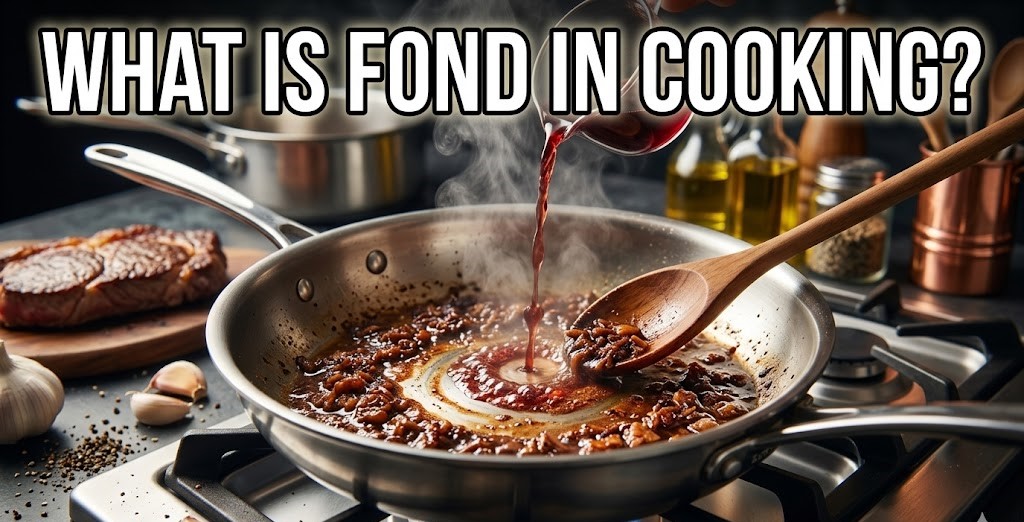
    If you’ve ever sautéed chicken, seared steak, or roasted vegetables in a stainless steel pan, you may have noticed golden-brown bits clinging to the bottom of the cookware. This is fond—a French culinary term meaning “base” or “foundation.”

    Far from being simple leftover residue, fond is one of the most powerful tools a cook has for building incredible depth of flavor in a dish.

    Cooking Fond: The Flavor Foundation

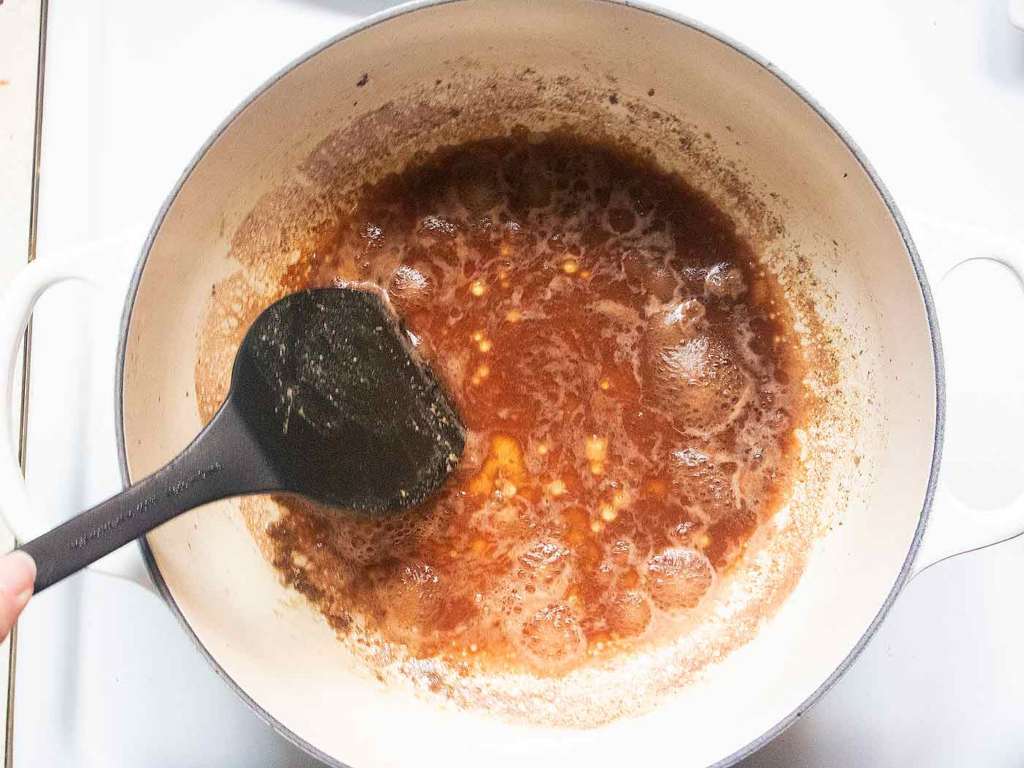
    Cooking fond happens when proteins and sugars caramelize against the hot surface of your pan through a process known as the Maillard reaction. As food cooks, these flavorful browned bits remain stuck to the metal after you remove the main ingredient.

    While some beginner cooks may mistake it for burnt food that needs to be scrubbed away, it’s actually quite the opposite: fond is highly concentrated flavor just waiting to be unlocked.

    The key to developing a good fond is cooking in high-quality, uncoated cookware. Stainless steel excels at creating fond because it heats evenly and encourages food to sear beautifully.

    What Is Fond Sauce?

    When liquid is added to the hot pan to dissolve and lift those browned bits, fond transforms into a fond sauce (more commonly known as a pan sauce). By deglazing the pan with wine, broth, or even water, you capture those concentrated flavors, turning them into a silky, savory sauce that perfectly complements your dish.

    Common Variations of Fond

    Different proteins create different flavor profiles:

    • Beef fond: Yields a deep, robust flavor that is ideal for rich red wine reductions.
    • Chicken fond: Light and savory, making it a great base for bright lemon, caper, and butter sauces.
    • Vegetable fond: Sweet and surprisingly complex, perfect for creating vegetarian pan sauces or gravies.

    How Do You Make Fond?

    While fond is typically a natural outcome of pan-searing, you can intentionally set yourself up for success to make the best fond possible. Making fond is simple but requires a few key techniques:

    • Preheat your pan: A heavy stainless surface distributes heat evenly and encourages rapid caramelization.
    • Dry your ingredients: Always pat your meat or vegetables completely dry with a paper towel. Moisture creates steam, and you want to ensure a hard sear rather than steaming.
    • Don’t overcrowd the pan: Putting too much food in the pan drops the temperature and causes the food to release juices, which inhibits browning. Work in batches if necessary.
    • Let it cook: Resist the urge to move the food around too soon. Fond develops best when the food is left completely undisturbed for a few minutes.

    How Do You Make a Pan Sauce Using Fond?

    Once your fond has developed on the bottom of the pan, you can turn it into a restaurant-quality sauce in just a few minutes:

    1. Remove the food: Take the main ingredient (meat or veggies) out of the pan and set it aside to rest.
    2. Deglaze: Pour in a splash of liquid—like white wine, beef stock, or apple cider vinegar.
    3. Scrape: As the liquid bubbles, use a wooden spoon or silicone spatula to gently scrape up all the browned bits from the bottom of the pan.
    4. Reduce: Let the liquid simmer and reduce until it is slightly thickened and the flavors are concentrated.
    5. Finish: Turn off the heat and stir in a pat of cold butter, a splash of heavy cream, or fresh herbs to give the sauce richness and a glossy finish.

    Professional Tip: Why Use Fond?

    Chefs consider fond to be the ultimate culinary shortcut to complexity. It builds massive flavor without requiring you to add a bunch of extra ingredients, reduces kitchen waste, and transforms simple weeknight dinners into gourmet experiences. A plain chicken breast instantly becomes an elegant entrée when paired with a quick wine-and-herb pan sauce!

    All-Clad Pans to Master Fond Cooking

    To achieve an exceptional sear and the perfect fond, it is highly recommended to invest in cookware that performs at a professional level:

    • All-Clad D3 Stainless 3-Ply Fry Pan: Ideal for even browning and hard searing.
    • All-Clad Copper Core Sauté Pan: Excellent heat control for delicate sauces and reductions.
    • All-Clad D5 Brushed Stainless Steel Dutch Oven: Perfect for building fond during slow braises or for larger cuts of meat.
  • Cleaning and Care: How to Clean Stainless Steel Pans and Keep Them Looking New!

    Cleaning and Care: How to Clean Stainless Steel Pans and Keep Them Looking New!

    There’s nothing quite like a brand-new stainless steel pan—bright, reflective, and ready for everything from weeknight sautés to serious searing. The good news is that with the right routine, stainless steel can stay beautiful and perform at a high level for years.

    Knowing how to cook with stainless steel is just as important as knowing how to clean it. Proper preheating, using the right amount of oil, and letting food naturally release all help protect your pan’s surface while improving your cooking results. By combining smart cooking techniques with the simple maintenance habits below, you’ll enjoy the full benefits of stainless steel—durability, versatility, and professional-quality performance—for decades.

    Daily Care: The Best Way to Clean Stainless Steel Pans After Cooking

    Start simple. Most of the time, stainless steel cleans up incredibly easily if you follow a few key habits:

    1. Cool Completely: Start your daily cleaning routine by letting your stainless steel pans cool completely. Never submerge a hot pan in cold water, as this risks thermal shock, which can permanently warp its structure.
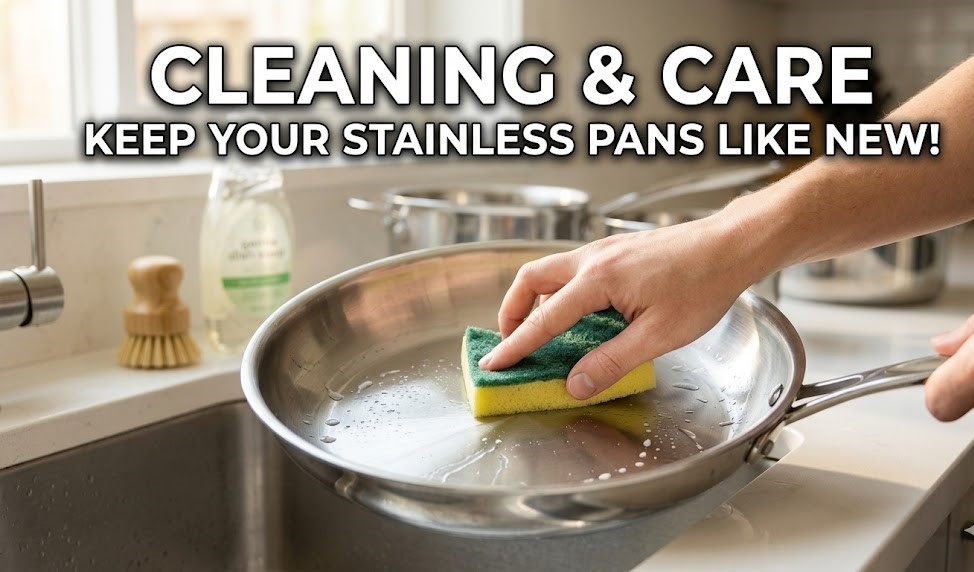
    2. Wash Gently: For everyday food residue, use warm water with a gentle dish soap and a soft sponge to clean both the interior and exterior surfaces.
    3. Dry Thoroughly: Remember to dry your cookware thoroughly with a clean cloth right after washing to prevent hard water spots.
    4. Soak When Needed: When faced with stubbornly stuck-on food, fill the pan with hot water and let it soak for 15 minutes. This simple step makes cleanup much easier and preserves your cookware’s finish by eliminating the need for harsh scrubbing.

    How to Properly Remove Stains and Burnt Food

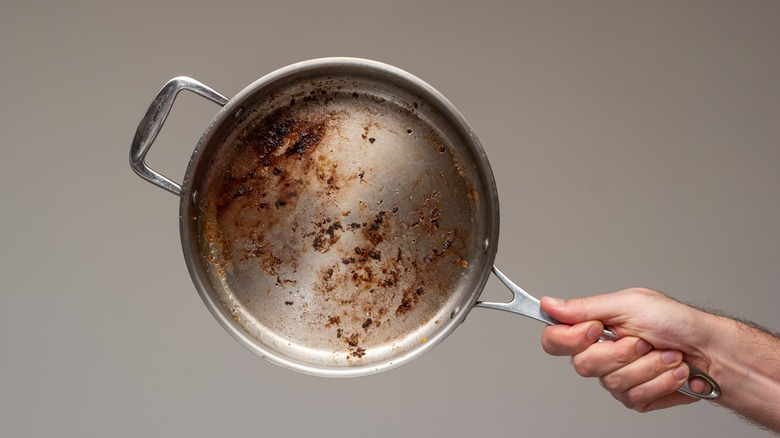
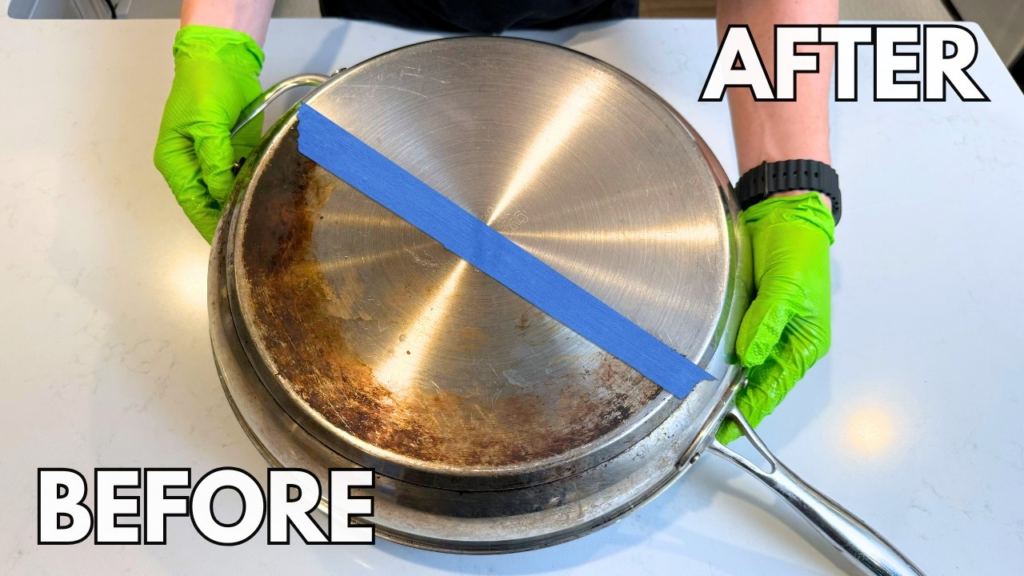
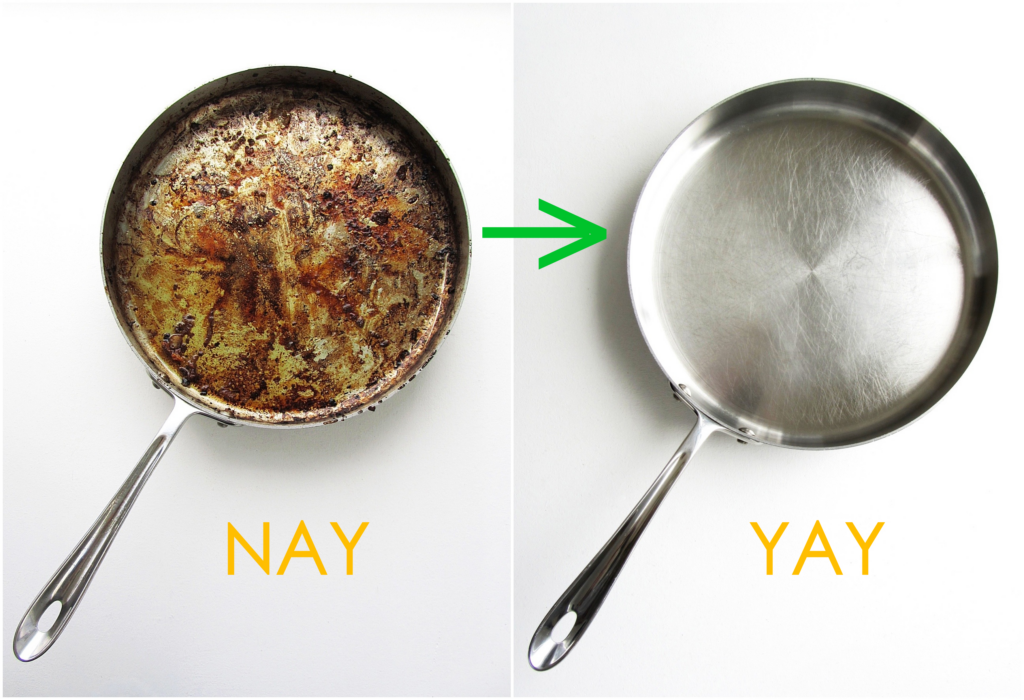
    For those challenging cooking mishaps, create a thick paste using baking soda and water. Apply this mixture to burnt areas and wait for 5-10 minutes while it works its magic. A non-abrasive sponge will then easily lift away the residue.

    For much tougher stains and professional-level results, use the All-Clad Stainless Steel and Aluminum Cleaner. This specialized formula combines natural minerals with environmentally safe ingredients to restore your cookware’s original brilliance. It effectively removes mineral deposits and cooking residue without scratching. Apply a small amount with a damp cloth, working in circular motions to reveal the metal’s natural luster. (Note: Premium stainless steel cleaners should not be used on hard anodized, copper, or nonstick cookware.)

    Tackling Water Spots and Pan Discoloration

    Discoloration or hard water spots (often characterized by a rainbow-like tint on the metal) call for a specialized approach. White vinegar acts as a brilliant, natural stainless steel cookware cleaner.

    Mix equal parts water and white vinegar in the pan, bring it to a gentle simmer, and then remove it from the heat. The acidic solution naturally breaks down burnt residue and mineral buildup, making cleanup significantly easier. Let the pan cool, wash it with soap and water, and then dry it thoroughly. Your pan will look cleaner and dramatically brighter!

    Maintaining Your Cookware: Preventing Warping and Surface Damage

    Maintaining your pan’s structural integrity starts with proper heat management. Consider preheating your pan gradually over medium heat rather than starting with high temperatures. This practice prevents thermal shock and ensures your cookware maintains its perfectly flat cooking surface for years. For example, when searing meat, bring your pan to temperature over 2-3 minutes rather than blast-heating it.

    When cooking, match your pan size to your burner diameter for even heat distribution. For maximum protection during storage, place felt pot protectors between stacked pans to prevent the metal bottoms from scratching the polished interiors.

    What NOT to Use on Stainless Steel Cookware

    Protect your cookware’s longevity by avoiding harsh cleaning materials.

    • Abrasives: Metal scouring pads and steel wool will leave permanent scratches across your pan’s pristine finish.
    • Harsh Chemicals: Skip bleach-based cleaners and oven sprays, which can corrode the metal’s composition. Your pans will also suffer damage from undiluted chlorine products or ammonia solutions.
    • Metal Tools: When removing stuck food, stay away from metal utensils and opt for wooden spoons or high-heat silicone kitchen tools instead.
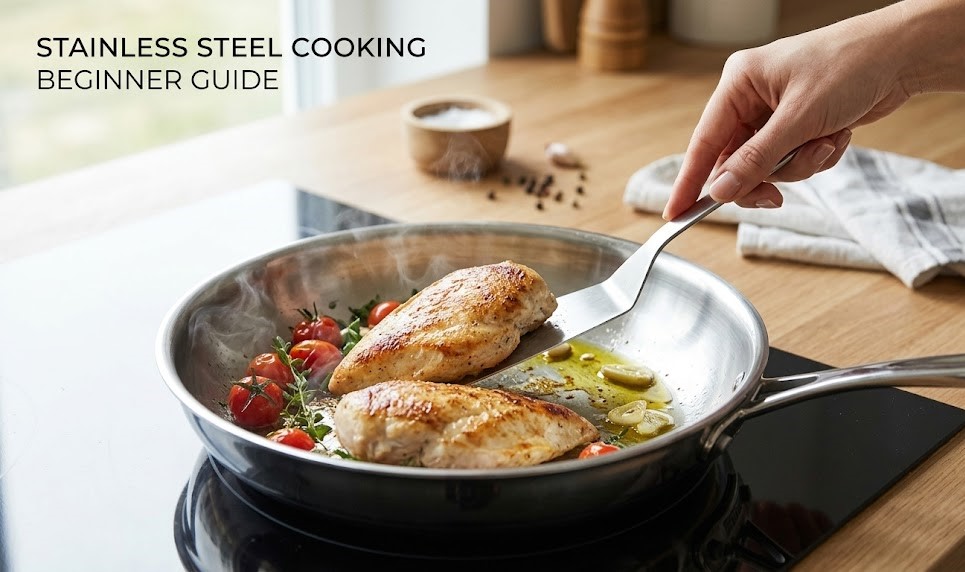
  • How to Cook with Stainless Steel Cookware – A Beginner’s Guide

    How to Cook with Stainless Steel Cookware – A Beginner’s Guide

    There’s a reason that stainless steel cookware is trusted by professional chefs around the world—it’s one of the most versatile cooking surfaces you can find. However, for some home cooks used to cooking on a coated non-stick surface, the idea of stainless steel can be daunting. Will your food stick? Will it be easy to clean?

    Let’s go over the four key ways to keep food from sticking to your stainless steel cookware, ensuring your meals remain intact and unstuck, all while protecting the integrity of your pan for years to come.

    4 Rules for Using Stainless Steel Pans

    1. Preheat Your Pan

    In the same way you preheat your oven before baking, remember to preheat your pan before adding any food to the cooking surface. A preheated pan means that your food will be cooking from the moment it touches the surface, ensuring that it cooks evenly.

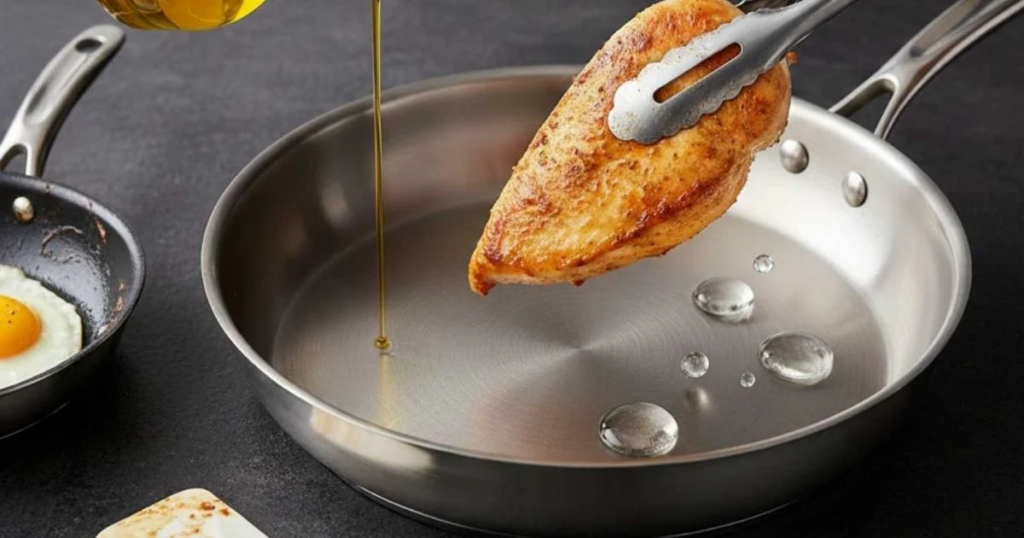
    The Water Test: A neat trick to know if your pan is ready is the “water test.” Place a few drops of water in your preheated pan. When they form perfect spheres that dance across the surface, your pan has reached 350-375°F (the ideal range for most tasks).

    • If the water evaporates instantly with an aggressive sizzle, your pan is too hot.
    • If the drops sit and slowly evaporate, the temperature needs to rise.
    • The perfect droplet will glide smoothly for 3-5 seconds before disappearing.

    2. Keep a Moderate Heat Level

    Use medium to moderate heat to avoid damaging your pan and the food inside of it. Overheating your pan can also burn any oils you are using to cook with. The only time to turn the heat up to high is when you are boiling liquids.

    3. Fat is Your Friend

    Using fat when cooking with stainless steel is absolutely crucial for preventing food from sticking. Begin by preheating your pan over medium heat for 2-3 minutes, then add a fat source such as butter or oil.

    Since different fats have unique smoke points, you will want to ensure you choose one based on your cooking temperature to avoid rendering it bitter:

    • Butter: Use at low heat (great for cooking eggs).
    • Olive Oil: Use for moderate heat (sautéing vegetables or cooking a delicate fish).
    • Grapeseed/Vegetable Oil: Use on higher heat when searing proteins.

    4. Be Patient

    Once you place your food in the pan, don’t be in a rush to move it around. If you move your food too early, it will stick to the cooking surface. The stainless steel surface will actively release your food when it is ready to be flipped. You can test this by gently nudging your food from side to side; if you encounter resistance, give it some more time.

    Mastering Cooking Techniques

    Searing, Sautéing, and Frying

    Master the art of high-temperature cooking by understanding each method’s unique requirements.

    • Searing: When searing meat, press down gently with tongs to ensure full contact with the pan’s surface, creating a golden crust. A splash of wine or broth helps deglaze those flavorful bits stuck to the pan (known as fond).
    • Sautéing: Keep ingredients moving with quick wrist flips or a wooden spoon. This technique works beautifully for tender vegetables.
    • Pan-Frying: This method demands more oil and steady heat. Maintain your oil temperature between 350-375°F for optimal results.

    Cooking with Stainless Steel Pans in the Oven

    Moving your stainless steel cookware from stovetop to oven opens up countless cooking possibilities. Most premium pans withstand temperatures up to 500-600°F, making them perfect for finishing thick steaks or baking casseroles. Remember that stainless steel handles become extremely hot during oven use—always keep protective mitts nearby for safe handling!

    Maintaining and Caring for Your Cookware

    Keeping your stainless steel cookware in top condition starts with proper cleaning.

    Always let the pan cool completely before washing with warm water, mild soap, and a soft sponge. Never shock hot metal with cold water, as this can cause the metal to severely warp. For everyday messes, gentle circular motions with a non-abrasive sponge are enough to lift food without scratching the polished surface.

    For tougher cleanup, simmer equal parts white vinegar and water in the pan to loosen stubborn residue, or make a baking soda paste to gently buff away stains. Always dry with a clean cloth to prevent water spots.

    Why Stainless Steel Pans Are Worth the Investment

    Investing in premium stainless steel cookware means choosing tools built to perform and last for decades. High-quality pans feature bonded materials—highly conductive metals like aluminum and copper are layered between stainless steel to provide exceptionally fast and even heat distribution. This superior construction helps eliminate hot spots and ensures precise temperature control.

    While the initial cost may be higher than coated non-stick cookware, the long lifespan, unmatched durability, and reliable performance make stainless steel pans remarkably cost-effective over time.

  • Mastery in the Kitchen: How to Prevent Food from Sticking to Stainless Steel Pans

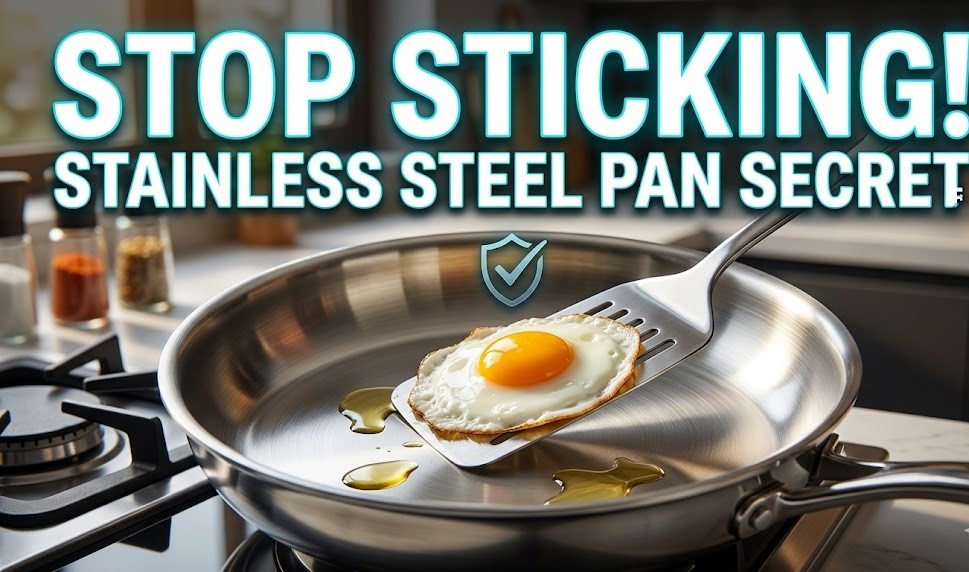
    Mastery in the Kitchen: How to Prevent Food from Sticking to Stainless Steel Pans

    Stainless steel cookware is the workhorse of the modern Indian kitchen. It is celebrated for being durable, toxin-free, and capable of achieving the perfect sear. However, the most common hurdle for home cooks is the dreaded “sticking” factor. Whether it’s torn paneer or stubborn egg residue, sticking usually happens because of physics, not a faulty pan.

    Understanding the relationship between metal, heat, and moisture allows you to transform your stainless steel into a naturally slippery surface that rivals non-stick.

    The Science of Sticking: Why It Happens

    At a microscopic level, stainless steel is not perfectly flat; it contains tiny “pores.” When a pan is cold or improperly heated, food particles settle into these pores. As the pan heats up, the metal expands and “grabs” the food, leading to sticking and tearing. To prevent this, you must create a thermal barrier that allows the food to glide.

    The “Water Test”: The Leidenfrost Effect

    Before adding a single drop of oil, you must ensure your pan has reached the correct temperature. Chefs use a simple technique known as the Leidenfrost Effect.

    1. Heat the dry pan on medium for 1–2 minutes.
    2. Flick a few drops of water onto the surface.
    3. The Result: * If the water sizzles and evaporates, the pan is too cold.
      • If the water forms a single, cohesive ball that “dances” or glides across the surface, the pan is perfectly heated.
      • Now, add your oil.

    Summary: Professional Tips for Stick-Free Cooking

    RuleActionWhy It Works
    Heat ControlPreheat to “Medium”Prevents the metal from “grabbing” the food.
    MoisturePat food dry with a towelMoisture causes steaming, which leads to sticking.
    Oil TimingAdd oil to a hot panHot oil spreads evenly and fills the microscopic pores.
    The FlipDo not move food too earlyFood naturally “releases” once a proper sear is formed.
    CleanupDeglaze while the pan is hotWater or stock lifts “fond” (flavorful bits) easily.

    Professional Insights: Safety & Performance

    To maximize your kitchen efficiency and health, follow these expert guidelines:

    1. Thermal Stability: Stainless steel doesn’t have a chemical coating that can flake off. The FDA notes that high-quality stainless steel (like 304 or 316 grade) is one of the safest materials for high-heat cooking as it is non-reactive.
    2. Avoid “Over-Heating”: While the water test is vital, do not let the pan get so hot that the oil smokes. The Mayo Clinic explains that heating oil past its “smoke point” can create harmful free radicals and bitter flavors.
    3. Ergonomics & Weight: High-quality tri-ply stainless steel (like Meyer Select) can be heavy. Use the “helper handle” when transferring hot liquids to avoid wrist strain, as suggested by the American Chiropractic Association.

    Conclusion

    Mastering stainless steel is a rite of passage for any serious cook. By moving away from the “cold pan, cold oil” habit and embracing the Leidenfrost water test, you unlock the ability to sear, sauté, and deglaze like a professional. Stainless steel rewarded with proper technique will provide a lifetime of safe, toxin-free, and flavorful cooking.

  • How to Clean Enamel Cast Iron Without Chipping: The 2026 Guide

    How to Clean Enamel Cast Iron Without Chipping: The 2026 Guide

    Enamelled cast iron cookware has become a modern kitchen essential, perfectly blending the superior heat retention of traditional cast iron with a smooth, non-reactive porcelain coating. Whether you are slow-cooking a traditional Indian dal or baking artisanal sourdough, enamel delivers consistent, gourmet results. However, because the surface is essentially a layer of glass fused to metal, improper cleaning is the leading cause of chips and dullness.

    This guide explores how to maintain your cookware’s pristine finish while ensuring maximum longevity and food safety.

    Step-by-Step: Cleaning Enamel Cast Iron Safely

    1. The Cooling Phase

    Never plunge a hot pan into cold water. Sudden temperature shifts cause thermal shock, which leads to microscopic cracks in the enamel that eventually turn into chips. Always allow the cookware to cool to room temperature naturally.

    2. Standard Washing

    Once cooled, use warm water and a mild, bleach-free dish soap.

    • Tools: Use a soft sponge, cloth, or a nylon brush.
    • Avoid: Steel wool, metal scrubbers, and harsh scouring pads are the primary enemies of enamel; they create micro-scratches that trap food and dull the shine.

    3. Dealing with Stubborn Stains

    For “fond” or burnt-on gravies, do not scrape with metal spatulas. Instead:

    • Soak: Fill the pan with warm, soapy water for 15–30 minutes.
    • Baking Soda Paste: Create a paste of baking soda and water. Apply it to the stain and scrub gently with a soft sponge. Baking soda is a “gentle abrasive” that lifts stains without wounding the porcelain.

    4. Drying and Storage

    Wipe the cookware dry immediately with a soft towel. While the enamel is rust-proof, the exposed cast iron rim (where the lid sits) can still oxidize if left damp. When stacking, always place a felt protector or soft cloth between pans to prevent metal-on-enamel impact.

    Comparison: Safe vs. Unsafe Cleaning Methods

    FeatureSafe PracticeUnsafe Practice (Avoid)
    TemperatureRoom temperature coolingSudden cold water immersion
    UtensilsSilicone, wood, or nylonMetal scrapers or knives
    ScrubbersSoft sponges, nylon brushesSteel wool, copper mesh
    Cleaning AgentMild dish soap, Baking sodaBleach, oven cleaners
    DishwasherOccasional (Handwash preferred)Frequent high-heat cycles

    Professional Insights: Safety & Longevity

    To keep your kitchen both efficient and healthy, follow these expert care guidelines:

    1. Chemical Safety: Avoid using heavy-duty degreasers or bleach. The FDA notes that harsh chemicals can linger on porous surfaces if not rinsed perfectly. Since enamel is non-porous, mild soap is all you need.
    2. Food Integrity: If your cooking surface has a large chip that exposes the raw iron, the Mayo Clinic notes that while iron leaching isn’t typically toxic, it can significantly alter the taste and color of acidic foods (like tomatoes).
    3. Ergonomic Handling: Cast iron is heavy. The American Chiropractic Association suggests using both handles (if available) when moving heavy cookware to prevent wrist strain, especially when the pan is full of liquid.

    Conclusion

    Cleaning enamel cast iron without damage is a matter of patience and the right tools. By avoiding thermal shock and abrasive metal tools, you preserve the non-reactive surface that makes this cookware so versatile. High-quality pieces, such as those from the Meyer Enamelled Collection, are designed for the rigors of Indian cooking, but a little mindful maintenance ensures they remain family heirlooms for generations.